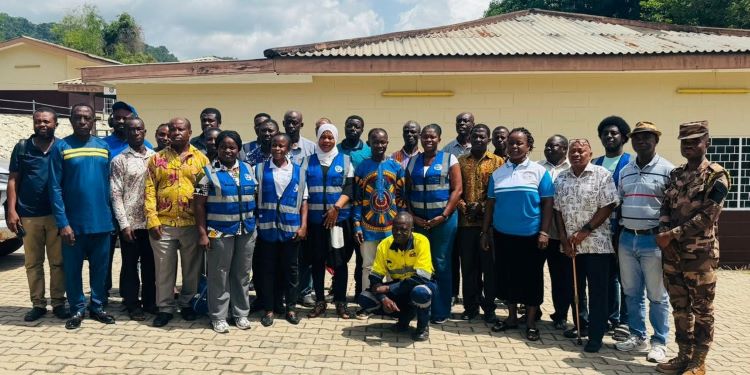
The Fisheries Commission, operating through its Ashanti Regional Directorate, has officially enrolled eleven selected beneficiaries into a specialized capacity-building and practical orientation program to launch Phase Two of the AngloGold Ashanti (AGA) Aquaculture Project.
Executed in direct alignment with the AGA Ten-Year Socioeconomic Development Plan, the intensive two-day training session held recently served as the primary technical deployment to scale sustainable fish production, upgrade farm management protocols, and enforce statutory compliance within the Obuasi enclave.
According to the Fisheries Commission, the joint state-and-corporate intervention integrates both incoming Phase Two farmers and existing Phase One operators to formalize local aquaculture systems under strict regulatory frameworks.
“The training served as both a refresher and a practical orientation program to equip eleven beneficiaries with the necessary technical knowledge and management skills required for effective fish farming operations, proper farm management, biosecurity compliance, and the successful implementation of the project interventions. Some beneficiaries from phase one also participated in the training”
Fisheries Commission
The geographical and economic profile of the Obuasi enclave is undergoing a major institutional recalibration. Historically dependent on gold extraction, the enclave is now the focus of targeted corporate-state interventions designed to insulate local communities from the structural volatility of mining life cycles.



This strategic mobilization marked an institutional commitment toward structured, non-extractive economic models in regions historically dominated by gold mining operations.
Under the framework of the AGA Ten-Year Socioeconomic Development Plan, the AngloGold Ashanti (AGA) Aquaculture Project is a flagship initiative to generate alternative livelihoods and build resilient, localized agricultural economies.
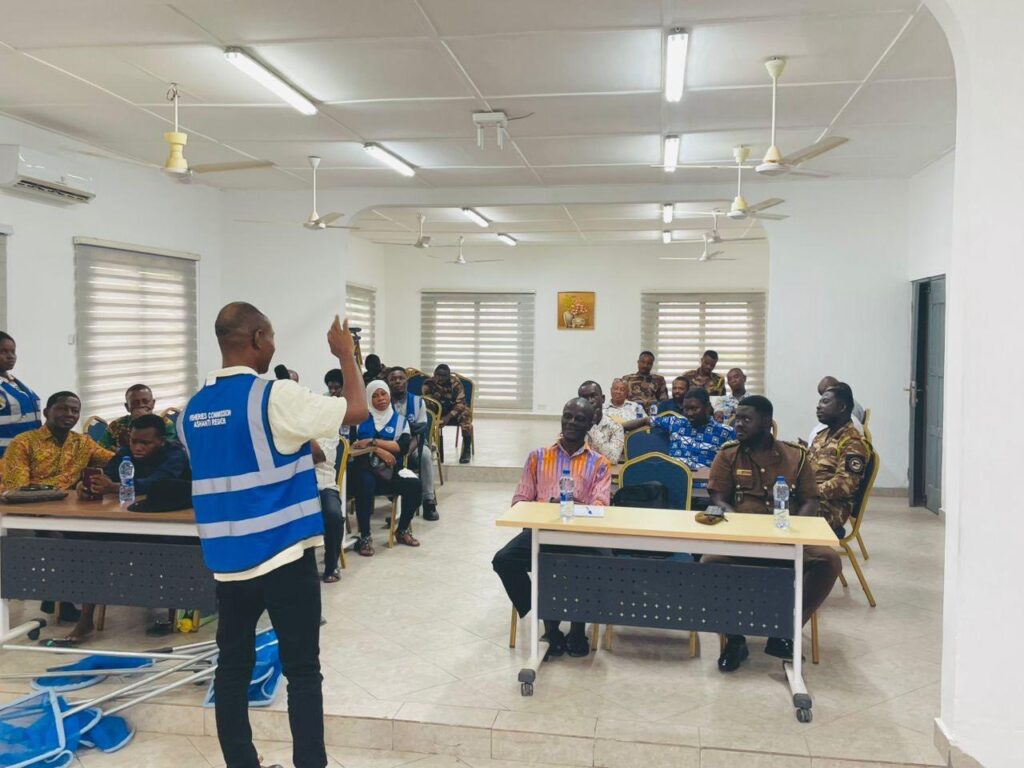
Through its direct partnership with the Ashanti Regional Directorate of the Fisheries Commission, the multinational mining corporation is utilizing its corporate social investment portfolio to establish sustainable agribusiness assets that can outlive mineral extraction.
The progression into Phase Two follows a rigorous assessment and selection process designed to identify high-potential beneficiaries capable of running commercial-scale fish farms. Rather than distributing passive financial grants, the collaboration has prioritized technical capacity-building and human capital investment.
Onboarding eleven new beneficiaries alongside the seasoned operators from Phase One, the project deepened its localized cooperative ecosystem where practical knowledge, risk-mitigation strategies, and operational efficiencies are systematically shared across the production value chain.
The AngloGold Ashanti Aquaculture Project is geared up to operate as a strategic vehicle to promote sustainable development, diversify the regional economy, enhance fish production, and secure long-term livelihoods across the broader Obuasi enclave.
Sustainable Farm Management
The core of the two-day training session focused on elevating the baseline of local fish farming operations to international standards, since informal aquaculture in rural enclaves has suffered from high mortality rates and low yields due to substandard design, poor site selection, and inadequate water quality management.
To correct these structural inefficiencies, technical experts from the Fisheries Commission led the beneficiaries through intensive modules covering the fundamentals of aquaculture in Ghana, including detailed comparative analyses of various fish farming systems and major cultured species viable for the local climate.
The operational curriculum placed significant emphasis on the engineering metrics of site selection, pond construction, and tank preparation. Beneficiaries were trained to calculate exact soil composition ratios, water flow velocities, and depth requirements necessary to prevent structural collapse and optimize dissolved oxygen retention.
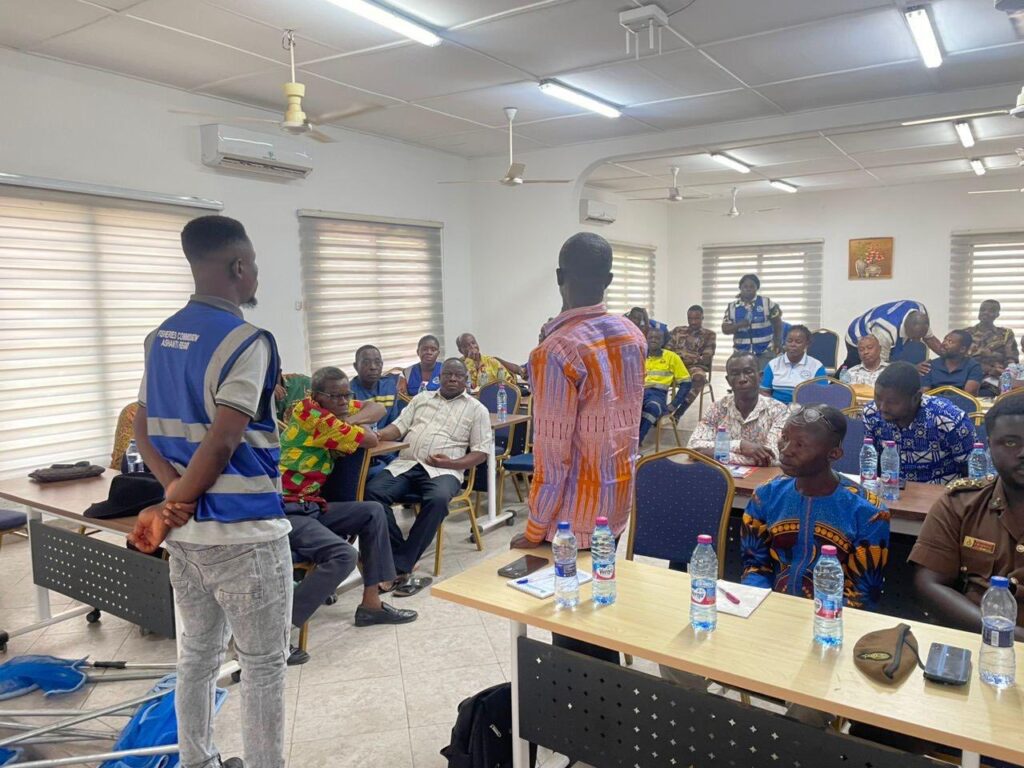
Furthermore, the training codified recommended stocking procedures and daily management best practices, ensuring that prospective farmers do not exceed the biological carrying capacity of their infrastructure, which often triggers catastrophic disease outbreaks.
A defining feature of Phase Two is the “total integration of macro-level regulatory policy into community-level agricultural production.” Participants underwent extensive legal onboarding focused on the newly enacted Fisheries and Aquaculture Act, 2025 (Act 1146).
The Commission signaled that informal, unregulated aquaculture will no longer be tolerated within the region, as beneficiaries were required to align their everyday operations with national statutory mandates governing environmental protection, resource sustainability, and institutionalized aquaculture governance.
Act 1146 establishes rigorous legal liabilities for environmental mismanagement, particularly regarding the discharge of aquaculture effluents into local water bodies and the unmonitored use of pharmaceutical inputs in fish feeds. The modules explicitly deconstructed these legal provisions, explaining how compliance with state regulations directly preserves the ecological integrity of the Obuasi enclave.
Through this approach, the project aimed to transform beneficiaries from localized subsistence farmers into legally compliant, environmentally conscious corporate citizens who operate within the boundaries of sovereign maritime and environmental laws.
The final phase of the capacity-building deployment utilized an interactive peer-to-peer knowledge network, intentionally integrating returning Phase One beneficiaries into the sessions, to facilitate an active forum for cross-generational operational review.
Existing fish farmers utilized the interactive question-and-answer segments to share real-world case studies detailing past infrastructure challenges, localized feed supply bottlenecks, and market distribution dynamics within the Ashanti Region, while prospective farmers secured immediate operational clarifications from both regulatory officers and their experienced peers.
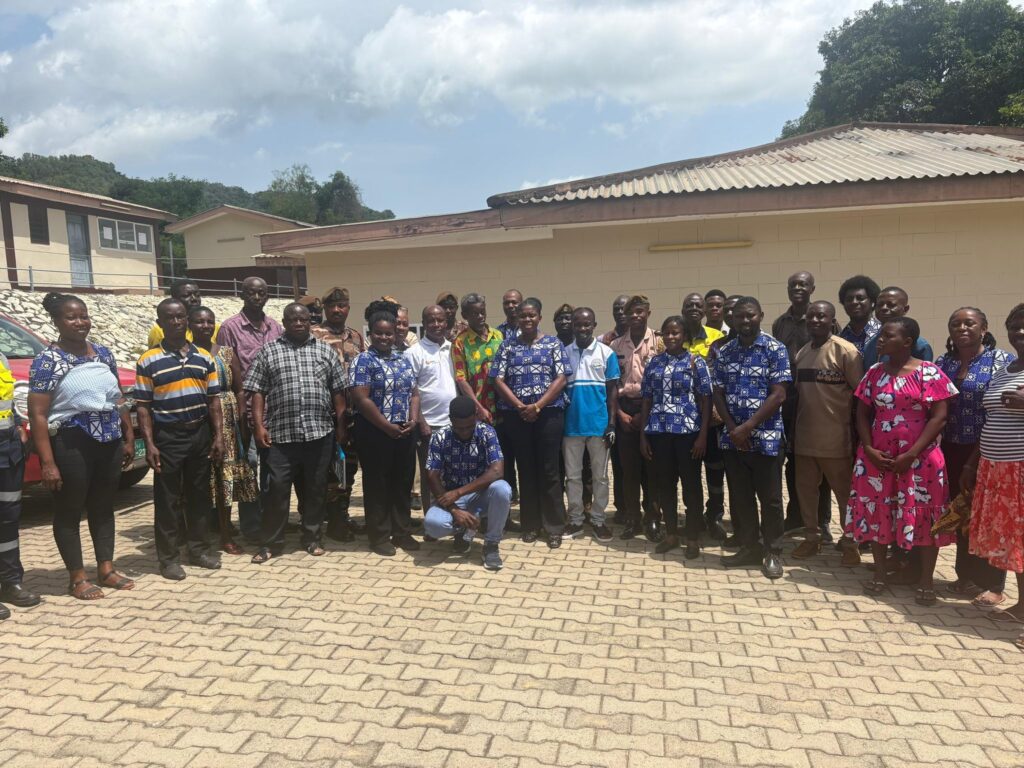
As the eleven new Phase Two farms become fully operational, their synchronized adherence to biosecurity compliance and proper farm management will establish Obuasi as a premier hub for sustainable aquaculture production in Ghana.
For the Commission, this holds proves that strategic public-private partnerships can successfully transition extraction-dependent enclaves into self-sustaining centers of agricultural industrialization.
READ ALSO: US Issues Temporary License for Russian Oil