
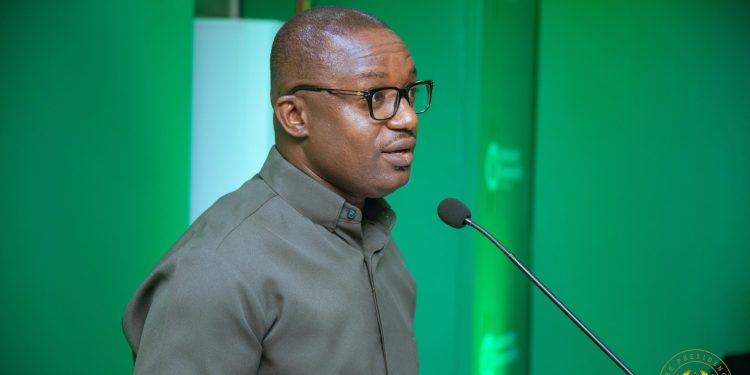
Hon. John Abdulai Jinapor, the Minister for Energy and Green Transition, has made a passionate appeal at the Africa Energy Technology Conference (AETC) 2026 in Accra, calling on all African nations including non-oil producing countries to actively participate in the African Petroleum Producers’ Organization (APPO) to collectively expand continental energy infrastructure and build a self-sustaining regional market.
Speaking to an audience of continental policymakers, energy experts, and investors, Energy Minister emphasized that a united front is necessary to reverse Africa’s historical challenges with local value retention and external financial dependencies.
“I think that all African countries should focus on APPO as well, not just oil producing countries, non-oil producing countries and other investments so that we can share in the infrastructure and build that needed market and retain the value here in Africa. That is one of the biggest problems we face in Africa, value retention, raising the capital from within because it looks like we’ve been used to always going to the capital market. Within ourselves, we can do a lot and I think that we should take it to another level and deepen that collaboration for the benefit of our citizenry.”
Hon. John Abdulai Jinapor,
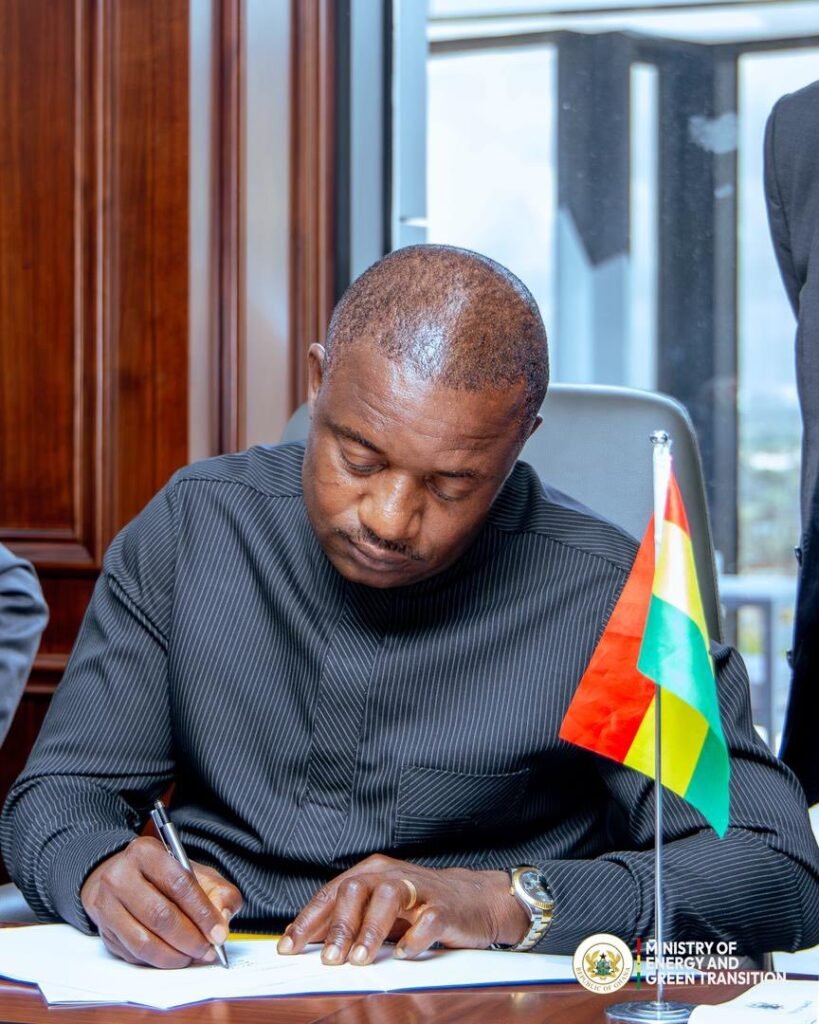
Hon. John Jinapor explained that true economic independence for the continent relies on pooling internal resources and establishing integrated energy value chains that insulate local economies from external shocks.
The Minister argued that by diversifying internal investments into unified energy grids and technological partnerships, African states can collectively create a robust, enclosed financial ecosystem capable of funding its own major capital projects without relying on high-interest international loans.
He cited Ghana’s fiscal resilience over the past three years as a prime example of this strategy, highlighting how the country successfully advanced major developmental goals internally without accessing the Eurobond market, proving that self-reliance is not only possible but more effective.
Dismantling Capital Market Over-Reliance via Regional Integration
The systemic paradigm shift proposed by the Ghanaian Energy Minister addresses a foundational flaw in Africa’s macroeconomic architecture: the historical compulsion to seek foreign debt for domestic development.

For decades, the reliance on external capital markets and Eurobonds has exposed African nations to volatile interest rates, sovereign debt crises, and conditionalities that siphon away local revenues.
By shifting the focus toward intra-continental capital aggregation through entities like APPO and its affiliated financial arms, such as the Africa Energy Bank, the continent can generate sovereign-backed, domestic investment pools.
This framework allows non-oil producing countries to invest their capital surpluses directly into cross-border infrastructure projects, effectively turning regional neighbors into preferred financial partners rather than distant Western institutions.
Technical Synchronization and Interconnected Grid Infrastructure
Hon. Jinapor’s proposal is anchored in the physical interconnection of Africa’s energy architecture, a move that he believed would fundamentally stabilize the continent’s erratic power grids through engineering synergies.
The technical integration of oil, gas, and green electricity networks implies the construction of trans-continental pipelines and synchronized regional electricity pools, such as the West African Power Pool (WAPP) and the Central African Power Pool (CAPP).
From a technical standpoint, an interconnected grid creates a highly resilient system where generation surpluses in one region can instantly compensate for deficits or system failures in another, balancing seasonal loads and preventing widespread industrial blackouts.
Furthermore, this infrastructural web mitigates the severe operational vulnerabilities associated with isolated distribution lines.
In standard standalone systems, if a single transmission line or subsea cable gets truncated, the entire length of that distribution line experiences a catastrophic failure, halting downstream industries and costing millions in emergency repairs.
A unified, meshed grid network behaves like a redundant system: when one fuel line or transmission line experiences a disruption, automated directional switches reroute power through alternative cross-border pathways, minimizing the impact of regional fuel cost spikes and safeguarding continuous industrial output across the continent.
READ ALSO: Parliament Must Amend PAC Laws For Fair Accountability — Adorye