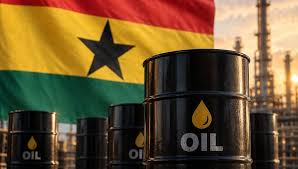
Minister for Government Communications, Hon. Felix Ofosu Kwakye, has announced that the upcoming review of the national fuel price relief policy by cabinet will firmly prioritize shielding Ghanaian consumers from unnecessary economic hardship.
Speaking ahead of the opening of the next bi-weekly petroleum pricing window, the Minister emphasized that the state’s intervention framework is structurally designed to absorb volatile international energy shocks.
He indicated that while a technical evaluation of the mitigation program is currently underway, the final policy directive will remain heavily anchored on the government’s commitment to protect domestic livelihoods.
“But the government is determined to ensure that the people of Ghana do not endure unnecessary hard subsidies on what they can endure. In fact, that was the main reason why we intervened at a time that the price on oil was going up, to ensure that people were cushioned and that they don’t come upon hard times. And I indicated, when I did the briefing after the cabinet decision, that the position will be reviewed after four weeks.”
Hon. Felix Ofosu Kwakye
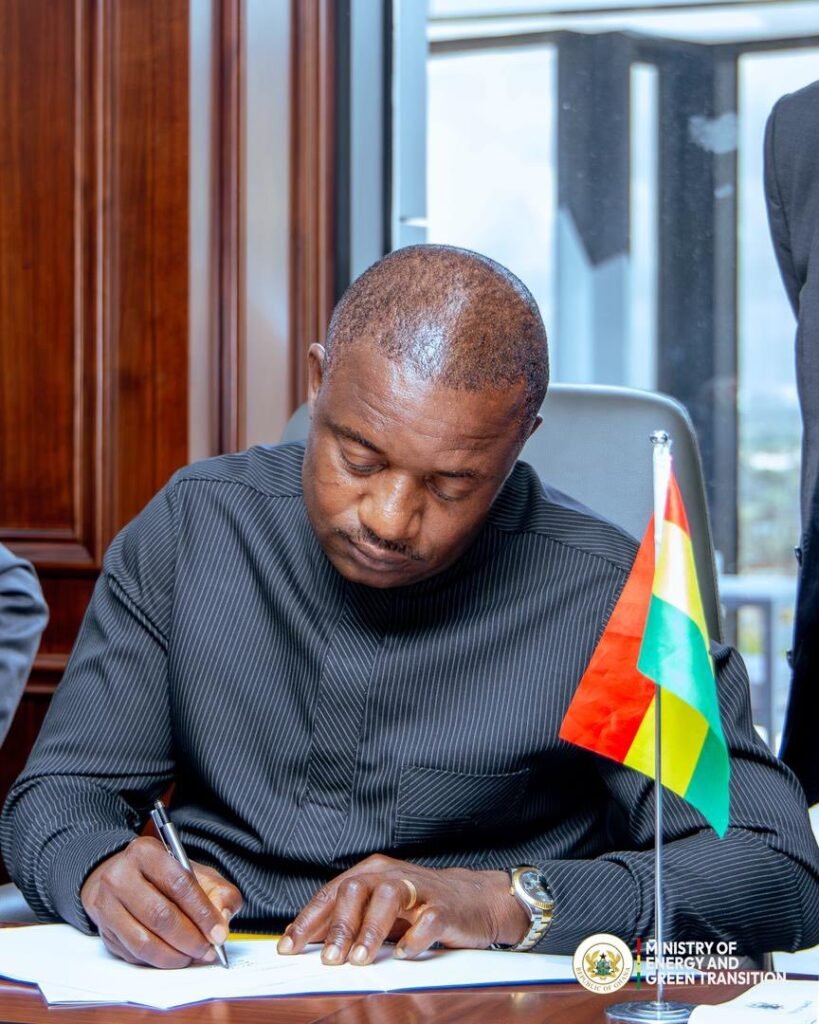
Expanding on this impending policy assessment, Kwakye disclosed that a comprehensive performance report is being prepared for immediate submission to the cabinet to determine the future trajectory of the energy subsidy margins.
The original temporary intervention, which targeted a strategic reduction in key petroleum levies to stabilize local commercial pumps, was explicitly scheduled for a macro-review after a strict four-week operational cycle.
With that timeline elapsing within the next two to three days, the government is analyzing prevailing global pricing dynamics alongside domestic revenue requirements to ensure that any prospective adjustment avoids the escalation of retail prices.
Mitigating Global Geopolitical Shocks on Local Pumps
The Genesis of this significant state intervention was prompted by extreme geopolitical instability in the Middle East, specifically the sudden escalation of high-intensity conflicts involving the United States and Israel on one side, and Iran on the other.
This external friction threatened to trigger immediate, overnight spikes in refined petroleum products, an unsustainable reality that forced a swift fiscal response from the national administration.

By aggressively adjusting specific margins and temporary levies, the government engineered a direct 2 cedis drop in the retail price of diesel, alongside a complementary marginal drop in the premium price of petrol.
According to Kwakye, these deliberate fiscal adjustments were essential to prevent widespread public distress and severe inflationary pressures across the transport and logistics sectors.
While normal market operations dictated by the country’s deregulated automatic price adjustment formula usually cause minor price variations, the state felt compelled to step in when the external geopolitical shocks threatened to push prices beyond manageable thresholds.
The state’s quick action successfully contained what could have been a debilitating spike, proving that targeted market interventions are crucial for maintaining macroeconomic stability during international energy crises.
Pricing Formula Dynamics and Market Implications
As the next pricing window approaches, technical reports indicate that even if the current tax reliefs are maintained by the state, structural factors within the broader deregulation formula will naturally kick in, causing marginal upward adjustments over the long-term horizon.
The Minister took great care to frame this reality objectively, stating that “if the intervention remains, other factors will have kicked in, which will warrant some adjustment.”
This careful balance is deemed mathematically necessary to protect the fiscal health of the energy sector, ensuring that bulk distribution companies and oil marketing firms do not suffer crippling operational deficits.

Crucially, the price of fuel has dropped twice during the two consecutive pricing windows that occurred immediately after the relief was introduced.
This positive market reaction is a clear testament to the direct, measurable impact that the state’s temporary intervention has had on the broader supply chain.
Because of these cumulative downward movements, energy experts note that any minor adjustments made during the next window will likely be absorbed without triggering significant retail price volatility for the final consumer.
Comparative Supply Chain Stability Across the Region
Evaluating the broader regional landscape reveals that Ghana’s proactive intervention strategy has kept domestic fuel supply perfectly synchronized with national demand.

While several neighboring countries are currently grappling with acute product shortages and severe logistical disruptions, the domestic market has maintained uninterrupted availability at all major retail stations.
In sharp contrast, regional pressures have forced other administrations to implement drastic emergency measures, including strict limits on vehicular movement and the enforcement of shortened two or three-day weekly work schedules for public sector employees.
By avoiding such disruptive operational constraints and ensuring that fuel queues do not re-emerge, the government’s relief program has achieved its core objectives.
READ ALSO: Ghana’s WC Opponent Croatia Unveils Strong 26-Man Squad