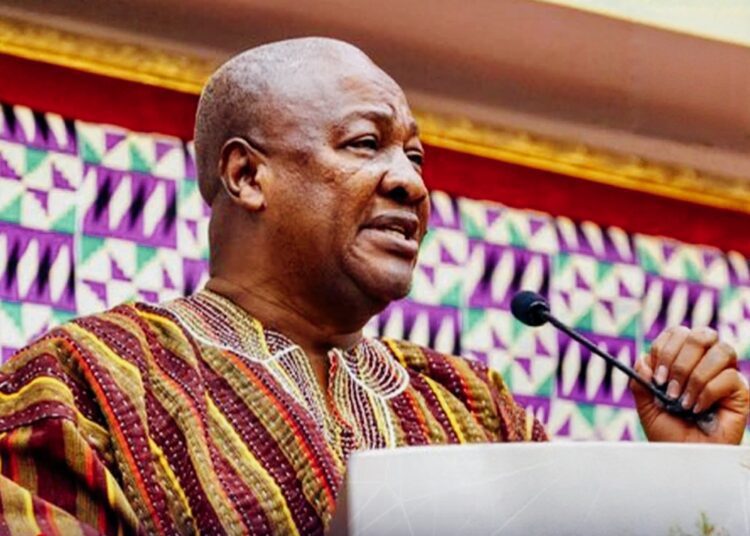
President John Dramani Mahama has announced that the recent fuel prices reduction has delivered significant relief to 3.7 million car owners and millions of commuters across the country, describing it as one of the clearest signs of Ghana’s ongoing economic recovery.
Addressing Parliament during his 2026 State of the Nation Address, the President highlighted the sharp drop in petrol and diesel prices over the past year, noting that the development has positively impacted transportation costs and household budgets.
“The reduction in fuel prices has provided relief to 3.7 million car owners, as well as the tens of millions of Ghanaians who rely on transportation daily.”
President John Dramani Mahama
The announcement was met with attention from lawmakers and industry observers, as fuel prices remain a key indicator of economic stability and consumer confidence.
Petrol and Diesel Prices See Significant Drop

Providing detailed figures, President Mahama outlined the scale of the decline in petroleum prices since his administration assumed office.
“Petrol prices dropped from 15.2 Ghana cedis to 10.7 cedis per litre, and only recently it dipped below the 10 cedis mark to 9.97. Diesel fell from 15.4 to 11.3,” he told Parliament.
President John Dramani Mahama
The President emphasized that the drop below the 10-cedi threshold for petrol marked a symbolic and practical milestone, easing the financial strain on both private motorists and commercial transport operators.
Fuel costs directly affect transport fares, food prices and the cost of doing business, making their reduction a critical factor in broader economic relief. Commercial drivers, delivery operators and logistics companies stand to benefit from lower operating expenses, which could help moderate inflationary pressures.
Impact on Transport-Dependent Population

Beyond private vehicle owners, President Mahama pointed out that the fuel prices reduction has broader implications for the millions of Ghanaians who depend on public transport daily.
From workers commuting to offices and markets to students travelling to schools, fluctuations in pump prices often translate into immediate adjustments in transport fares. Lower fuel prices, therefore, have a ripple effect throughout the economy.
By referencing the nation’s 3.7 million registered car owners alongside the “tens of millions” who rely on transport, the President underscored the widespread reach of the policy outcome.
Industry analysts note that transport costs are among the most sensitive components of household expenditure. Any sustained reduction can improve disposable income and stimulate economic activity in other sectors.
President Mahama framed the fuel price decline within the broader context of what he described as a comprehensive economic turnaround.
“Mr. Speaker, Ghana’s economic turnaround is broad-based and comprehensive.
“All sectors of the Ghanaian economy have witnessed remarkable improvement in our first year in office.”
President John Dramani Mahama
While the address covered multiple sectors, the fuel price data served as a tangible example of what the administration considers progress.
The President’s remarks suggest that macroeconomic stabilisation measures, currency management and fiscal adjustments have contributed to easing pressure on import-dependent commodities such as petroleum products.
Observers say global oil price trends and exchange rate movements often influence domestic fuel pricing. However, the President’s framing indicates that internal policy measures have also played a role in achieving stability at the pumps.
Symbol of Broader Economic Confidence

The reduction in petrol and diesel prices comes at a time when many Ghanaians continue to monitor the cost of living closely. In recent years, sharp increases in fuel prices have triggered public concern and affected business operations nationwide.
By highlighting the new pricing benchmarks in his State of the Nation Address, President Mahama positioned the development as both an economic and political milestone. The dip below 10 cedis per litre for petrol, in particular, serves as a psychological indicator of improving conditions.
Economic commentators argue that sustained stability in fuel pricing could help anchor inflation expectations and support growth in key sectors such as transportation, agriculture and manufacturing.
While the President celebrated the gains, attention now turns to whether the fuel prices reduction can be maintained in the face of global market volatility. International crude oil prices, geopolitical tensions and exchange rate fluctuations remain factors that could influence domestic pricing.
Nevertheless, the administration maintains that its broader economic strategy is designed to promote resilience and long-term stability.
Whether these gains endure will depend on continued economic discipline and market conditions, but for now, the fuel prices reduction offers a moment of relief and renewed optimism for households and businesses alike.
READ ALSO: Ghana Navigates New Reciprocity Shift in AGOA Extension