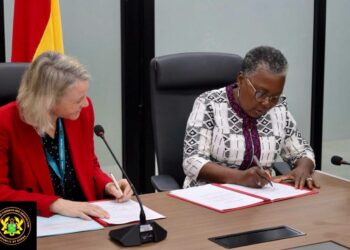

In a decisive political move that converts a week of intensive agro-technical audits into binding international capital commitments, the Government of Ghana has formally signed a historic Memorandum of Understanding (MoU) with the Legislative Council of Nebraska State.
The bilateral agreement, executed directly by the Minister for Food and Agriculture, Hon. Eric Opoku, marks the official culmination of a high-stakes, 23-member trade mission to radically overhaul the domestic livestock, meat, and dairy value chains by establishing a direct institutional alliance with Nebraska.
Addressing the joint assembly of Nebraska lawmakers, state agricultural directors, and private sector trade executives immediately before signing the bilateral pact, Hon. Eric Opoku delivered a sharp, zero-compromise message on administrative accountability, explicitly rejecting the legacy model of superficial state-sponsored travel.
He framed the agreement as a mandatory socio-economic contract to deliver immediate structural relief to the Ghanaian taxpayer.
“I want to go and tell a story. So let’s tell the story together. What message are we going to communicate to the people back home? That we came to Nebraska to enjoy with the people of America, and then we came back home empty-handed? No, that shouldn’t be the story”
Hon. Eric Opoku, Minister for Food and Agriculture
The MoU with Nebraska – one of the preeminent global leaders in animal husbandry, beef cattle feedyard operations, and automated agricultural production systems – represents a major shift from traditional exploratory diplomacy toward an aggressive, contract-backed campaign for absolute import substitution in the West African sub-region.
Ghana is anchoring its long-term food security strategy in concrete industrial technology transfers, with the execution of the MoU serving as a direct legislative and administrative answer to persistent structural inefficiencies in Ghana’s public sector agricultural investments.
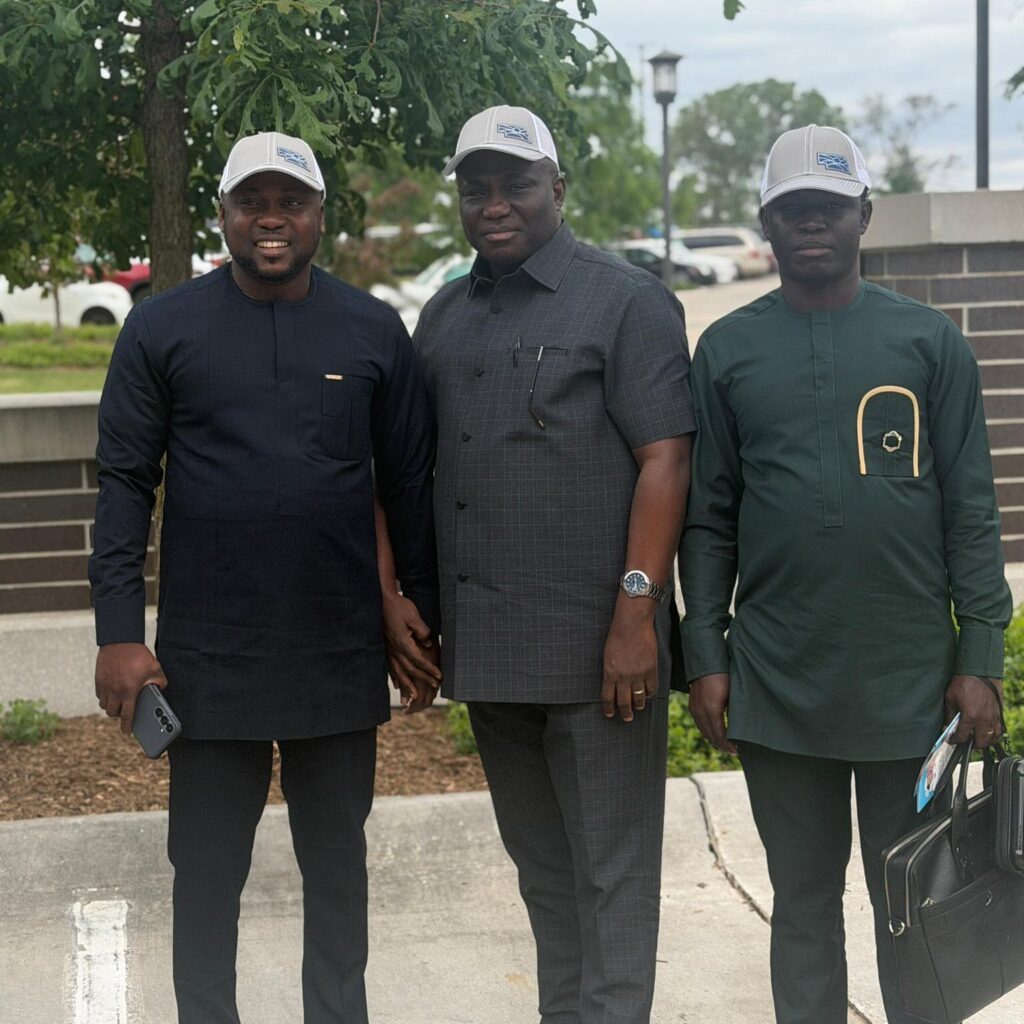
Throughout the week-long tour – which took the Ghanaian delegation through complex technical evaluations at automated poultry assemblies in Lincoln, halal processing operations in Omaha, and advanced circular feedyards in the Nebraska heartland – the focus remained squarely on economic deliverables.
The Minister’s blunt rhetoric underscored a systemic realignment within the Ministry of Food and Agriculture (MoFA), for high-level international trade missions to no longer conclude with vague communiqués and non-binding expressions of interest.
Targeting the 90% Dairy Deficit
The primary economic justification driving this trans-Atlantic industrial partnership is Ghana’s staggering macroeconomic vulnerability to imported food products. Current import registries reveal that Ghana imports an unsustainable 90% of its aggregate finished dairy commodities, including milk powder, butter, and processed cheeses.
This overwhelming reliance on foreign production lines represents a massive, continuous drain on the nation’s foreign exchange reserves, directly undermining the stability of the Ghanaian Cedi and worsening domestic food inflation.
Importing nearly all of its dairy, Ghana exports the vital job-creation and wealth-generation opportunities that naturally occur within specialized agricultural ecosystems. The Nebraska partnership systematically challenges this status quo.
The domestication of Nebraska’s high-yield dairy production and processing technologies is geared towards constructing an integrated, localized supply chain that absorbs domestic dairy cattle output, introduces strict quality-control protocols, and services both domestic consumers and the broader West African market.

To transform this policy vision into physical reality, the signed MoU lays down explicit, actionable blueprints for the construction and operationalization of two massive industrial facilities within Ghana: “a state-of-the-art commercial dairy processing plant and a highly automated meat processing plant.”
According to the Minister, these facilities will be the structural anchors for the nation’s decentralized agricultural transformation, acting as guaranteed off-take centers for livestock breeders operating across the northern savannah and transitional ecological zones.
The design of these processing centers draws directly from the technical audits conducted during the earlier phases of the Nebraska tour. The dairy processing facility will integrate automated pasteurization, separation, and packaging systems modeled after operations observed at Prairieland Dairy.
Similarly, the meat processing plant will implement the strict sanitary, cold-chain, and high-throughput frameworks studied at Omaha’s industrial processing facilities. This ensures that Ghanaian meat products can meet the rigorous international compliance standards required for export under the African Continental Free Trade Area (AfCFTA).
The multi-sector benefits of these upcoming industrial hubs extend far beyond simple import substitution. The establishment of localized processing plants will trigger a powerful multiplier effect throughout Ghana’s rural economy, generating thousands of specialized technical jobs in food engineering, veterinary science, industrial logistics, and quality assurance.
Furthermore, by providing livestock farmers with a reliable corporate off-taker, the project completely re-engineers the economic incentives for local ranching, driving private sector capital into domestic animal feed production, veterinary care networks, and advanced breed genetics.
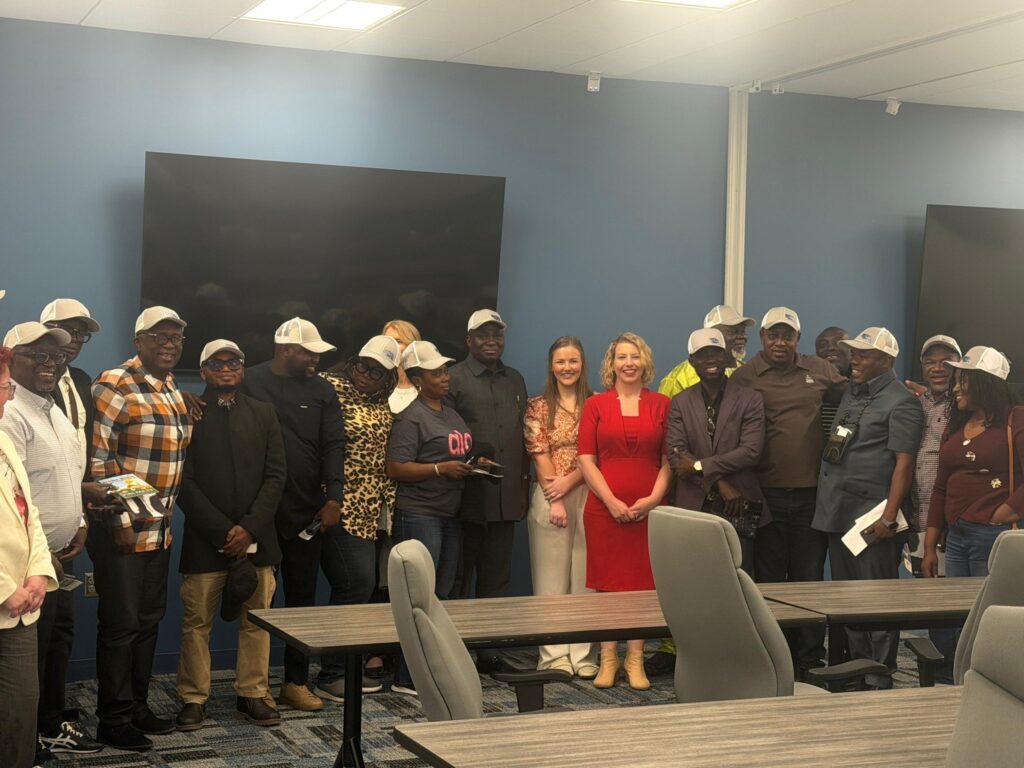
As the Ghanaian delegation prepares to return to Accra, the signed MoU stands as an undeniable turning point for national agricultural policy, as the agreement provides a clear, actionable template for how African states can engage directly with sub-national Western entities to extract pure industrial utility.
READ ALSO: Global Stars LISA, Anitta, and Rema Unleash Official 2026 FIFA Anthem “GOALS”