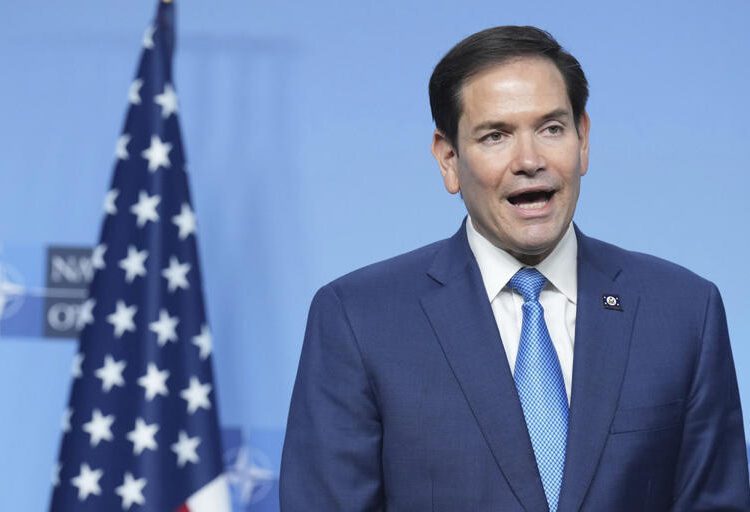
Marco Rubio has said the United States and its allies must prepare alternative measures if diplomatic efforts fail to reopen the strategically vital Strait of Hormuz, signaling that action may become necessary if Iran refuses to allow normal shipping through the passage.
Speaking to reporters after a meeting of NATO Foreign Ministers in Helsingborg, Sweden, the U.S Secretary of state said that discussions focused in part on the challenges surrounding the reopening of the Strait of Hormuz, one of the world’s most important maritime routes for oil and gas transportation.
Rubio stressed that Washington would prefer a diplomatic resolution with Tehran that guarantees open shipping lanes and addresses concerns over Iran’s nuclear program.
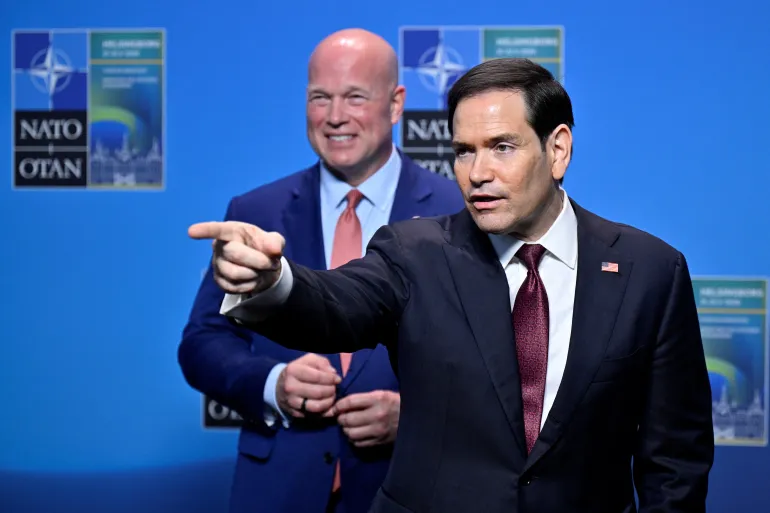
However, he warned that governments must also prepare for the possibility that negotiations may fail. Rubio said after the meeting, “We have to have a plan B for if someone is shooting” in the Strait of Hormuz.
“We would all love to see an agreement with Iran, in which the Straits are open and they abandon their nuclear ambitions.But we also have to have a plan B. What if Iran refuses to open the Straits? At that point, something has to be done about it.
“At some point, ideally, they open the strait. Plan B needs to be, what if Iran says, ‘No, we refuse to open the Strait?’”
Marco Rubio
He added that countries including the US would would need to “do something about it” but stopped short of saying whether he thought NATO should be involved.
Although he did not specify what “plan B” would involve, his comments indicate growing concern among Western governments about the economic and strategic consequences of prolonged disruption in the strait.
The possibility of further escalation in the Gulf remains a major concern for governments and investors alike. Rising tensions involving Iran, regional military activity, and threats to commercial shipping have already contributed to volatility in energy markets and increased diplomatic pressure for a negotiated solution.
For now, Rubio maintained that the United States would continue pursuing diplomacy while simultaneously preparing for alternatives if negotiations fail. His comments signal that Washington is attempting to balance diplomatic engagement with contingency planning as uncertainty over the future of the Strait of Hormuz continues.
Rubio also reiterated earlier comments about the status of talks, claiming U.S negotiators were dealing with “difficult” people. “There’s been some progress – we’re not there yet,” he said, adding, “Hopefully that will change, but it may not.”
“The primary interlocutor on this has been Pakistan and they’ve done an admirable job. We’ve been working with them on all of this and that will remain the case.”
Marco Rubio
NATO Secretary-General Mark Rutte told the news conference that it is important that countries are coming together around plans to ensure that the Strait of Hormuz can be open for transit. “Iran’s direct assault on freedom of navigation impacts us all,” the NATO Chief added.
Slight Progress In Talks With Iran
Earlier, U.S. Secretary of State Marco Rubio said that there was “slight progress” during talks with Iran amid uncertainty about whether a deal will be reached or war will resume.
Rubio made the remarks ahead of the meeting of NATO Foreign Ministers in Helsingborg, Sweden, where the military alliance is expected to discuss what role it could play in helping police the Strait of Hormuz once the war is over.
He spoke days after U.S. President Donald Trump said he was holding off on a military strike against the Islamic Republic because “serious negotiations” were underway. Trump has been threatening for weeks that the ceasefire reached in mid-April could end if Iran does not make a deal, with shifting parameters for striking such an agreement.
Rubio said he did not want to exaggerate the progress, saying there had been “a little bit of movement and that’s good.” He said that the conversations were ongoing. In recent weeks there have been repeated claims of progress, but a deal has stayed out of reach.
Trump has repeatedly set deadlines for Tehran and then backed off. However, he’s also previously indicated he would hold off on military action to allow talks to continue — only to turn around and launch strikes. That’s what happened at the war’s outset, when he ordered strikes in late February shortly after indicating he would let talks play out.
He said he called off attacks on Iran this week at the request of allies in the Middle East, including the leaders of Qatar, Saudi Arabia and the United Arab Emirates, who have been targeted by Iran and its allied militias.
READ ALSO: Sports Minister Pushes For Structural Reform For Africa’s Sports Growth