World Health Organization (WHO) has warned that the ongoing armed conflict in the eastern Democratic Republic of Congo (DRC) is severely disrupting efforts to contain a growing Ebola outbreak, as health teams struggle to reach affected communities amid insecurity, displacement and collapsing health infrastructure.
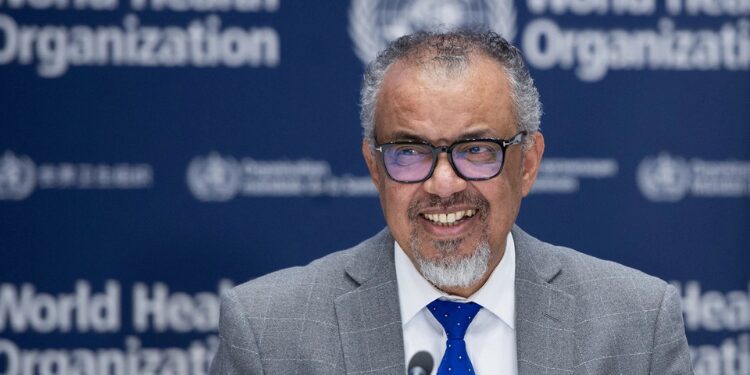
WHO Director-General Dr Tedros Adhanom Ghebreyesus stated that, the situation in the country’s east represents a “catastrophic collision of disease and conflict,” with the outbreak in Ituri province continuing to outpace containment efforts.
In a statement posted on X, Dr Tedros noted that, the organzation “cannot build community trust or isolate the sick while bombs are falling,” highlighting the scale of operational challenges facing frontline responders.
Health authorities have reported that the outbreak has already resulted in approximately 220 suspected deaths, while around 1,000 people are currently showing symptoms consistent with Ebola infection. However, only a small number of cases have so far been confirmed through laboratory testing, highlighting major gaps in surveillance and diagnostic capacity.
The outbreak, centred in Ituri province, is being driven by a rare strain of Ebola known as Bundibugyo, for which there are currently no approved vaccines or specific treatments. Medics have described the situation as increasingly difficult to control, with limited testing capacity and major logistical barriers preventing a clear understanding of the outbreak’s full scale.
According to the WHO Chief, bringing transmission under control depends entirely on ensuring safe and sustained humanitarian access. However, ongoing clashes between armed groups have triggered mass displacement, forcing exposed contacts into overcrowded camps and breaking down vital containment efforts.
Frontline health workers, he added, are operating under extreme pressure, with repeated attacks on health facilities making it nearly impossible to trace contacts or effectively isolate suspected cases. He further called for an immediate ceasefire to allow humanitarian teams safe passage and uninterrupted response operations.
The security crisis in Ituri has been compounded by weak infrastructure and poor road networks, which further delay the movement of medical teams and supplies.
The region has also been under military administration since 2021, when civilian governance was replaced in an effort to stabilise areas affected by numerous armed groups.
Global Alarm Grows as Ebola Spreads in Conflict-Ridden Eastern DR Congo
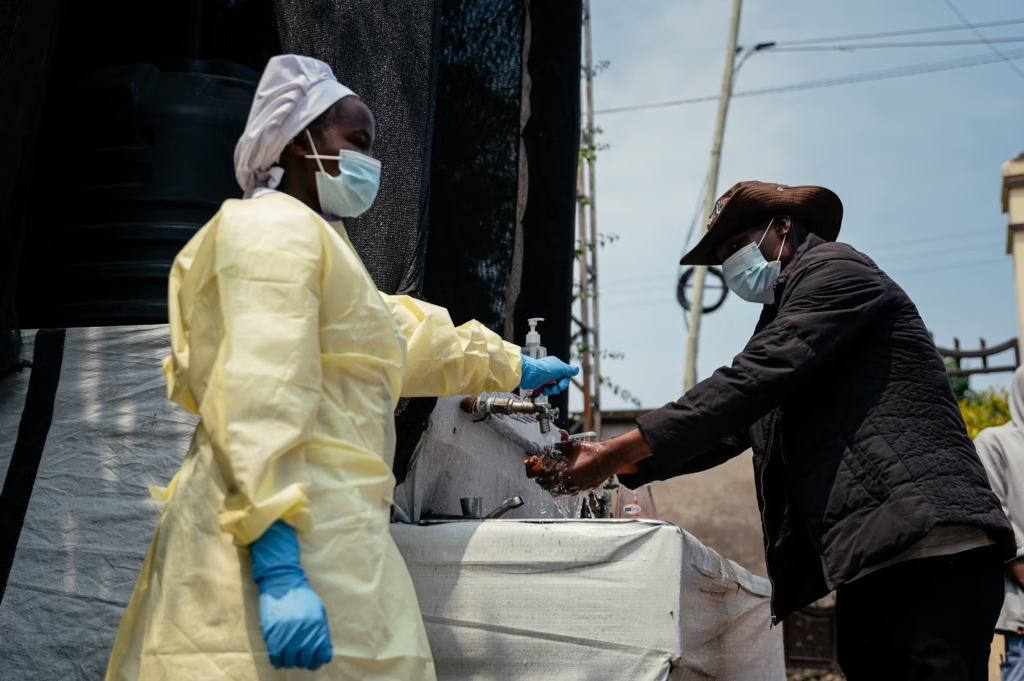
According to humanitarian organisations on the ground, including Médecins Sans Frontières (MSF), efforts to establish effective containment measures remain far behind the pace of transmission. MSF officials indicated that while some progress is being made in deploying staff and supplies, insecurity and transport challenges continue to hinder operations.
Ewald Stals, MSF’s country Director in DR Congo, highlighted that responders still lack a complete picture of the outbreak due to insufficient testing and limited access to affected areas. He warned that the response is effectively “running behind the virus,” with health teams struggling to catch up as new cases emerge faster than they can be identified and isolated.
Authorities are also facing the challenge of tracing approximately 3,600 contacts linked to confirmed and suspected cases, a task made more difficult by population movement and displacement across conflict zones. Around 2,000 test kits have already been distributed, with a further 4,000 expected to be deployed to strengthen diagnostic capacity.
Experimental treatments, including antibody-based therapies developed internationally, are being considered for possible deployment as part of the response strategy, though logistical and safety concerns remain.
Furthermore, international concern over the outbreak’s spread has also prompted tighter travel controls. Several countries have introduced temporary restrictions on travellers from DR Congo and neighbouring Uganda and South Sudan, while other nations have imposed quarantine measures or entry bans in an effort to prevent cross-border transmission.
United States has also introduced restrictions on non-citizens who have recently travelled from affected regions, reflecting growing global concern about the outbreak’s potential to spread beyond Central Africa.
Despite these measures, health experts warn that containment will depend primarily on stabilising conditions within eastern DR Congo itself. Aid workers emphasised that without improved security, stronger testing capacity and uninterrupted humanitarian access, efforts to control the outbreak will remain severely constrained.
Moreover, the European Centre for Disease Prevention and Control (ECDC) has also announced it is increasing its presence in the region, deploying additional experts through the EU Health Task Force to support surveillance and response operations.
As the crisis deepens, health officials continue to stress that the combination of armed conflict, population displacement and fragile health systems is creating one of the most complex Ebola response environments in recent years, with the virus continuing to spread faster than it can be contained.
READ ALSO: BoG Appeals Ruling Restoring GN Savings and Loans License