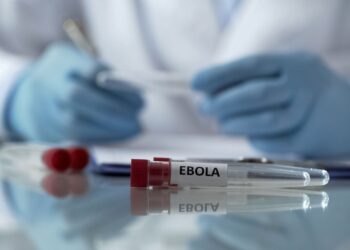
Uganda has confirmed two additional Ebola cases, bringing the total number of infections recorded in the country to seven as health authorities intensify efforts to contain a regional outbreak that continues to spread across parts of Central and East Africa.
According to Uganda’s Ministry of Health, both patients have been admitted to a designated treatment unit and are receiving medical care while health officials conduct contact tracing to identify and monitor individuals who may have been exposed to the virus.
The announcement comes just days after Uganda confirmed three new Ebola infections, including a Ugandan driver, a Ugandan health worker and a woman from the Democratic Republic of Congo (DRC), where the outbreak remains most severe.
The growing number of infections has heightened concerns about cross-border transmission as health authorities race to prevent wider regional spread.
Uganda’s confirmed cases are linked to an outbreak that has been centered in eastern Democratic Republic of Congo, where health officials continue to struggle against a rapidly escalating health emergency.
The Africa Centres for Disease Control and Prevention (Africa CDC) warned that at least ten African countries are at increased risk of infection due to high population movement, regional insecurity, and porous borders.
Africa CDC Director-General Jean Kaseya mentioned that the countries at risk include Angola, Burundi, the Central African Republic, the Republic of Congo, Ethiopia, Kenya, Rwanda, South Sudan, Tanzania, and Zambia.
The warning followed the World Health Organization’s decision to elevate the outbreak to its highest risk level and declare it an international public health emergency.

In the Democratic Republic of Congo, the situation continues to deteriorate. Congolese authorities reported that the number of suspected Ebola infections had surpassed 900 cases, while 119 suspected deaths had been recorded, the majority concentrated in Ituri Province, the epicentre of the outbreak.
The latest figures represent a sharp increase from earlier reports that identified more than 700 suspected cases. Although the number of suspected fatalities was revised downward from previous estimates exceeding 170 deaths, officials did not immediately explain the adjustment.
Health experts warn that the outbreak is unfolding under exceptionally difficult conditions. Years of conflict, widespread displacement, fragile healthcare infrastructure and shrinking international aid budgets have combined to create an environment in which disease control efforts face significant obstacles.
Before the outbreak intensified, aid organizations had already expressed concerns about worsening security conditions in eastern Congo. Doctors Without Borders reported that ongoing violence in Ituri had forced healthcare workers to flee and left medical facilities overwhelmed and under-resourced.
The region remains plagued by the activities of multiple armed groups. While the Congolese government officially controls Ituri Province, its authority is often challenged by rebel organizations operating in the area. Among them is the Allied Democratic Forces, a Ugandan Islamist group linked to the Islamic State, which has been blamed for numerous attacks on civilians.
Moreover, United Nations estimates that nearly one million people have been displaced by conflict in Ituri alone, creating ideal conditions for disease transmission as large populations move between communities and temporary settlements. “That means this Ebola outbreak is unfolding in communities already facing insecurity, displacement and fragile health care systems,” said Gabriela Arenas, a Regional Coordinator at the International Federation of Red Cross and Red Crescent Societies.
Health Workers Struggle to Contain Ebola
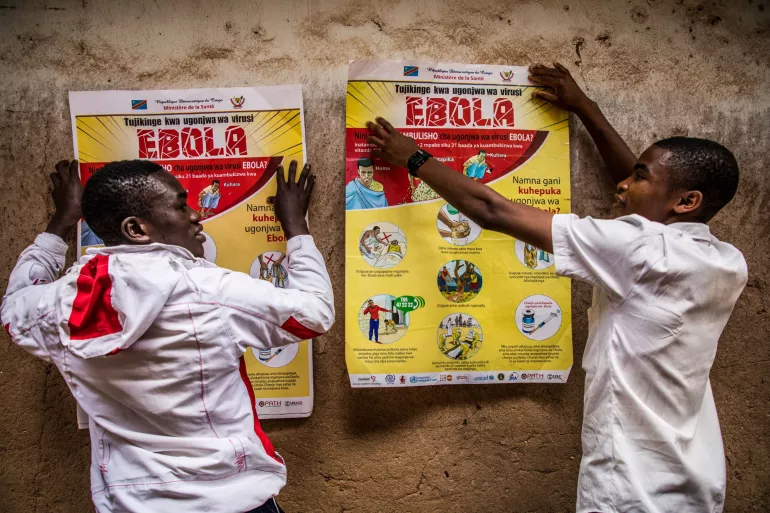
Meanwhile, health workers battling an Ebola outbreak in eastern Democratic Republic of Congo are facing mounting challenges as violence, mistrust and critical shortages of medical supplies undermine efforts to contain the disease.
Officials are particularly worried about the risk of Ebola spreading through displacement camps near Bunia, where some of the earliest cases were reported. The situation has been made worse by attacks on healthcare facilities, including the burning of treatment centres in Rwampara and Mongbwalu, two communities heavily affected by the outbreak.
Aid workers and local authorities stressed that misinformation and distrust among residents are fuelling resistance to public health measures.
The destruction of treatment centres has placed additional pressure on an already underfunded response. Humanitarian organisations warn that funding cuts by major international donors have weakened disease surveillance and emergency response efforts across the region.
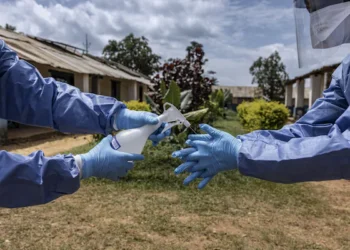
Medical teams working in affected communities further indicate that, they are struggling with shortages of protective equipment, testing materials and other essential supplies needed to safely treat patients and prevent further transmission.
According to Julienne Lusenge, President of Women’s Solidarity for Inclusive Peace and Development, which operates a small hospital near Bunia, “we have made requests to different partners, but we have not yet really received anything,” adding, “we only have hand sanitiser and a few masks for the nurses.”
Compounding the crisis is the fact that the Bundibugyo strain of Ebola responsible for the outbreak currently has no approved vaccine or treatment, limiting the options available to health authorities.
READ ALSO: Bright Simons Questions E & P-Goldbod Gold Transaction, Alleges Illegality