The Tree Crops Development Authority (TCDA) has executed a significant industrial alignment with Russian agricultural interests to fundamentally restructure Ghana’s downstream shea industry, in a formal Memorandum of Understanding (MoU) signing ceremony held in Accra.
The TCDA entered into the comprehensive MoU with Golden Forest Limited, a specialized subsidiary of Russia’s prominent EFKO Group of Companies, to inject critical capital, advanced refining technologies, and structured ecological support into a sub-sector long characterized by primary commodity flight and untapped industrial potential.
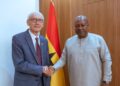
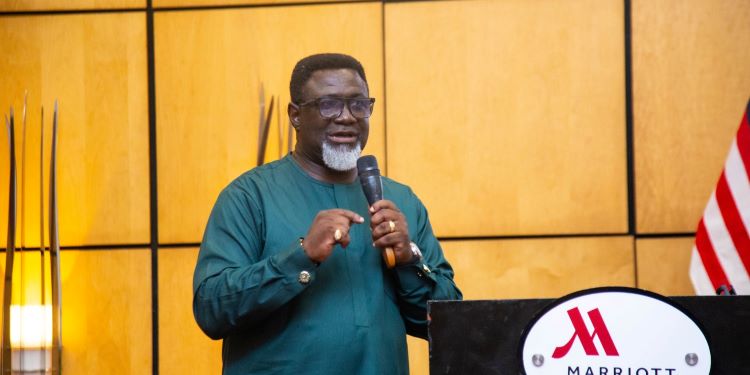
The transaction was executed directly by the Chief Executive Officer of the TCDA, Dr. Andy Osei Okrah, and the Chief Executive Officer of Golden Forest Limited, Mr. Timur Bakusev. Recognizing the broader geopolitical and economic implications of the pact, the signing assembly was witnessed by Dr. Natalia Muzhennikova, Counsellor at the Embassy of the Russian Federation in Ghana.
“The partnership represents a significant step toward our collective efforts to transform the shea value chain that delivers greater value to all actors, especially the rural women who form the backbone of the industry”
Dr. Andy Osei Okrah, TCDA CEO
According to the TCDA, the focus of this public-private alliance spans across four critical operational domains: large-scale investment in processing infrastructure, localized scientific research, extensive parkland reforestation, and the formal organization of rural women’s production cooperatives.
Globally, the commercial market for shea and its secondary derivatives – primarily utilized in international cosmetics, high-end confectionery, and specialized pharmaceuticals – is experiencing significant growth. Current market valuations position the global shea industry at approximately $2.75 billion, with aggressive mid-term projections estimating a surge beyond $5.5 billion in the coming years.
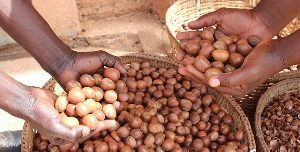
Despite this expanding global capital pool, a stark macroeconomic imbalance persists. Although West African coastal and savanna nations generate the overwhelming majority of raw shea nuts, the highly profitable secondary refining, chemical fractionation, and final product manufacturing stages are historically concentrated within European and Asian industrial zones.
This lopsided arrangement leaves domestic economies vulnerable to primary commodity price cycles while depriving state coffers of vital foreign exchange and value-added tax revenues. The alliance with the EFKO Group – which operates advanced oilseed and lipid fractionation facilities – aims to reposition Ghana as a dominant, self-sustaining industrial processor on the continent.
Dr. Okrah noted that this reality presents an opportunity for Ghana to reposition itself “not just as a supplier of raw materials but as a competitive player in value addition and industrial processing.”
Upgrades and Reforestation Pillars
To successfully retain value domestically, the MoU establishes a technical framework targeting the upstream supply chain and downstream processing capabilities.
A primary operational challenge facing the local sector is the ongoing degradation of indigenous shea parklands across the northern savanna ecosystem. Driven by climate-induced thermal stress, bushfires, and unauthorized land clearance for charcoal production, the wild tree populations have suffered a contraction in density.
To counteract this ecological decline, Golden Forest Limited and the TCDA will jointly fund targeted parkland rehabilitation initiatives. This environmental stabilization will be paired with strict scientific cooperation.
Agronomists from both institutions will conduct localized research into tree breeding, seedling cultivation, and disease-resistance models to reduce the long gestational periods typical of wild shea trees and improve raw nut yields.

The agreement also lays the groundwork for direct capital deployment into heavy processing infrastructure, ensuring that harvested nuts can be crushed, refined, and deodorized within local industrial enclaves.
While technical and environmental infrastructure forms the foundation of the agreement, the TCDA is using its statutory powers to ensure these industrial advancements translate into tangible welfare gains for local communities.
To shield vulnerable rural women collectors in northern Ghana from unfair buying cartels, the TCDA has introduced a series of structural regulatory reforms. These interventions include the mandatory registration and formal licensing of all value chain actors, strict export permit allocations, and the enforcement of standardized quality control systems.
Importantly, the Authority is leveraging a state-enforced minimum pricing formula. This mechanism guarantees that international processors like Golden Forest buy raw materials at a price floor that covers local production costs and secures fair wages for the thousands of women who form the backbone of the upstream sector.
Diplomacy and Technological Transfer
Beyond the immediate agricultural metrics, the alliance reflects a deliberate deepening of economic and educational ties between the Russian Federation and the Republic of Ghana.
As part of this corporate social alignment, Golden Forest Limited has committed to funding advanced higher education opportunities for young Ghanaian students. Selected scholars will pursue specialized degrees in tree crop processing, agricultural engineering, and biochemistry at leading Russian agricultural universities, building a local cohort of technical experts to manage Ghana’s future processing plants.
This focus on human capital development serves as an important prelude to broader continental economic alignments. The Russian delegation confirmed that these thematic priorities – industrial agriculture, technology sharing, and infrastructural investment – will lead the agenda at the upcoming Third Russia-Africa Summit, scheduled to take place in Moscow in October 2026.
The summit will provide a high-level diplomatic platform for African states to negotiate direct industrial partnerships, using their raw resource leverage to secure long-term manufacturing investments.
The strategic alliance between the TCDA and Golden Forest Limited sets a strong template for managing Africa’s rich resource endowments, creating an enforceable regulatory environment under Act 1010 and pairing it with large-scale international capital, to systematically address the structural vulnerabilities of Ghana’s agrarian sector.
As the joint parkland restoration projects commence and modern processing infrastructure is deployed, the country is well-positioned to capture a fairer share of the multi-billion-dollar global shea market.
READ ALSO: Black Sherif’s ‘Swagga’ Debuts at Number One on Ghana Apple Music