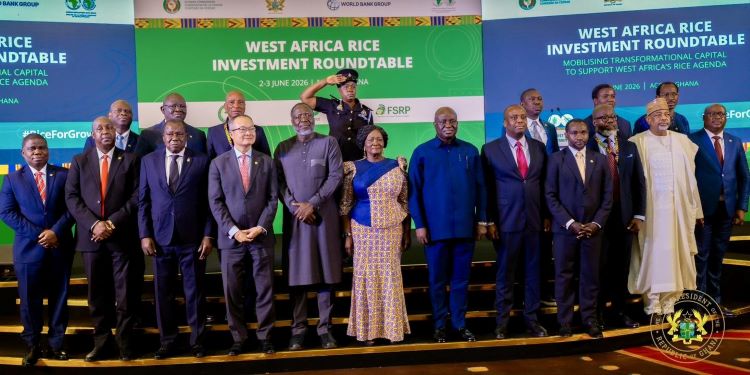
West African heads of state, international development banks, and private equity investors have concluded a major regional summit in Accra with a unified directive to aggressively scale up capital investments across the sub-regional grain value chain and achieve full rice self-sufficiency by 2035.
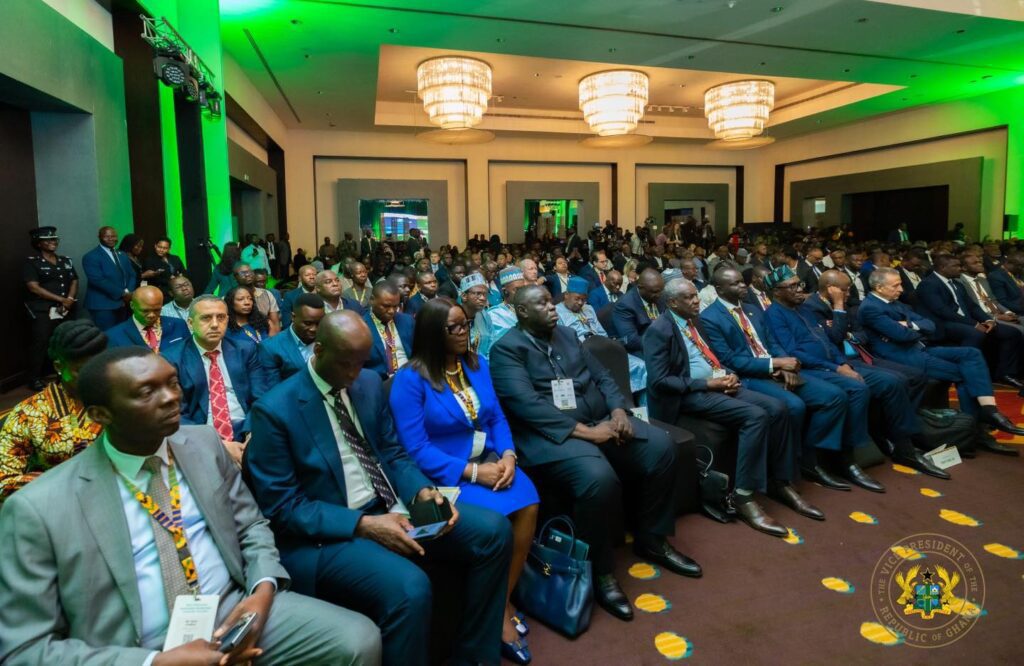
The two-day West Africa Rice Investment Roundtable, organized under the AgriConnect Initiative, brought together ministers and 15 distinct country delegations to transition national production frameworks into highly competitive, bankable commercial operations capable of halting the region’s costly reliance on foreign food imports.
According to organizers, the roundtable focused on securing concrete financial and technical partnerships to back specific National Rice Investment Action Plans, as domestic demand for rice continues to outpace local production capacities in the Economic Community of West African States (ECOWAS).
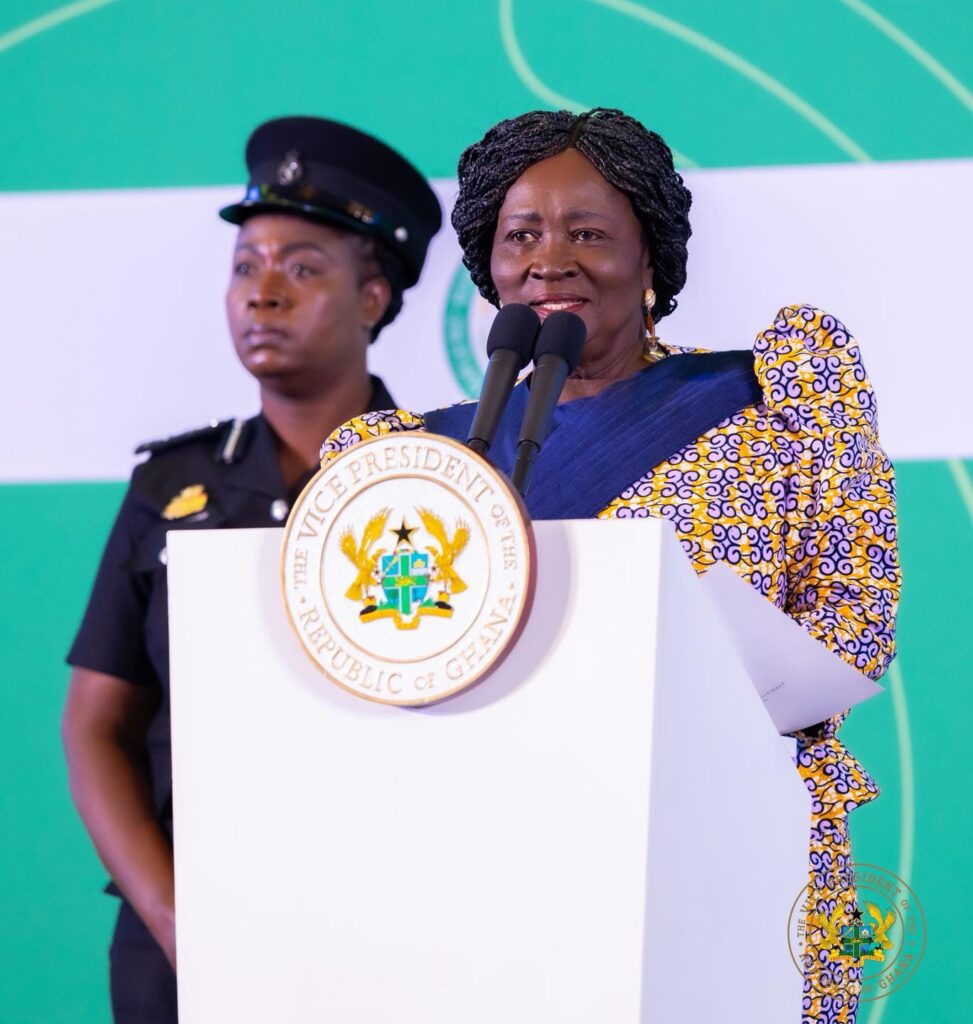
Addressing the summit, Ghana’s Vice-President, Her Excellency Prof. Jane Naana Opoku-Agyemang, emphasized that increasing crop yields alone cannot protect West African economies from global supply shocks.
Instead, state budgets and private financial institutions must collaborate to mobilize large-scale industrial capital. This funding is essential for connecting fragmented rural farms to advanced mid-stream processing factories, ensuring that local economies capture the full financial value of their harvests.
“The challenge before us is not just about growing more rice, but also about mobilizing the scale of capital required to transform agriculture from a subsistence sector to commercial production, and from fragmented production to integrated value chains.
“We must therefore also see rice as a strategic economic asset. It is about jobs for young people, incomes for farmers, and strengthening the resilience of our economies against future global shocks”
Vice-President, Prof. Jane Naana Opoku-Agyemang
Gathering public policymakers, technical experts, and agribusiness leaders around a single, unified regional agenda, the primary focus of the West Africa Rice Investment Roundtable was the urgent need to fundamentally redefine how agricultural cultivation is funded and managed across the region.
The Accra summit rejected treating the agrarian sector primarily as a social safety net focused on basic rural survival, with policymakers arguing that true regional resilience requires a complete shift toward large-scale commercial agribusiness and highly integrated processing networks.
To support this industrial transition, the roundtable identified several critical investment areas across the rice supply chain that require immediate funding. West Africa’s current agricultural vulnerability stems from severe deficits in secondary infrastructure, such as unreliable rural transport networks, poor irrigation systems, and outdated post-harvest storage facilities.
These deficiencies lead to high product spoilage rates and inflate the market price of locally grown rice, making it difficult to compete with heavily subsidized imports from Asia. The 15 attending country delegations presented a coordinated regional pipeline of bankable projects based on their respective national rice strategies to fix these structural bottlenecks.
According to the West Africa Rice Investment Roundtable, resolving these challenges requires setting up dedicated risk-sharing financial tools, strengthening public-private partnerships (PPPs), and standardizing trade policies across West African borders.
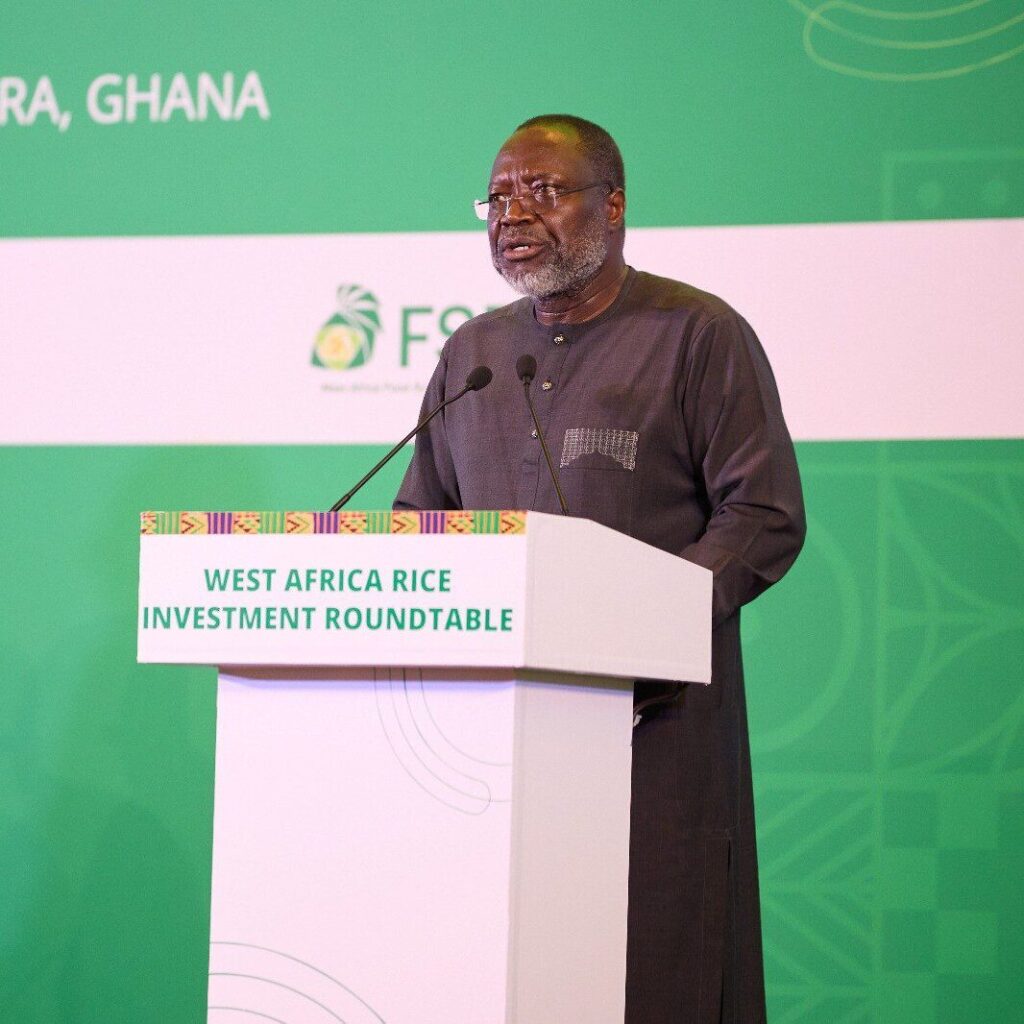
Outlining this vision, the President of the ECOWAS Commission, Dr. Omar Alieu Touray, explained that this regional cooperation will be closely monitored through institutional oversight platforms, including the ECOWAS Rice Observatory, and will be formalized under an upcoming Regional Rice Investment Compact to build investor confidence.
“Our ambition is clear: to build more competitive, inclusive, and sustainable agrifood systems that strengthen food sovereignty, create economic opportunities, contribute to shared prosperity, and progressively achieve regional rice self-sufficiency by 2035.
“This Roundtable must therefore serve as a catalyst for action. It must strengthen investor confidence, reinforce partnerships, accelerate financing for bankable opportunities, and help build a more competitive, resilient, and self-sufficient regional rice economy”
Dr. Omar Alieu Touray, President of the ECOWAS Commission
AgriConnect Compact
On the sidelines of the regional summit, the Government of Ghana formally launched its own country-led AgriConnect Compact. This comprehensive development framework positions modern agriculture as the primary driver of Ghana’s long-term economic transformation and macroeconomic stabilization.
The aggressive five-year plan aims to mobilize a $3.5 billion investment program to overhaul several key domestic value chains, including rice, maize, cocoa, oil palm, and poultry. The macroeconomic targets of Ghana’s new compact are substantial.
Over its initial five-year deployment phase, the initiative is designed to create more than 2.6 million sustainable jobs and directly improve food and nutrition security for nearly 3 million citizens, using an integrated systems approach to direct large-scale funding into automated irrigation services, widespread farm mechanization, climate-smart farming techniques, and digital market innovations.
Endorsing the strategy, the World Bank Group Vice-President for Planet, Guangzhe Chen, noted that Ghana’s approach serves as an operational blueprint for how other West African nations can design market-led agricultural programs to attract international private capital.
“Ghana’s AgriConnect Compact demonstrates how this agenda can deliver jobs, strengthen resilience, and drive inclusive growth at scale,” he stated, adding that the long-term success of West Africa’s agricultural modernization depends entirely on its ability to productively engage the continent’s rapidly growing youth population.
Revitalizing the sector requires treating agriculture as a highly profitable, technology-driven business sector capable of fueling industrialization and generating high-value employment, as the lack of mechanization and low profitability in traditional farming have driven young people away from rural communities and toward urban centers.
Closing out the discussions on workforce transformation, the Director of Agricultural Finance and Rural Development at the African Development Bank, Mr. Richard Ofori-Mante, emphasized that the modern rice value chain offers diverse entrepreneurial opportunities far beyond basic field labor.
He stated that directing public and private capital into advanced processing, logistics, and digital agriculture is essential to turning Africa’s rapid population growth into a powerful economic asset.
“Agriculture must no longer be treated as a social sector; it must be recognized as a productive economic sector capable of driving growth, creating jobs, and powering industrialization. At the center of this transformation is Africa’s youth.
“The rice value chain offers substantial opportunities across irrigation services, mechanization, processing, logistics, digital agriculture, and agribusiness entrepreneurship. Harnessing this potential is essential to turning Africa’s demographic growth into an economic dividend”
Mr. Richard Ofori-Mante, Director of Agricultural Finance and Rural Development at the African Development Bank
For stakeholders, the transition away from low-yield subsistence farming toward structured, commercial agribusiness is no longer just a policy preference – it is an economic necessity.
Implementing these national investment plans, expanding regional logistics networks, and deploying next-generation agricultural technologies will allow West African nations to systematically reduce their import bills, insulate their currencies from external shocks, and secure long-term food sovereignty for the entire sub-region.
READ ALSO: Mahama Heads to Belarus, Eyes Strategic Partnerships to Boost Reset Agenda