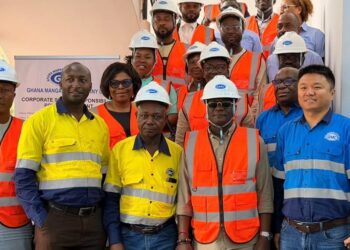
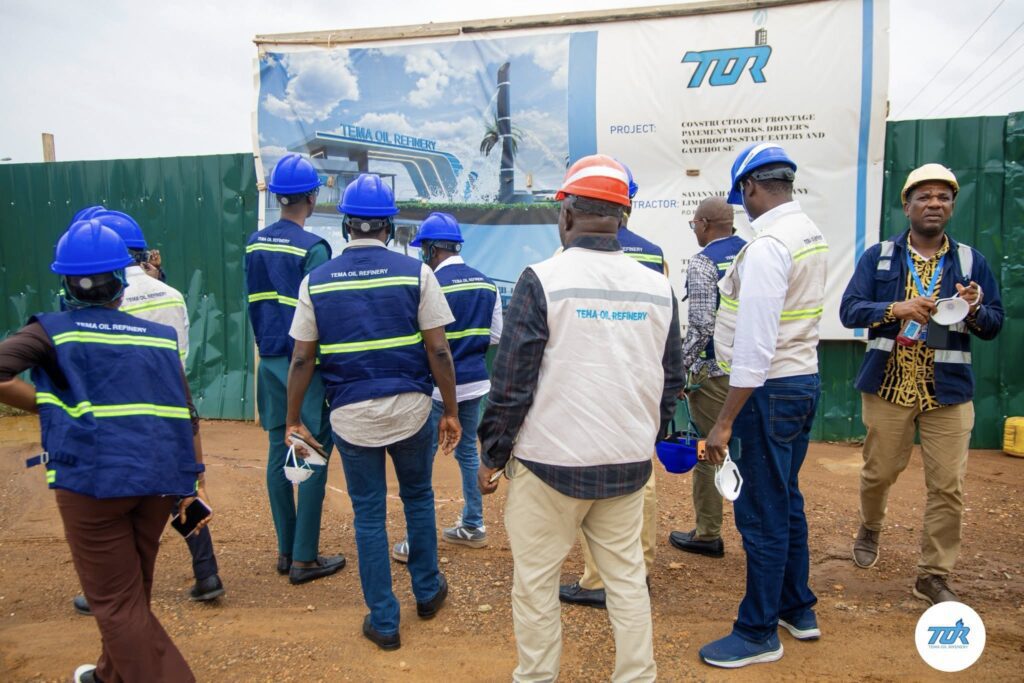
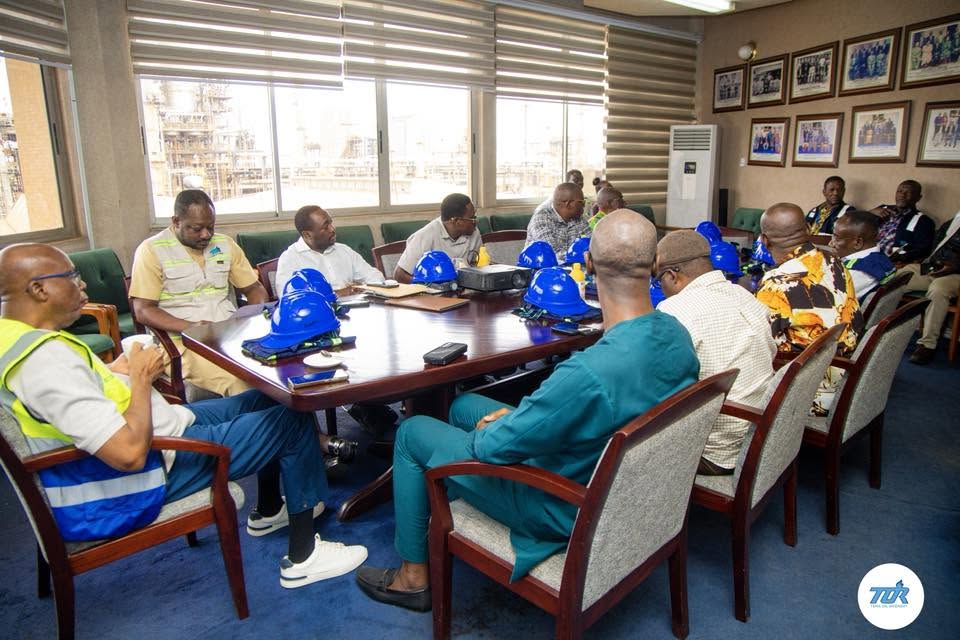
Board of Directors of Tema Oil Refinery (TOR) has conducted an extensive working visit to the facility to inspect critical infrastructure developments and review strategic blueprints for a new, state-of-the-art loading gantry.
This high-profile facility inspection aligns perfectly with the state-backed refinery’s ambitious strategy to achieve comprehensive corporate expansion and long-term commercial sustainability.
By actively monitoring these core developments, the leadership aims to transition the institution into a highly efficient energy hub that meets international standards.
“The visit forms part of TOR’s Reset and Rebranding Agenda, which includes the renovation of offices, repair of fuel storage tanks, improvement of driver welfare facilities, and the reconstruction of the refinery’s frontage. The Board also inspected the proposed site for a new loading gantry that will support TOR’s planned expansion and improve operational efficiency.”
Tema Oil Refinery (TOR)

The corporate leadership closely evaluated several key assets, including ongoing office renovations, critical maintenance on bulk fuel storage tanks, enhanced driver welfare facilities, and a complete reconstruction of the refinery’s main frontage.
Beyond immediate repairs, the primary focus centered on checking out the designated land site for a modern loading gantry, which will serve as the technical backbone for expanding operations.
These combined efforts represent the practical execution of the refinery’s structural turnaround campaign, optimizing product distribution channels while revitalizing the physical appearance of Ghana’s premier processing facility.
Infrastructure Transformation and the Reset Agenda
The Board of Directors emphasized that these physical upgrades are vital steps within the framework of TOR’s ongoing “Reset and Rebranding Agenda.”
Overhauling old storage tanks directly increases total storage capabilities, allowing the domestic midstream sector to keep larger petroleum reserves.
Simultaneously, updating the driver welfare spaces guarantees safer, more regulated environments for bulk vehicle operators, drastically lowering turn-around times while minimizing safety hazards during overland transport.
Engineers at the site explained that integrating a modernized loading gantry will remove the distribution friction that previously slowed down commercial operations.
Moving from legacy loading platforms to an automated, multi-product gantry will optimize flow rates and allow several product tankers to fill up at the same time.
The planned reconstruction of the facility’s frontage further signals a complete corporate rebranding, moving the state asset away from past operational challenges toward a future of corporate transparency and reliability.
Alleviating Pressures in Ghana’s Upstream Petroleum Sector
Analysis of Ghana’s broader energy market reveals that restoring TOR to full operational efficiency will provide massive financial relief to the domestic upstream petroleum sector.
Historically, crude oil produced within Ghana’s local offshore fields such as the Jubilee, Tweneboa-Enyenra-Ntomme (TEN), and Sankofa-Gye Nyame fields is exported entirely as raw material, while the state spends billions of dollars importing expensive, refined petroleum products.
By building a reliable, expanded midstream processing center, local upstream producers gain a strategic domestic customer, keeping the economic value chain completely within the borders of the country.
This structural shift significantly alters the economics of the country’s petroleum trade. Localizing the processing of crude oil reduces heavy reliance on foreign refineries, insulating Ghanaian consumers from global freight premiums and volatile international supply shocks.
Furthermore, an efficient refinery relieves intense pressure on the central bank’s foreign exchange reserves, as bulk distribution companies will no longer need to scramble constantly for United States dollars to finance basic fuel imports.
Driving Regional Energy Security and Economic Resilience
The long-term success of this expansion plan will establish the state refinery as a vital player in West Africa’s regional energy market.
Enhancing bulk storage capacity and optimizing loading logistics allows the nation to reliably supply landlocked neighbors like Burkina Faso, Mali, and Niger with high-quality refined products.

Ultimately, this corporate modernization ensures that the nation secures maximum value from its natural resources.
Removing logistical bottlenecks at the refinery secures a steady supply of essential fuels, providing a stable foundation for industrial manufacturing, agricultural logistics, and commercial transport across the country.
Through disciplined governance and targeted infrastructural investments, the refinery is actively building a resilient corporate foundation capable of guaranteeing national energy independence for the next generation.
READ ALSO: NBA Finals: Knicks Fend Off Late Spurs Comeback to Surge into a 2-Game Lead