
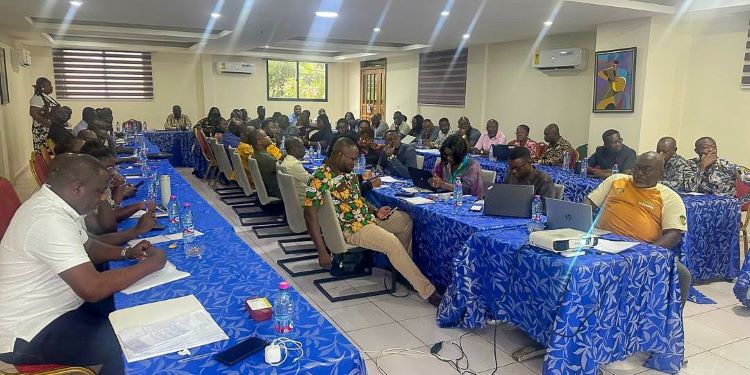
The Ghana Cocoa Board (COCOBOD) recently gathered key operational actors and institutional division heads in Aburi for a high-stakes strategic workshop to engineer the upcoming nationwide distribution of critical agricultural inputs.
This massive administrative mobilization comes as a decisive precursor to the official rollout of the Cocoa Diseases and Pests Control (CODAPEC) and Hi-Tech input distribution programmes for the highly anticipated 2025/2026 cocoa crop season.
Facing a clear institutional imperative to maximize national yields and reinforce the economic foundations of the agrarian sector, COCOBOD is utilizing this technical forum to completely harmonize its multi-layered regulatory and extension machinery.
“Welcoming participants to the workshop, Dr Richard Adu Acheampong, Executive Director of Cocoa Health and Extension Division (CHED), underscored the importance of a successful distribution exercise, noting that the effective delivery of inputs remains critical to improving cocoa productivity and supporting the livelihoods of cocoa farmers across the country”
Ghana Cocoa Board
The workshop highlights a proactive push by management to resolve field challenges through early alignment and robust logistical planning before the distribution begins across all districts, serving as the primary mechanism for breaking down operational silos among departments that frequently operate independently.



Gathered within the Aburi technical sessions are senior management teams and field staff from the CHED, the Seed Production Division (SPD), and the Cocoa Research Institute of Ghana (CRIG). Recognizing that large-scale logistical rollouts require substantial administrative padding, COCOBOD has also fully embedded its Special Services, Legal, and Public Affairs Departments directly into the core planning tracks.
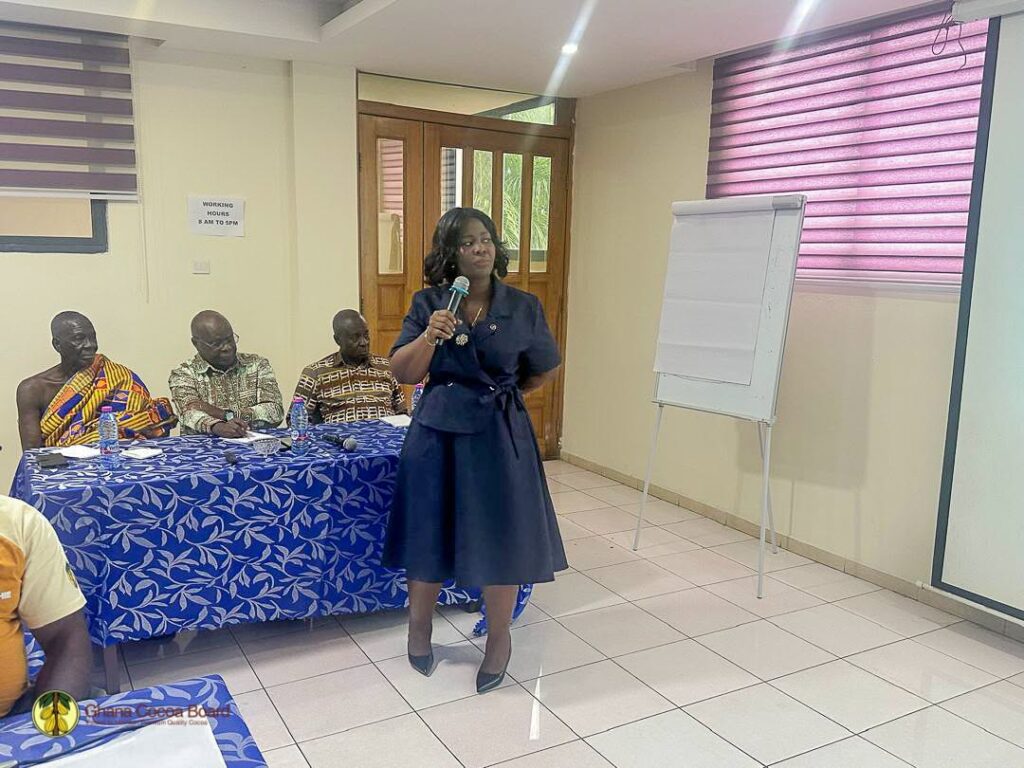
More importantly, technical personnel from the Cocoa Management System (CMS) Unit are working alongside members of the CHED Management Committee to ensure that the entire 2025/2026 rollout is anchored in exact digital tracking metrics and sound governance frameworks.
The objective of this cross-departmental gathering is to “align operating strategies, solidify institutional collaboration, and secure a seamless delivery mechanism” across all cocoa-growing regions and local districts.
Bringing the scientific research capacity of CRIG together with the extension networks of CHED and the specialized seed development teams of SPD, COCOBOD aims to establish an integrated operational loop that ensures scientific input specifications are perfectly synchronized with practical field logistics and local soil requirements.
Furthermore, integrating the Legal and Public Affairs directorates ensures that contractual safeguards and public communications are finalized simultaneously, mitigating administrative delays or localized information gaps.
Dr. Acheampong noted that the Aburi platform provides an invaluable space for stakeholders to dissect operational blueprints, identify potential field bottlenecks, and fortify communication channels before vehicles leave central supply depots.
Operational Restructuring
To ensure that the advanced strategies formulated during the Aburi sessions are effectively executed on the ground, CHED leadership is enforcing a strict protocol of vertical knowledge transfer.
Dr. Acheampong directed all managers and supervisors to cascade the technical updates, operational insights, and administrative directives acquired during the workshop directly down to their respective field teams, establishing a completely uniform understanding of the 2025/2026 distribution guidelines across all administrative levels.
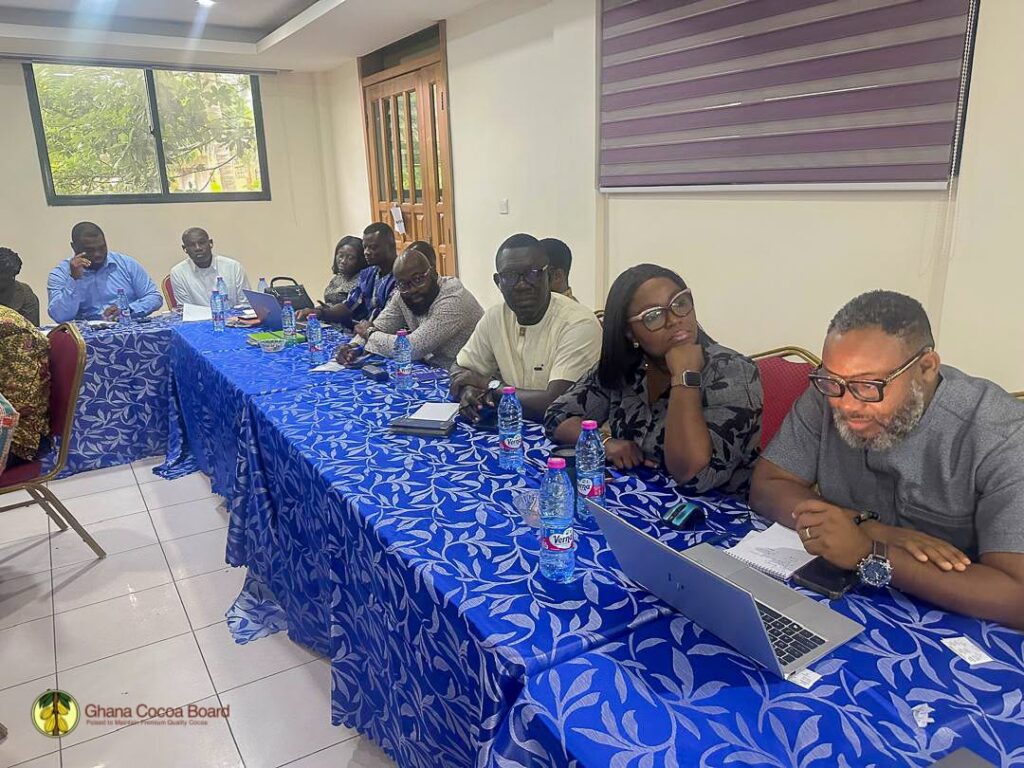
Standardizing the operational knowledge shared with grassroots field officers is expected to prevent localized discrepancies in input delivery, ensuring policy compliance and uniform execution, whether an input is deployed in deep rural districts or major regional hubs.
“Attach importance to the workshop and openly offer suggestions to improve the rollout strategies,” Dr. Francis Kofi Oppong said, on behalf of the CHED Management Committee, underscoring an internal management push for absolute institutional candor and thorough peer evaluation.
COCOBOD revealed that a core pillar of the Aburi technical sessions is the introduction of entirely new distribution modalities engineered by the CODAPEC Directorate under the supervision of its Director, Mr. Abu Seidu.
These updated modalities represent a direct response to previous supply chain inefficiencies and are aimed squarely at maximizing resource optimization across all growing areas. Mr. Seidu addressed the assembled institutional stakeholders with an urgent call for collective diligence and cross-departmental collaboration.
The newly introduced modalities are to establish an airtight, highly visible distribution chain that prioritizes cost efficiency, rapid transit, and absolute transparency, ensuring that every unit of fertilizer and pest control input is fully accounted for.
To structurally secure these performance benchmarks of transparency and public accountability, the workshop placed an unprecedented emphasis on leveraging digital technology through the active involvement of the Cocoa Management System (CMS) Unit, with detailed presentations from each participating unit and department.
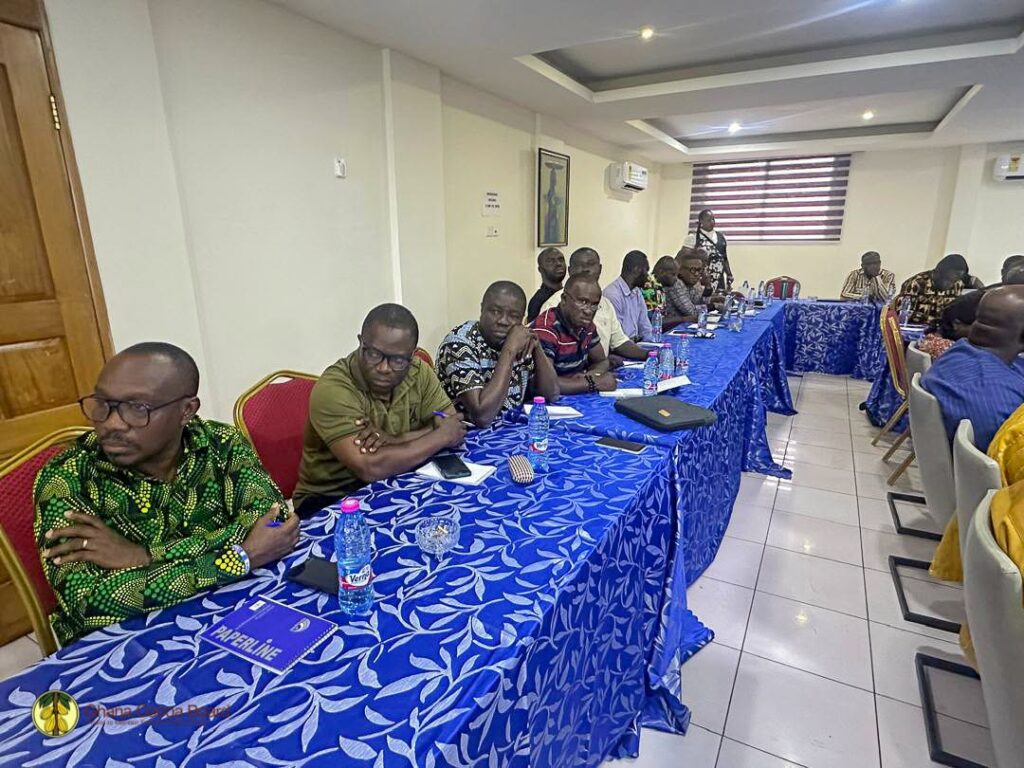
These comprehensive presentations will finalize the Board’s collective approach to reinforcing data accountability, upgrading reporting timelines, and guaranteeing the synchronized, highly efficient delivery of CODAPEC and Hi-Tech inputs to cocoa farmers nationwide.
READ ALSO: Putin Slams EU Sanctions Against Children’s Centers