
The recalibration of Ghana’s agricultural education is moving away from purely abstract theories toward practical, sector-specific industrial training, with the Ashanti Regional Directorate of the Fisheries Commission leading the transformation via its recently organized “Aquaculture & Career Fair.”
Hosted at KANTA FISH VILLAGE in Wioso, located within the Atwima Nwabiagya District, this targeted youth intervention addressed a critical issue: the persistent gap between academic curricula and the operational realities of modern agritech industries, bringing together students and educators from Toase Senior High School and Nkawie Senior High Technical School.
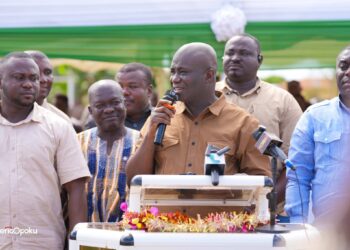
According to the Fisheries Commission, the intensive training framework demystified commercial fish production and showed the massive career potential waiting within the country’s blue economy.
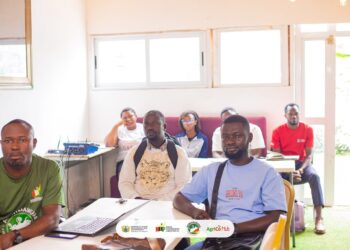
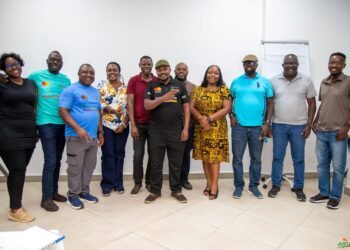
“The program was conducted in two separate sessions for the participating schools, bringing together 170 students and tutors from the Science, Agriculture, and Home Economics departments of both institutions. The training aimed to equip participants with practical knowledge in aquaculture”
Fisheries Commission
The Commission noted that modern aquaculture is no longer a simple backyard activity; it is a complex scientific discipline that requires a mix of biological expertise, structural engineering, and advanced nutritional science.
Introducing these specific student cohorts to KANTA FISH VILLAGE – a commercial facility that serves as a practical model for local industrial operations – the Fisheries Commission successfully connected classroom theory with hard, real-world execution. Students were able to directly visualize the spatial, drainage, and biological considerations taught during the field sessions.

This clear visual structure highlighted the exact transition from traditional, unmanaged water bodies to heavily controlled, biosecure fish production cells. The core of the training was strictly experiential, allowing students to step away from their textbooks and engage directly with functional industrial infrastructure.
Experienced technical officers from the Commission walked the students through the delicate mechanics of fish hatchery operations, demonstrating the precise temperature, oxygen, and nutritional balances required to successfully raise fragile fish fingerlings.
The educational tour went deep into the engineering requirements of pond and tank construction, explaining how soil composition, water inflow designs, and specialized pond liners prevent catastrophic stock loss.
Additionally, participants were taught the daily operational habits of water quality monitoring. They learned how to use testing kits to measure dissolved oxygen levels, pH balances, and ammonia concentrations – the fundamental chemical baselines that determine the survival or failure of a commercial fish crop.
Beyond raw production, the training program focused heavily on post-harvest value retention. Home Economics and Agriculture students received instruction in hygienic fish handling and processing techniques designed to dramatically cut down post-harvest losses and ensure consumer safety.
Finally, the Commission’s team introduced basic fish disease diagnostics, showing the students how to spot early signs of parasitic or bacterial infections that could otherwise ruin a commercial farm’s entire stock.
Rebranding Aquaculture
A central goal of the joint initiative was to fundamentally reframe how the younger generation views the fisheries sector.

For too long, secondary school agriculture has been mistakenly viewed as a low-tech, low-return industry or a secondary subsistence path. The Fisheries Commission directly challenged this outdated view by presenting aquaculture as a highly profitable corporate business and a key driver of national economic health.
Technical directors explained how local fish cultivation directly supports Ghana’s broader macroeconomic stability by strengthening national food security, building resilient livelihoods for rural communities, and generating sustainable employment opportunities that keep local capital circulating within the country.
Detailing the stark supply-and-demand realities of the domestic fish market, the Commission showed the students that aquaculture is a wide-open commercial landscape, noting that as wild fish stocks face mounting environmental pressures, controlled fish farming is emerging as the primary way to satisfy the nation’s protein needs.
This economic reality means that entering the aquaculture value chain is not just a path to steady employment, but a direct contribution to national self-reliance, helping reduce the millions of dollars currently spent on importing frozen fish from foreign fleets.
The program concluded with an interactive “Career Fair” segment that systematically broke down the diverse professional positions available across the modern aquaculture value chain. Commission experts mapped out clear educational pathways and strict professional certifications required to enter various fields, showing students that the industry extends far beyond the physical work of managing a pond.
The fair highlighted vital technical careers including specialized fish nutritionists, hatchery managers, aquatic veterinarians, water quality engineers, and supply chain logistics managers who oversee the distribution of fresh and processed seafood products across regional markets.
The long-term impact of the event was clearly reflected in the highly positive feedback from both students and faculty members.

Tutors from Toase SHS and Nkawie SHTS praised the commission for providing an invaluable educational supplement, noting that the practical exposure at KANTA FISH VILLAGE gave their students a deep, intuitive understanding of concepts that are incredibly difficult to convey through standard classroom lectures alone.
Encouraged by the rapid skills acquisition seen during the sessions, the educators strongly urged the Fisheries Commission to institutionalize this program, turning it into a regular training cycle for secondary schools across the entire region.
READ ALSO: Trump Accuses Iran Of Shooting Down U.S Apache Attack Helicopter