
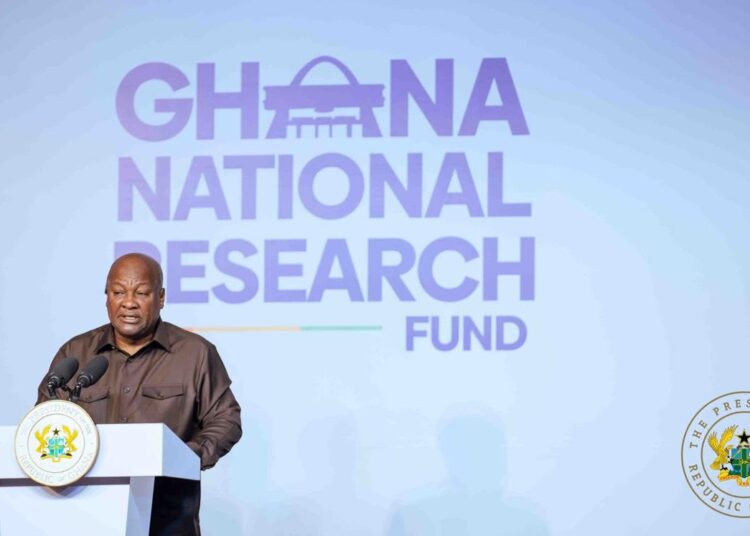
President John Dramani Mahama has unveiled the Ghana National Research Fund for 2026 with an initial allocation of GHS100 million, describing research as a central engine for economic growth, social development, and national competitiveness.
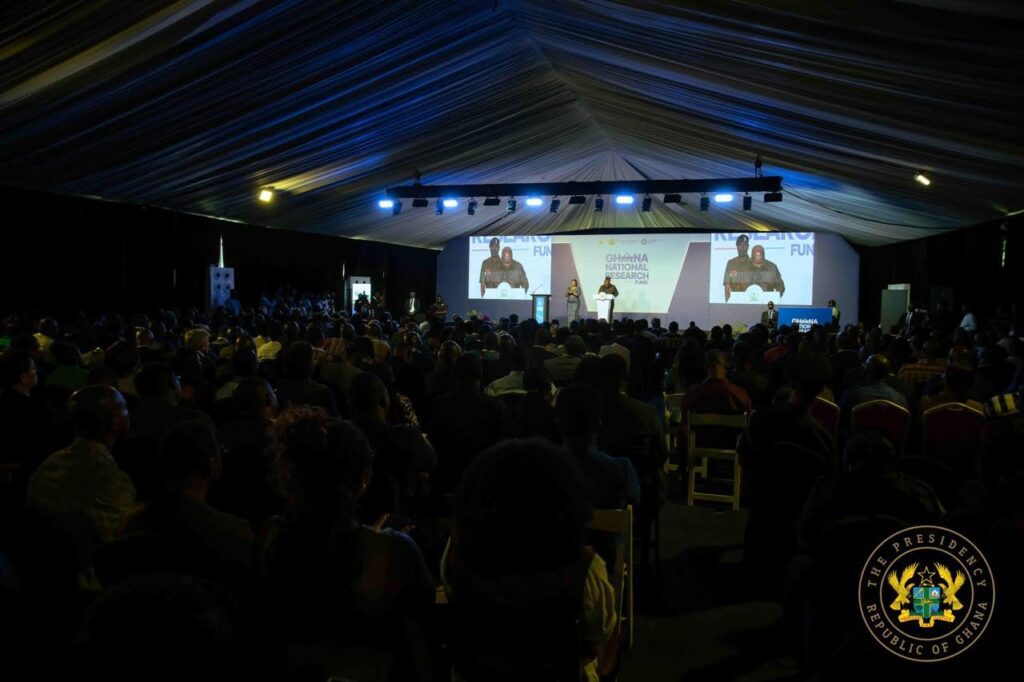
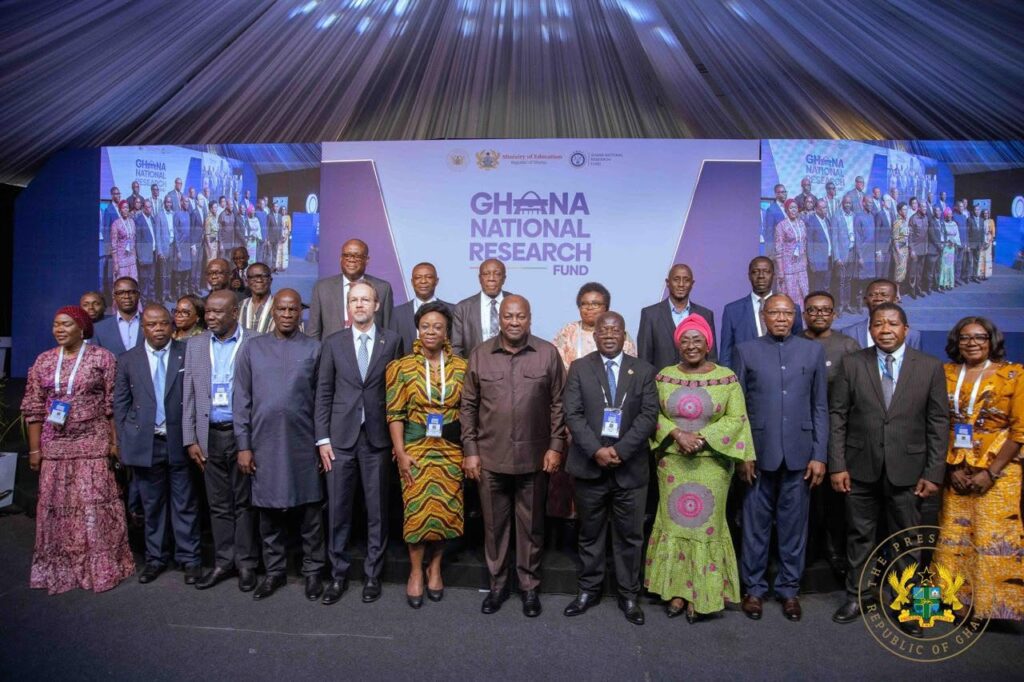
The announcement was made at the official launch held at the Labadi Beach Hotel in Accra, where government officials, researchers, and development partners gathered to mark the operational rollout of the new national research financing framework.
President Mahama stated that Ghana’s development path has always been shaped by the role of knowledge, science, and innovation, stressing that research can no longer be treated as a peripheral activity.
“Today, Ghana affirms that research can no longer be treated as a peripheral activity. It must become one of the engines that drive our economic growth, our social progress, and our national competitiveness.”
President John Dramani Mahama
He linked the current initiative to the vision of Osagyefo Dr Kwame Nkrumah, who he said recognised early that industrialisation and self reliance required the deliberate generation of local knowledge, technologies, and solutions rather than dependence on imported expertise.

He also acknowledged former President John Evans Atta Mills for consistently promoting science, technology, innovation, and research as pillars of national development, noting that the Ghana National Research Fund reflects a long standing vision associated with him.
According to the President, the passage of Act 1056 in 2020 provided the legal foundation for the Fund, and he acknowledged the role of the previous NPP administration under former President Akufo-Addo in supporting its passage through Parliament.
Building a Knowledge Driven Economy
President Mahama said that in the 21st century, nations compete not only on natural resources or capital but on ideas, innovation, and their ability to transform knowledge into productivity and prosperity.
“Every major technological breakthrough that has transformed human society from modern medicine and telecommunications to artificial intelligence, biotechnology, renewable energy and advanced manufacturing has been made possible by deliberate government and institutional investment in research”.
President John Dramani Mahama
He stressed that Ghana cannot pursue industrial transformation while underinvesting in knowledge creation, adding that long term development depends on productivity growth driven by research, skills, and technological advancement.
The President said Ghanaian researchers have demonstrated resilience despite limited funding, often producing valuable work under constrained conditions, but noted that reliance on fragmented and externally driven funding models remains a structural challenge.

Aligning Research With National Development Goals
President Mahama explained that the Ghana National Research Fund is designed to directly support the country’s broader transformation agenda, including the 24-hour economy initiative, export development programme, agricultural modernisation, agro-processing, manufacturing expansion, healthcare improvement, digital transformation, and renewable energy development.
He stated that every major national policy direction requires innovation, and every innovation depends on a strong research ecosystem supported by predictable financing.
“Macroeconomic stability remains important and the government has taken difficult but necessary measures to restore confidence in our economy. However, long-term transformation cannot rely on macroeconomic stability alone.”
President John Dramani Mahama
The Ghana National Research Fund, he said, will prioritise mission-driven research that addresses real national challenges and produces practical outcomes for citizens.
Focus on Agriculture, Health, and Industrial Innovation
President Mahama highlighted the importance of research in addressing agricultural challenges such as pest and disease outbreaks affecting maize, cocoa, cotton, and other key crops.
He stressed the need for cocoa varieties resistant to swollen shoot disease, cotton resistant to boll weevil infestation, and improved maize protection against armyworm outbreaks.
He also pointed to food safety concerns and the need to reduce post harvest losses, noting that Ghanaian consumers require safer and more reliable food systems.
The President further observed that while Ghana has made scientific progress, a major challenge remains the translation of research into large scale commercial production.
He cited examples of locally developed innovations, including non-toxic pesticides, which he said require stronger support to reach farmers at scale despite Ghana’s continued reliance on imported agrochemicals.
Global Competitiveness and Innovation Imperatives
President Mahama noted that global economic competition is increasingly shaped by rapid advances in artificial intelligence, biotechnology, automation, and digital technologies.
He referenced global innovation assessments that highlight the importance of analytical thinking, creativity, technological literacy, resilience, and lifelong learning as essential skills for future economies.
He also observed that Ghana performs better in innovation outputs than inputs, but requires stronger investment in research infrastructure, laboratories, doctoral training, and industry collaboration.

According to him, scientific sovereignty is essential for national sovereignty, as countries that rely on imported technologies and external solutions remain structurally vulnerable.
Funding Commitment and Implementation Framework
The President announced an immediate GHS100 million catalytic allocation to support the operational launch of the Ghana National Research Fund for 2026.
He directed the Ministry of Education, the Ghana Education Trust Fund, and the Fund’s Governing Board to ensure transparent, accountable, and efficient use of the funds.
The allocation will support competitive research grants, doctoral and post doctoral programmes, digital grant management systems, and priority innovation projects aligned with national development objectives.
He also instructed the Ministries of Finance, Education, Environment, Science and Technology to fully operationalise the statutory financing framework under Act 1056 to ensure long term sustainability and scale.
Strengthening Research Institutions and Partnerships
President Mahama commended key research institutions such as the Council for Scientific and Industrial Research and the Ghana Atomic Energy Commission for their contributions to national scientific advancement.
He also referenced the African Centres of Excellence programme, including institutions such as the West Africa Centre for Crop Improvement and the West African Genetic Medicine Centre, as examples of successful research investment models.
He encouraged universities and research institutions to use the new fund to pursue ambitious, solution oriented research in food security, climate resilience, healthcare innovation, artificial intelligence, and governance.
He further supported Ghana’s participation in global initiatives such as the World Bank ACE Innovate programme to strengthen research collaboration and funding opportunities.
A Strategic Investment in Ghana’s Future
President Mahama concluded that the launch of the Ghana National Research Fund represents a deliberate investment in Ghana’s future scientists, engineers, innovators, and problem solvers.
He said the success of the Fund will depend on consistency, transparency, and a strong focus on research that delivers practical solutions to national challenges.
He formally declared the Ghana National Research Fund launched, describing it as a key instrument for building a more innovative, productive, and globally competitive Ghana.
READ ALSO: Ghana, Côte d’Ivoire Cocoa Summit Delivers New Vision for Farmer Prosperity