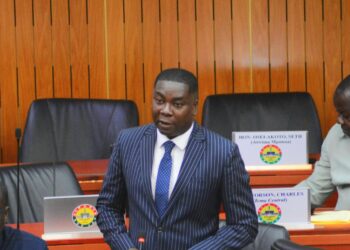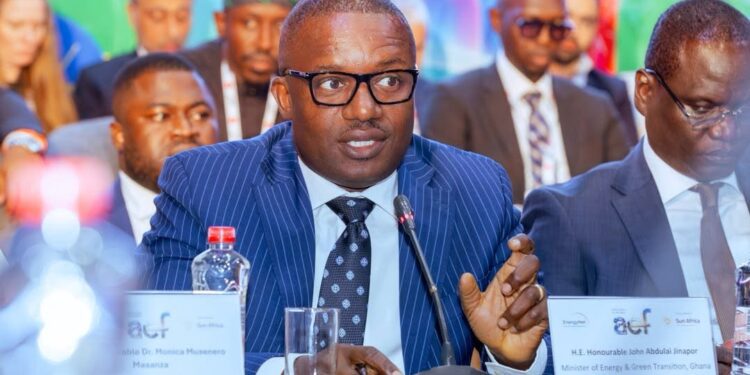
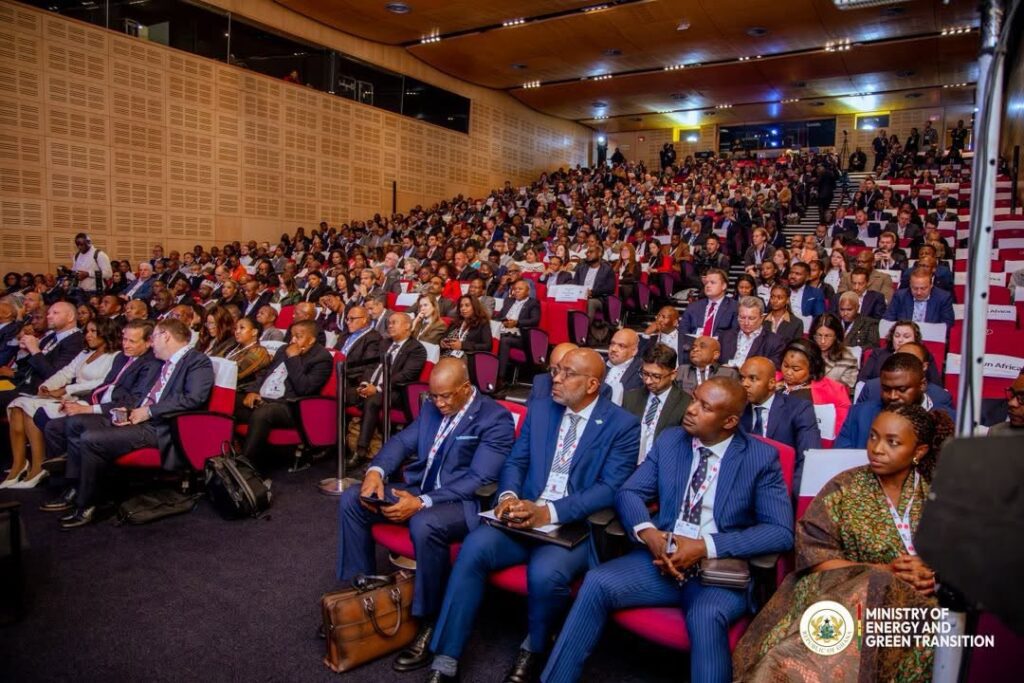
Hon. John Abdulai Jinapor, the Minister for Energy and Green Transition, has highlighted Ghana’s sweeping energy market interventions during a high-level Town Hall panel at the Africa Energy Forum (AEF).
Addressing a gathering of African energy ministers, regional policy makers, and international financiers, the Minister detailed how structural overhauls are turning Ghana into a preferred, highly competitive location for industrial production and West African regional commerce.
The panel, which focused on the collaborative development of regional production hubs to fast-track continental industrialisation, served as a key platform for Ghana to showcase its progress in building commercial security.
“I shared the reforms we are implementing in Ghana, which have made our country a competitive hub for industrial production and regional trade. These reforms are already yielding positive results. We have recorded significant improvements in payments to utility service providers, helping to strengthen the financial sustainability of the energy sector and enhance investor confidence.”
Hon. John Abdulai Jinapor, the Minister for Energy and Green Transition
Expanding on these milestones, the Energy and Green Transition Minister explained that the country’s aggressive restructuring measures are already resolving long-standing liquidity and distribution challenges.
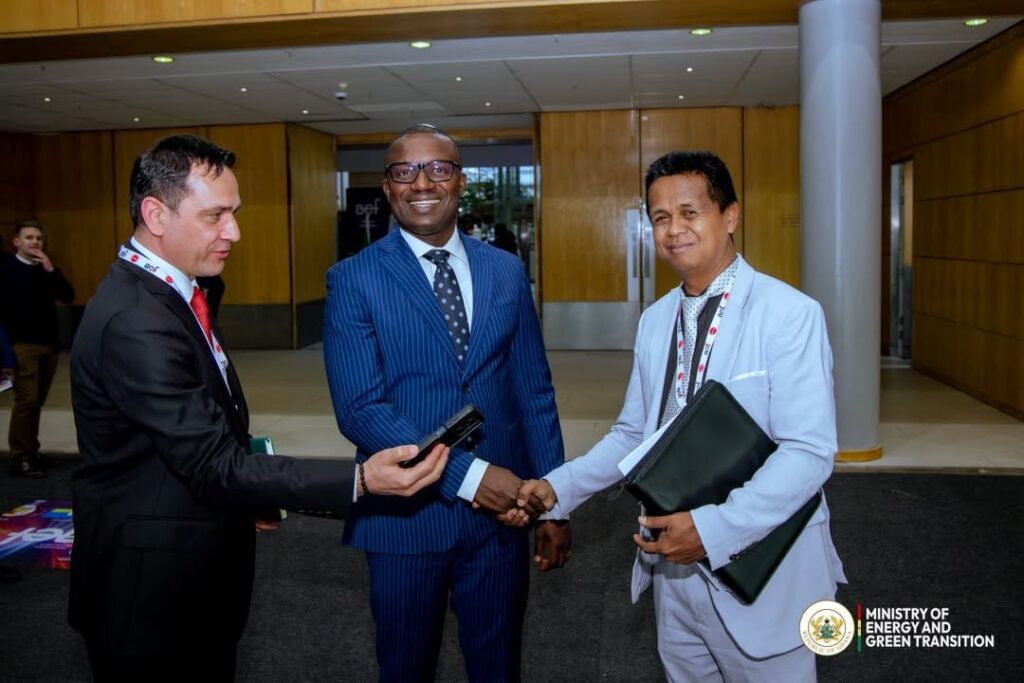
A major highlight of these changes includes massive improvements in collections and financial settlements to utility service providers, an achievement that drastically minimizes the sector’s legacy fiscal deficits while boosting the confidence of independent power producers and multi-national corporations.
Simultaneously, targeted capital expenditure directed toward expansion in generation capacity, robust transmission infrastructure, and clean, renewable grid solutions is stabilizing power delivery to critical manufacturing enclaves across the country.
In line with the “Accra Reset Agenda” championed by President John Dramani Mahama, Ghana is executing a deliberate economic pivot away from primary resource extraction, choosing instead to prioritize domestic value addition, intensive local processing, and full integration into global supply networks.
Financial Sustainability and Investor De-risking
International commercial engagements of this magnitude provide Ghana with a vital pathway to mitigate institutional risks and attract large-scale capital injection.
By showcasing verifiable improvements in utility revenue collections directly to global financiers at the AEF, the Ministry of Energy and Green Transition effectively elevates the creditworthiness of state utilities like the Electricity Company of Ghana (ECG) and the Ghana Grid Company (GRIDCo).
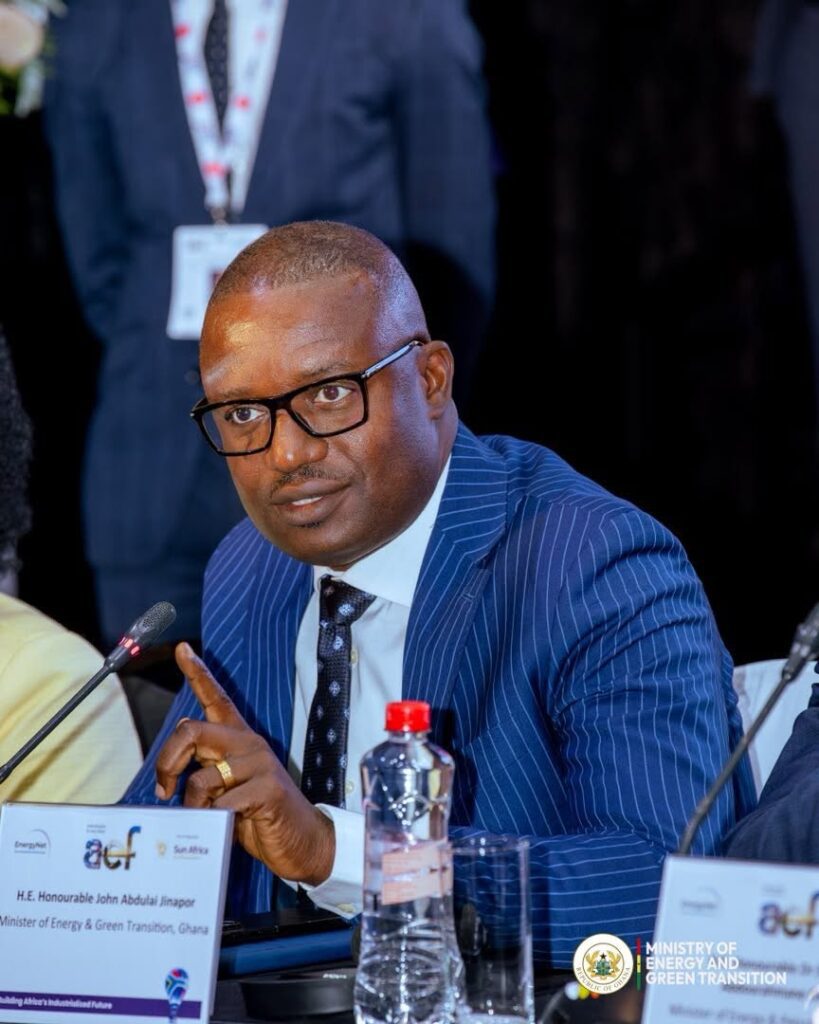
This transparent display of operational efficiency reduces the perceived risk premium for incoming green transition capital, enabling Ghana to secure highly favorable concessionary loans and private equity partnerships.
Furthermore, aligning domestic policy with clear financial benchmarks ensures that international developers can forecast predictable returns on investment, thereby positioning the sovereign state as the primary destination for sub-regional energy infrastructure funding.
Grid Stabilisation and Cross-Border Power Trade
Another critical advantage stemming from this top-tier diplomatic and economic dialogue is the acceleration of cross-border grid synchronization and energy trading under the West African Power Pool (WAPP).
The ongoing investments in transmission architecture and utility-scale solar projects discussed by Hon. John Jinapor directly address the technical bottlenecks that historically limited reliable supply to heavy industrial manufacturers.
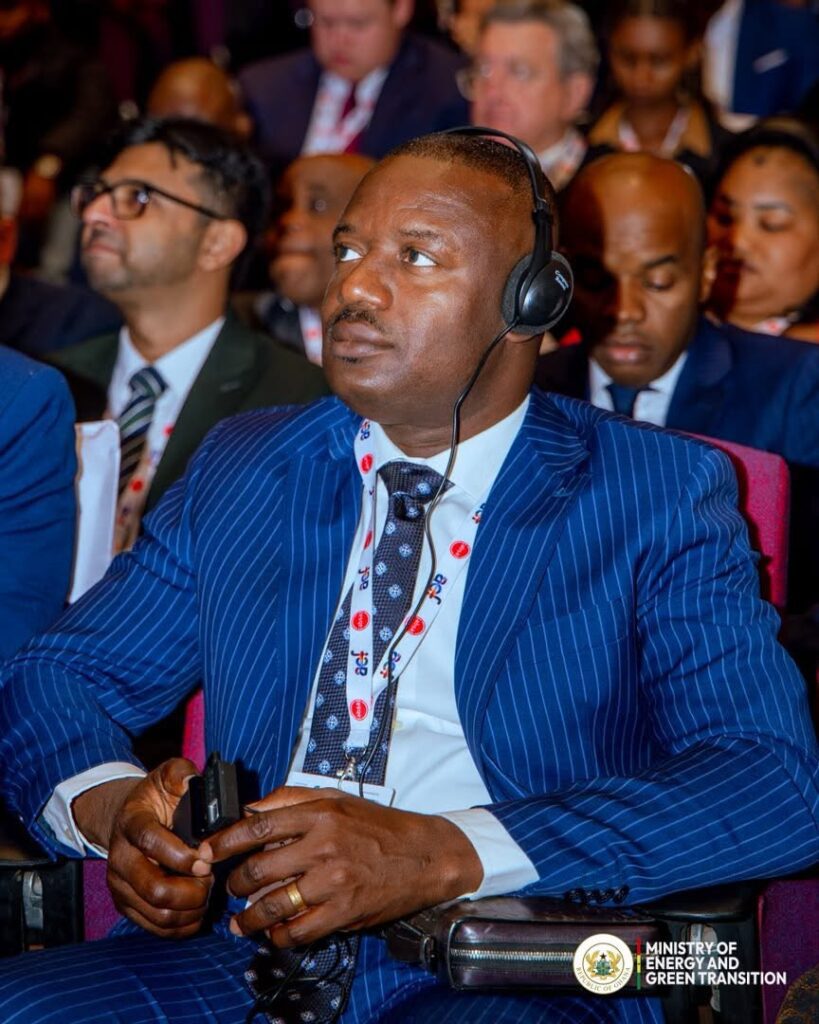
By presenting these transmission upgrades to regional counterparts, Ghana reinforces its technical capacity to serve as the primary power exporter to neighboring nations, capitalizing on the broader trading frameworks established by the African Continental Free Trade Area (AfCFTA).
This cross-border capacity transforms domestic power generation into an active asset for foreign exchange earnings, ensuring that excess generational capacity is commercially monetized rather than lost to grid inefficiencies.
Value Addition and Sustainable Industrialisation
The long-term impact of integrating the energy sector with President Mahama’s overarching economic blueprint lies in its capacity to break the historical cycle of raw material reliance.
By providing a stable, affordable, and green power supply, the energy sector acts as the fundamental catalyst for downstream processing industries, allowing local firms to refine raw gold, bauxite, and agricultural outputs before export.
This industrial growth directly translates into stable employment opportunities for a rapidly growing domestic workforce while insulating the broader economy from the volatile commodity price shocks characteristic of global markets.
Ultimately, Ghana’s strategic presence at the Africa Energy Forum solidifies its geopolitical standing as an innovative, self-determined leader in Africa’s green industrial transition, setting a powerful precedent for regional energy sovereignty.
READ ALSO: Government Distributes 40, 000 Fertilizers and Advanced Drones to Farmers