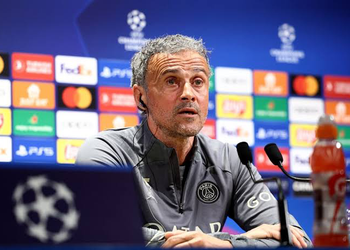
England head coach, Thomas Tuchel, has successfully influenced a significant operational change at the 2026 FIFA World Cup after raising concerns about photographers obstructing his view during the pre-match national anthem ceremony.
FIFA has responded by introducing a revised positioning system for photographers following Tuchel’s criticism after England’s victory in their opening Group L match against Croatia. The world football governing body has now altered its arrangements to ensure coaches have a clear line of sight to their players during one of football’s most symbolic moments.
The adjustment comes after England’s entertaining 4-2 victory over Croatia in Dallas, where Tuchel took charge of a World Cup match for the first time in his managerial career. While the result provided an ideal start to England’s campaign, the German coach admitted that the pre-match experience left him frustrated.
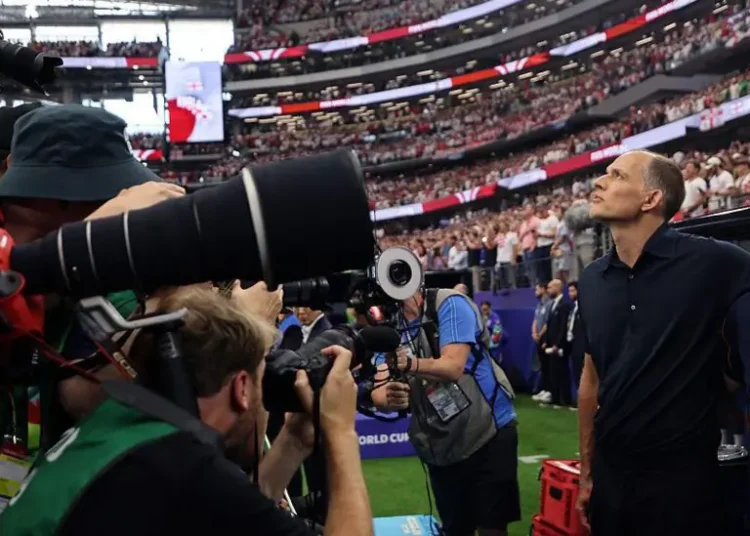
According to Tuchel, dozens of photographers stationed between the technical area and the pitch effectively blocked his view of the players throughout the national anthems, diminishing what he expected to be a memorable occasion.
FIFA Responds Swiftly to England Coach’s Concerns
The issue was brought to public attention when Tuchel openly appealed to FIFA after the Croatia encounter.
The England manager argued that the positioning of media personnel prevented him from sharing an important emotional moment with his squad. “I have to tell you something. I’m begging Fifa to change the position of the photographers in the national anthem, because I could not see my team,” Tuchel said after the match.

The coach explained that the significance of hearing the national anthem before his first World Cup game as England manager had been overshadowed by the visual obstruction.
“It was a very special moment, and I was standing in front of a wall of 50 photographers and I could not see one single player. It ruined a little bit my experience.”
Thomas Tuchel
FIFA subsequently reviewed the situation and agreed to a compromise that will be implemented across affected tournament venues. Under the revised arrangement, photographers will gather closer to the halfway line during the anthem ceremony rather than occupying positions directly in front of the coaching areas.
The new configuration is designed to preserve media access while ensuring coaches and support staff can maintain an unobstructed view of their teams.
Tournament organisers moved quickly to apply the change, demonstrating a willingness to address logistical concerns raised by participating nations during the competition.
Stadium Layout Created Unexpected Challenge
The problem was particularly evident at AT&T Stadium in Dallas, one of the tournament’s largest venues and the regular home of the NFL’s Dallas Cowboys.
Unlike purpose-built football stadiums, the venue was originally designed for American football, creating unique challenges when adapted for World Cup matches. To accommodate a standard football pitch, organisers were required to raise the playing surface by approximately 1.2 metres.
The modification reduced the amount of available space around the touchlines and technical areas. As a result, photographers and coaching staff were forced to operate within tighter confines than usual, increasing the likelihood of visibility issues during pre-match ceremonies.
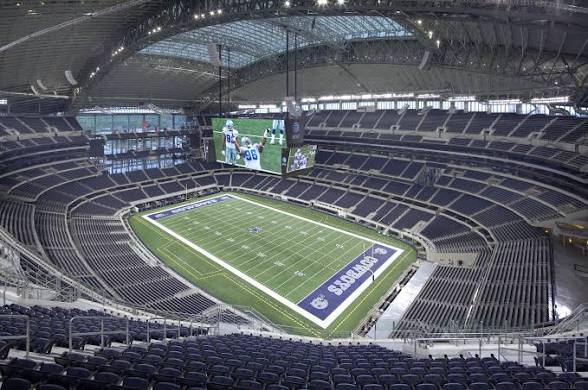
While the arrangement satisfied broadcasting and media requirements, it inadvertently created the obstacle that Tuchel encountered before England’s opener.
FIFA’s revised positioning strategy aims to prevent similar complaints at other venues where space restrictions may exist.
The governing body wasted little time putting the solution into practice. The updated setup was first used during Thursday’s Group A encounter between the Czech Republic and South Africa in Atlanta, marking the beginning of the new protocol.
Although relatively minor in the context of a month-long tournament, the change highlights the importance FIFA places on maintaining the World Cup experience for players and coaches alike. It also underscores the influence national team managers can have when raising concerns that affect the matchday environment.
For Tuchel, the adjustment represents a small but meaningful victory. More importantly, future anthem ceremonies will allow coaches to fully engage with their players during one of the most emotional moments of international football, without a wall of cameras standing in the way.
READ ALSO: Mahama Unveils High-Powered Global Panels to Drive Reparatory Justice