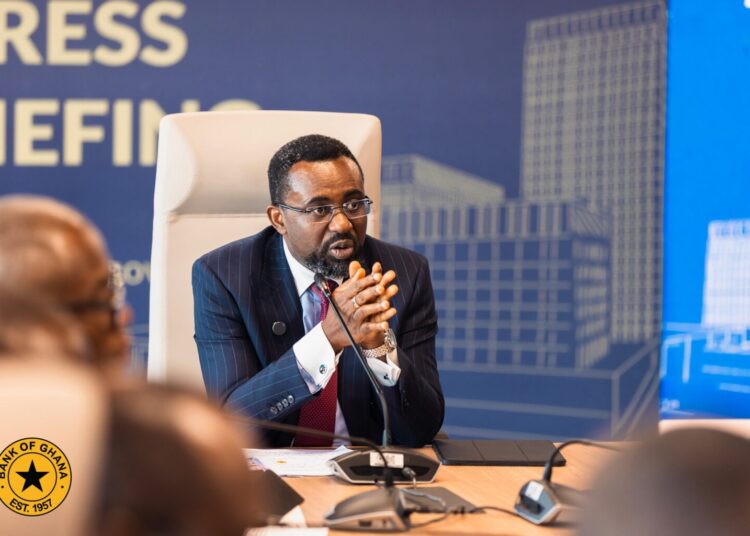
A breakthrough in diplomatic relations between Iran and the United States is emerging as a potential game changer for Ghana’s economy, with the Governor of the Bank of Ghana (BoG), Dr. Johnson Asiama, suggesting that recent developments could strengthen the country’s fight against inflation and create room for further monetary policy easing.
The development comes at a time when Ghana has been recording encouraging gains in macroeconomic stability, but with inflation gradually rising and the local currency showing signs of fatigue against major currencies.
According to the Governor, a framework agreement reportedly reached between Iran and the United States to de-escalate hostilities could significantly alter the global economic outlook in Ghana’s favour.
The announcement has generated optimism across international markets, particularly because of its implications for the Strait of Hormuz, one of the world’s most strategic oil shipping routes. Any threat to this critical passage has historically triggered fears of supply disruptions and sharp increases in global crude oil prices.
Oil Market Relief Could Benefit Ghana
For Ghana, a nation heavily dependent on imported petroleum products despite being an oil producer, lower global oil prices can have a significant impact on inflation and overall economic stability.
When oil prices rise, transportation costs increase, production expenses surge, and imported inflation filters through the economy. Conversely, any reduction in geopolitical tensions that helps stabilize oil markets could ease these pressures and support Ghana’s ongoing disinflation efforts.
Dr. Asiama revealed that the Monetary Policy Committee (MPC) is closely monitoring developments and assessing how the changing global environment could influence future policy decisions.
“The Committee noted that although inflationary pressures remained contained, potential risks persisted, especially those associated with prolonged geopolitical tensions.”
Dr. Johnson Asiama
His comments reflect concerns that had dominated the MPC’s previous assessment, when uncertainty surrounding global conflicts posed a significant threat to economic stability and inflation management.
Why the MPC Held Rates Steady
At its most recent meeting, the MPC decided to maintain the policy rate at 14 percent after evaluating both domestic and international economic conditions.
The Committee concluded that risks to inflation and economic growth were broadly balanced, making it prudent to keep rates unchanged while observing developments in the global economy.
At the time, inflationary pressures were easing, but uncertainty surrounding geopolitical events remained a major concern. Rising oil prices resulting from conflict escalation could have reversed gains made in controlling inflation and stabilizing the economy.
However, the situation appears to be evolving rapidly.
“Clearly, the outlook has now changed, and we are monitoring events in the coming days and weeks until the next meeting of the MPC.”
Dr. Johnson Asiama
The Governor’s remarks have attracted attention from economists and market analysts who believe the changing geopolitical landscape could reshape expectations for future monetary policy actions.

Possibility of Further Policy Easing
Financial analysts argue that a sustained reduction in geopolitical tensions could lower risk premiums in global energy markets, leading to softer crude oil prices.
For Ghana, such an outcome would bring several advantages. Lower fuel costs would reduce transportation expenses, ease pressure on electricity generation costs, and help moderate imported inflation. Businesses and consumers alike would benefit from a more stable pricing environment.
This would also strengthen the case for additional monetary policy easing, especially if inflation continues its downward trajectory and exchange rate stability remains intact.
While Dr. Asiama stopped short of indicating a specific policy direction, his comments suggest that the central bank is increasingly optimistic about external conditions that could support economic recovery and price stability.
Investors Watching Closely
The Bank of Ghana has already begun easing monetary policy in recent months as inflationary pressures moderate. Any further decline in inflation driven by favourable global developments could provide policymakers with additional flexibility.
Investors, businesses, and financial markets are now closely watching developments in the Middle East and their potential impact on global energy prices. A prolonged period of stability could strengthen confidence in Ghana’s economic outlook and support growth across multiple sectors.
For businesses struggling with high operating costs and households battling rising living expenses, lower oil prices would offer welcome relief.
Cautious Optimism Prevails
Despite the positive signals, the Bank of Ghana remains cautious. Policymakers are expected to continue monitoring international developments, inflation trends, exchange rate performance, and domestic economic indicators before making any decisions on interest rates.
For now, the message from the central bank is one of cautious optimism. A diplomatic breakthrough thousands of miles away could ultimately deliver tangible economic benefits to Ghana, helping accelerate disinflation, support growth, and strengthen macroeconomic stability.
If current trends persist, the Iran-US agreement may become an unexpected catalyst in Ghana’s journey toward lower inflation and a more favourable economic environment.
READ ALSO: Boamah-Nyarko Demands Full Disclosure On MASLOC CEO Case