
The Minority in Parliament has criticised the Public Utilities Regulatory Commission’s (PURC) latest electricity tariff increase, arguing that repeated adjustments are placing a growing burden on consumers despite earlier promises to ease living costs and reform the energy sector.
PURC announced a 3.49 percent increase in electricity tariffs and a 0.85 percent rise in water tariffs effective July 1, 2026, following its quarterly review of utility rates. The Commission said the adjustment was based on movements in key variables including exchange rates, inflation, natural gas prices and the country’s hydro-thermal generation mix.
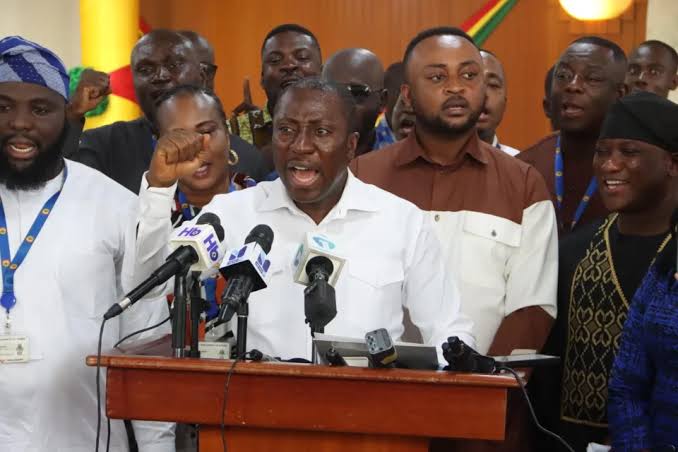
The Minority, however, described the latest increase as part of what it called a sustained pattern of tariff escalation under the current administration.
The NDC campaigned loudly on reducing the cost of utilities, easing the burden on households, and fixing the energy sector. Eighteen months into their term, Ghanaians are paying 26.82% more for electricity than they were when President Mahama took the oath of office. This is a broken promise.
Minority in Parliament
According to the caucus, electricity tariffs have undergone several adjustments since January 2025, including increases of 14.75 percent in the second quarter of 2025, 2.45 percent in the third quarter, 1.15 percent in the fourth quarter, and 9.8 percent in the first quarter of 2026.
While tariffs were reduced by 4.81 percent in the second quarter of 2026, the Minority argued that the latest 3.49 percent increase brings cumulative tariff growth since the beginning of the administration to 26.82 percent.
PURC Defends Adjustment
PURC has maintained that the quarterly tariff review mechanism is designed to reflect changes in economic conditions affecting utility service providers.
The Commission noted that inflation for the review period eased to 3.43 percent from 4.17 percent in the previous quarter, while natural gas prices declined by 1.58 percent. Despite these developments, PURC concluded that the combined impact of the various indicators still warranted an upward adjustment to preserve the real value of utility revenues and ensure continued service delivery.
The regulator also increased water tariffs by 0.85 percent across customer categories under the same review.
Debate Extends Beyond Politics
The latest exchange between the Minority and the regulator comes as energy policy experts continue to question whether tariff adjustments alone can resolve the financial difficulties facing the power sector.
In a recent analysis, the Africa Centre for Energy Policy (ACEP) argued that automatic tariff adjustments address macroeconomic variables such as inflation, exchange rates and fuel costs but do not tackle persistent inefficiencies across the electricity value chain.

Similarly, concerns raised by policy analysts and industry observers have focused on high technical and commercial losses, revenue collection challenges and mounting sector debt, which continue to place pressure on electricity prices.
Those concerns were echoed in recent commentary by IMANI associates, who questioned whether consumers are increasingly being asked to shoulder the cost of inefficiencies that remain unresolved.
What It Means for Consumers
For households and businesses, the immediate effect will be higher utility bills from July.
Although the 3.49 percent adjustment is relatively modest compared to previous increases, it arrives at a time when consumers are already dealing with broader cost pressures.
Businesses that rely heavily on electricity, particularly manufacturers, small enterprises and service providers, may face additional operating costs, while households could see a further increase in monthly utility spending.
The debate also raises a broader question about the future direction of energy sector reforms.
Critics argue that without significant reductions in transmission losses, improvements in revenue collection and progress in addressing legacy debts, consumers may continue to face periodic tariff increases regardless of broader economic improvements.
Supporters of the adjustment, however, contend that maintaining the financial viability of utilities remains necessary to ensure reliable electricity supply and prevent deeper challenges within the sector.
Focus Shifts to Structural Reforms
The latest tariff review has once again highlighted the tension between affordability and financial sustainability in Ghana’s power sector.
While the Minority’s criticism adds a political dimension to the discussion, the underlying issue extends beyond party lines. The recurring debate over tariffs increasingly centres on whether pricing adjustments are being matched by reforms capable of improving operational efficiency and reducing the sector’s dependence on higher consumer charges.
As Ghana continues efforts to stabilise its energy sector, the discussion is likely to move beyond the size of tariff increases and toward the deeper structural changes needed to improve service delivery, strengthen utility finances and ease pressure on consumers over the long term.
READ ALSO: Poor Succession Planning Threatens Family Business Survival- IFC