Minerals Income Investment Fund (MIIF) has initiated high-level bilateral discussions with the International Monetary Fund (IMF) to solidify a strategic framework aimed at transforming Ghana’s lucrative mining landscape, boosting mineral revenue mobilization, and accelerating the formalization of artisanal and small-scale mining activities.
This collaboration prioritizes tightening the collection mechanisms for mineral royalties to optimize national wealth extraction.
“The Minerals Income Investment Fund (MIIF) and the International Monetary Fund (IMF) have held high-level discussions on strengthening Ghana’s mining sector, with a particular focus on increasing mineral revenue mobilization and speeding up the formalization of the small-scale mining sector, especially regarding the payment of royalties.”
Minerals Income Investment Fund (MIIF)
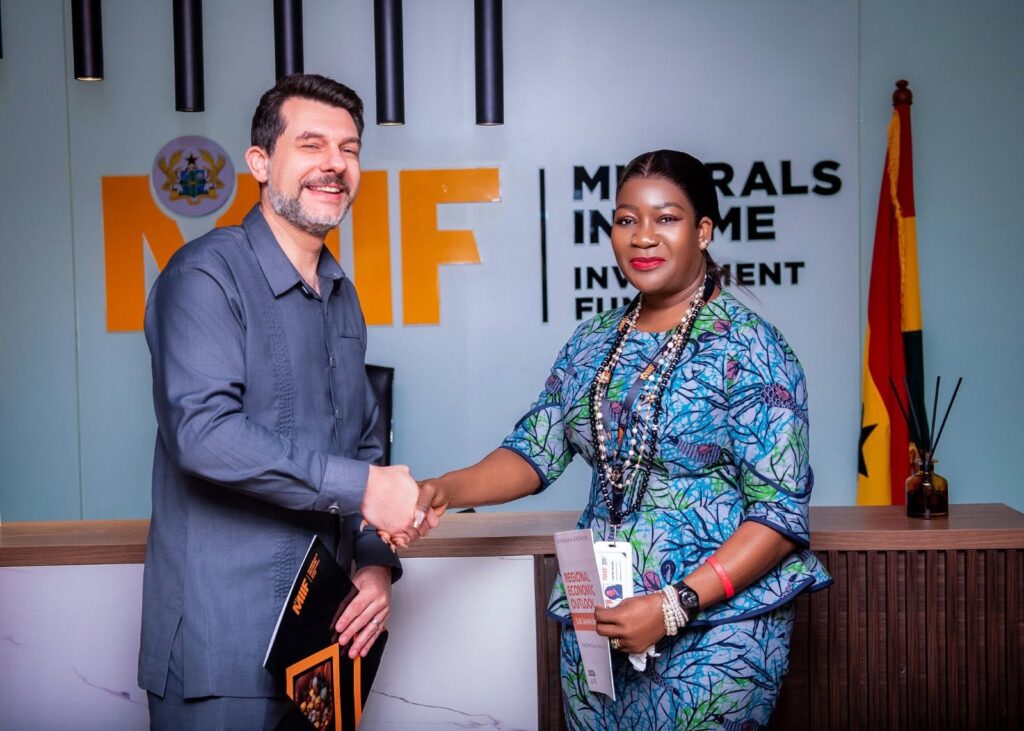
The historic engagement took place in the MIIF Boardroom in Accra, bringing together a high-profile delegation from the IMF, led by its Resident Representative, Dr. Adrian Alter, and senior executives from the host institution, guided by the Chief Executive Officer of the Fund, Mrs. Justina Nelson.
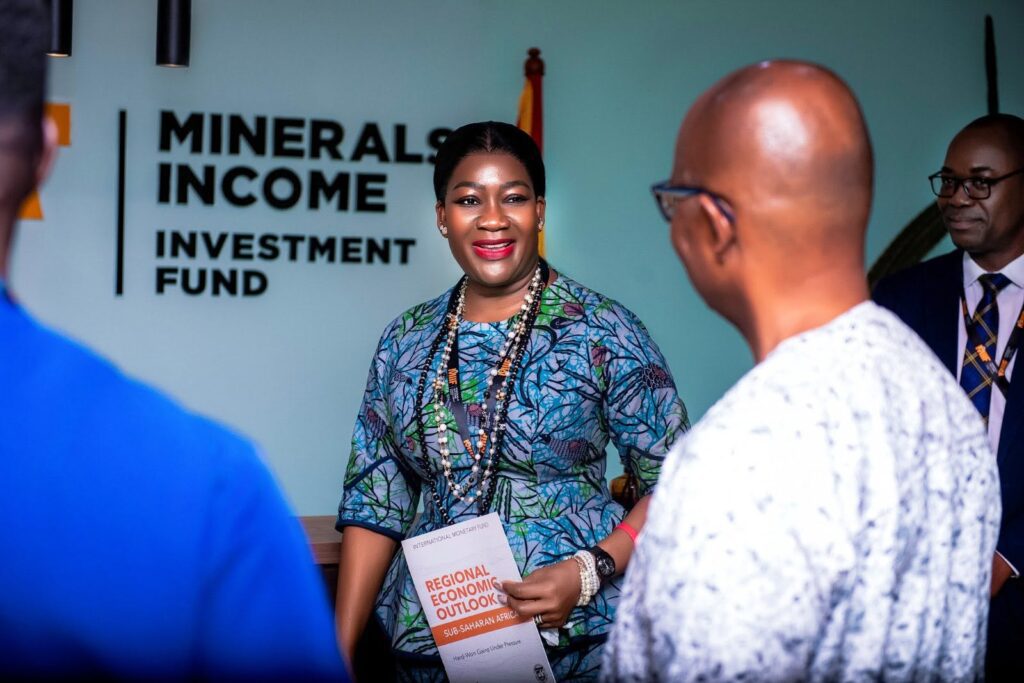
This meeting reflects an analytical approach to institutional synergy, focusing directly on scaling up domestic resource mobilization while ensuring economic resilience against global market fluctuations.
“Strategic reforms and stronger collaboration with key sector institutions had significantly contributed to increased mineral royalty since the Fund became operational in 2020. Royalty inflows had increased by nearly 500 percent over this period, with the Fund recording mineral royalties exceeding collections GH¢5 billion for the first time in its history in 2025. This achievement demonstrated stronger revenue mobilization efforts despite fluctuations in exchange rates and current market conditions.”
Minerals Income Investment Fund (MIIF)
Transforming Small-Scale Mining Dynamics
Mrs. Nelson observed that the country’s small-scale mining sector continues to hold enormous potential for national economic transformation.
To harness this immense capacity, the state vehicle is actively tightening ties with crucial statutory institutions, including the Ghana Revenue Authority (GRA), the Minerals Commission, the Ghana Gold Board, and the Ghana National Association of Small-Scale Miners.
This collective alliance aims to overhaul governance systems and perfect royalty collection protocols across rural mining centers.
The structural formalization of this informal tier remains an urgent economic necessity for Ghana.
By introducing standardized reporting requirements and streamlining the tracking of gold outputs, the nation can block revenue leakages that have traditionally undermined small-scale productivity.
The focus is to transform illegal practices into well-regulated economic engines that contribute directly to the treasury.
Strategic Vision and Future Portfolio Expansion
Elaborating on the investment architecture, the Head of Investment at MIIF, Mr. Ernest Attiso, outlined the core mandate of the institution to maximize mineral royalty collections in close synergy with the Ghana Revenue Authority.
He explained that investing these mineral proceeds efficiently creates sustainable wealth for the benefit of current and future generations.
Mr. Attiso presented the operational roadmap of the Fund’s active three-year strategic plan, which runs through to 2028, focusing primarily on enhancing royalty mobilization, strengthening internal controls, risk management, compliance, and aggressively growing Assets Under Management (AUM).

The investment chief specified that profitable emerging opportunities are currently being explored across greenfield exploration, near-production mineral assets, and localized processing and beneficiation infrastructure.
He noted that small-scale mining formalization and advanced royalty streaming financing models are central to this expansion strategy.
“Beyond financial returns, the Fund maintains a strict commitment to Environmental, Social, and Governance (ESG) principles,” Mr. Attiso observed, highlighting development-focused initiatives such as comprehensive afforestation, heritage and tourism development, and targeted women empowerment programmes within host mining communities.
Analytical Insight: Why the MIIF-IMF Partnership Matters
This high-level cooperation is highly critical for achieving the ultimate long-term benefits of Ghana’s natural endowments.
Historically, informal gold production has suffered from heavy revenue leakages and systemic under-reporting, depriving the state of essential fiscal resources.
By onboarding the IMF’s technical oversight, MIIF gains access to macroeconomic modeling and institutional leverage capable of aligning local collection systems with international fiscal transparency benchmarks.
Furthermore, this partnership plays an indispensable role in safeguarding the broader economy against macro-fiscal vulnerabilities and inflationary shocks.
As the state seeks to build strong foreign reserves, maximizing sovereign royalty collection guarantees a steady inflow of non-debt capital.
The integration of international compliance guidelines not only elevates investor confidence but also establishes a clear blueprint for sustainable natural resource governance in West Africa.
READ ALSO: Trump Threatens 100% Tariff Over Digital Taxes On US Companies