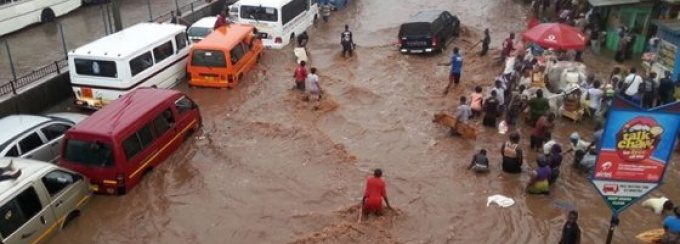
The Director of Inspectorate for National Disaster Management Organisation, Richard Amo Yartey has disclosed that flood related incidents recorded across seven regions have affected thousands of residents, with emergency response efforts now centered on protecting lives. He indicated that current assessments show widespread impact following heavy rainfall across several parts of the country.
Discussing the scale of the flooding, The Director stated that seven regions recorded significant flood incidents after the rains. Mr Yartey noted that preliminary figures placed the total number of affected persons at 75,051.
He explained that Greater Accra Region recorded the highest number of affected persons, with nearly 40,000 residents impacted by the flooding. The Director added that other affected areas ranges from the Western North Region through the Western Region to the Ashanti Region.

According to Mr Yartey, the immediate priority has shifted toward protecting displaced persons and ensuring their safety. He explained that while damage assessments remain ongoing, emergency interventions are currently focused on vulnerable households and exposed communities.
“Our immediate concern is the safety of affected persons across the country. Damage assessments will continue, yet our first responsibility is to ensure that lives are protected.”
Richard Amo Yartey
Addressing the destruction caused by the floods, The Director said detailed assessments are still underway. He stated that response teams remain on the ground gathering data to determine the extent of damage to homes, businesses and infrastructure.
From his perspective, disaster response must begin with life preservation before financial losses are fully quantified. This, he noted, allows emergency teams to allocate resources where the need is greatest.
Additionally, Mr Yartey indicated that coordinated response systems have been activated across all affected districts. He explained that local disaster management officers continue to work with assemblies and security agencies to support rescue efforts.
One of the ongoing response is the identification of highly exposed communities that may require further intervention. Mr. Yartey stated that risk mapping remains essential as more rainfall is anticipated in some areas.
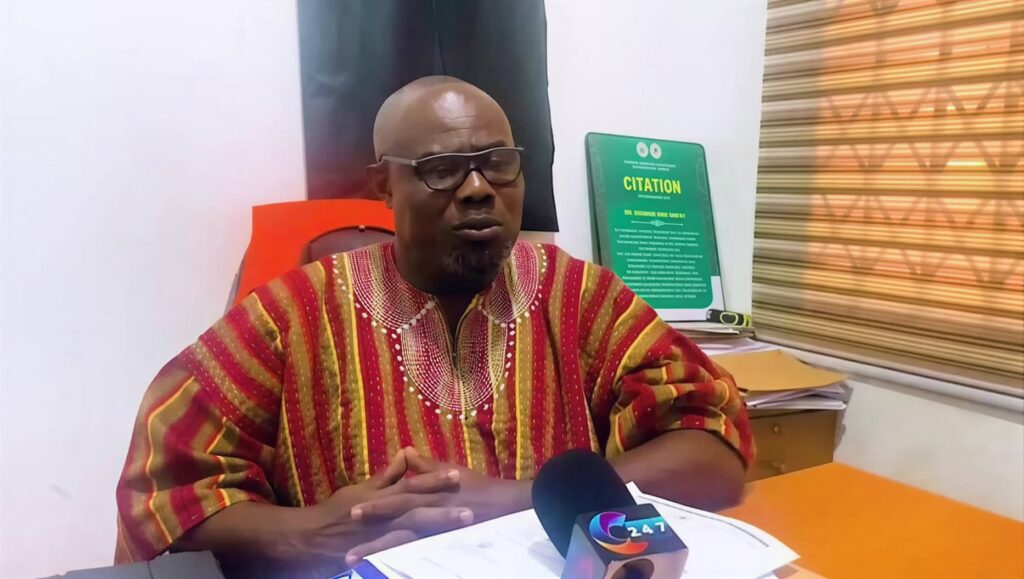
Moreover, he urged residents in vulnerable zones to remain alert to official advisories. The emphasis, he said, rests on preparedness and timely response to minimise additional losses.
The Director also appealed for public cooperation during the emergency period. He added that community support and adherence to safety directives is key to reducing disaster related harm.
Evacuation and Drainage Measures Key To Flood Mitigation
Highlighting response strategies, The Director explained that displaced residents are being supported through a combination of temporary shelters and community-based assistance. He noted that while some victims have been relocated to churches and designated safe centres, many have sought refuge with relatives and friends.
Mr Yartey stated that family support continues to serve as one of Ghana’s strongest coping mechanisms during emergencies. In light of this, disaster management teams are prioritising those currently housed in formal shelters for immediate relief support.
Furthermore, he confirmed that relief distribution has already commenced in affected communities. Items including mattresses, buckets and essential supplies are being distributed to households requiring urgent assistance.
“We have begun relief support for affected residents. In the coming days, every affected person will receive the assistance required for recovery.”
Richard Amo Yartey
Discussing long term mitigation, The Director explained that drainage management remains central to flood prevention efforts. He stated that continuous assessment of drainage infrastructure, wetlands and waterways is underway to improve water flow across vulnerable communities.
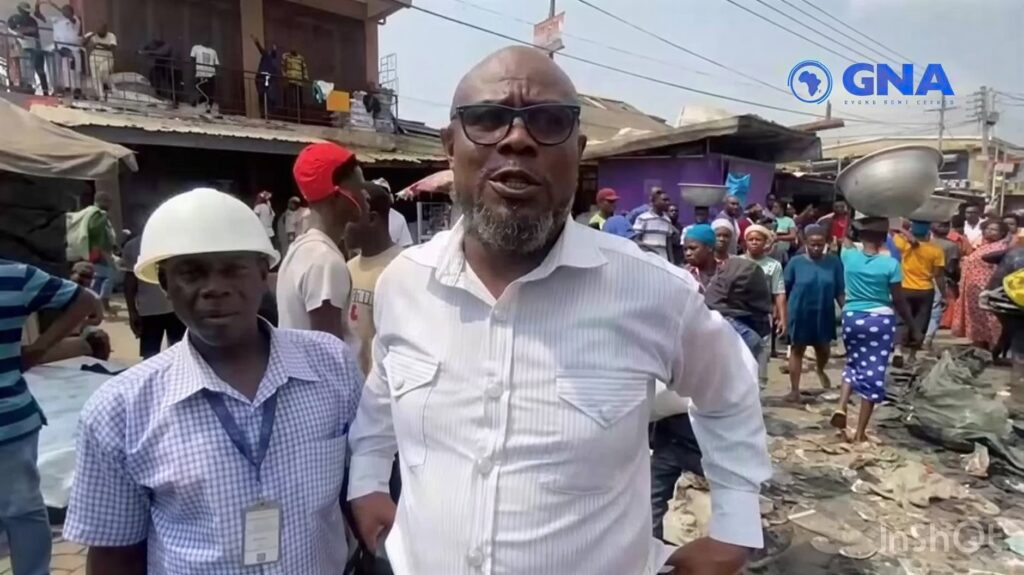
Dredging and desilting operations are expected to continue in collaboration with local authorities. These interventions, he said, will help expand drainage capacity and reduce inundation during future rainfall events.
Mr Yartey reiterated calls for early evacuation by residents living in flood prone areas. He observed that many people delay movement until floodwaters become dangerous, increasing the risk of emergency rescues.
Accordingly, he urged residents to identify safe havens within their districts before weather alerts are issued. He explained that every district assembly hosts a NADMO office where residents can obtain evacuation guidance.
With reference to the Weija Dam spillway where controlled spillage continues due to rising inflows, the Director clarified that increased rainfall upstream has forced authorities to intensify the release of water from the reservoir.
He noted that additional estuaries have been created to ease pressure on downstream communities. Originally, one estuary carried the excess water, though two more have since been developed to improve outflow into the ocean.
“The dam spill remains controlled, yet increased inflows require stronger discharge. Residents near spill zones should move to safer places whenever advisories are issued.”
Richard Amo Yartey
Consequently, Mr Yartey called on waste management agencies to intensify enforcement of sanitation regulations. He added that improved waste disposal and cleaner drains will significantly reduce urban flooding during heavy rains.
READ ALSO: GMET Predicts Thunderstorms Throughout The Northern Parts of Ghana