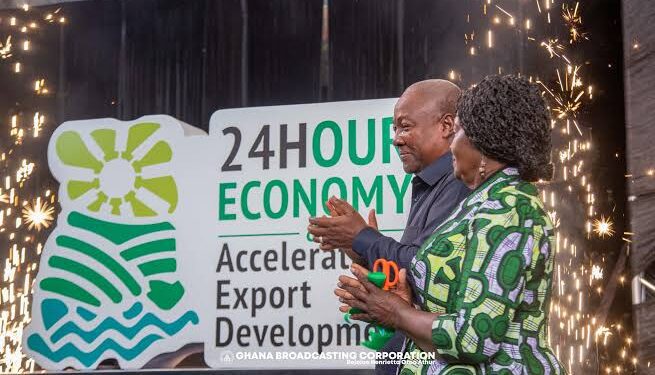
Ghana’s ambitious 24-Hour Economy and Accelerated Export Development Programme has chalked up a major milestone, with the Government announcing that it has already mobilised more than US$11.5 billion in prospective investments less than a year after the initiative was launched.
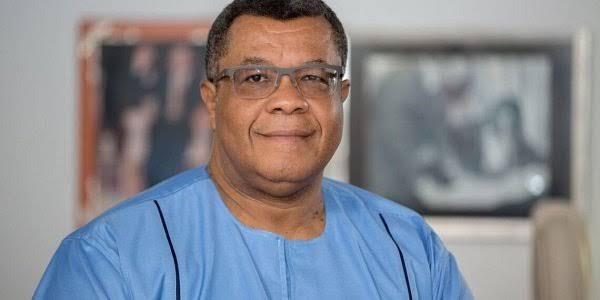
The remarkable disclosure was made by the Senior Presidential Advisor and Coordinator of the 24-Hour Economy Secretariat, Dr. Augustus Goosie Tanoh, during the Upper East Regional Development Forum held in Bolgatanga.
The announcement represents one of the biggest investment commitments secured under the government’s flagship economic transformation agenda and signals growing investor confidence in Ghana’s industrialisation and export driven development strategy.
According to Dr. Tanoh, the investments are expected to create approximately 1.7 million direct, indirect, and induced jobs, with opportunities spread across agriculture, manufacturing, logistics, and value addition industries.
US$11.5 billion commitments signal strong investor confidence
Speaking at the forum, Dr. Tanoh revealed that the programme has attracted significant interest from investors since its official launch in July 2025.
“Since His Excellency launched the programme in July 2025, the Secretariat has mobilised prospective investments exceeding US$11.5 billion, with several agreements already secured to support implementation across key productive sectors.”
Dr. Augustus Goosie Tanoh
The announcement underscores the government’s determination to reposition Ghana from an exporter of raw materials into a competitive industrial economy capable of producing finished goods for both domestic consumption and international markets.
Officials believe that attracting large scale investments into productive sectors will help diversify the economy, stimulate industrial growth, and reduce unemployment while strengthening Ghana’s export earnings.
Creating 1.7 million jobs through industrial growth
Beyond the impressive investment figure, the programme is expected to become a major employment engine for the country.
Dr. Tanoh explained that the projected 1.7 million jobs will emerge through investments in agriculture, manufacturing, logistics, and value added industries, sectors regarded as critical pillars of sustainable economic transformation.
He explained that the initiative seeks to transform Ghana from an economy that exports raw materials into one that processes locally, adds value, and competes in international markets.
The strategy reflects a shift towards increasing domestic production, expanding processing capacity, and creating opportunities for businesses to move higher along global value chains.
PEARL Framework complements national transformation agenda
A key highlight of the forum was the proposed Prosperity through Enterprise, Agriculture and Regional Livelihoods (PEARL) Framework for the Upper East Region.
According to Dr. Tanoh, the regional strategy aligns perfectly with the objectives of the national 24-Hour Economy programme by encouraging industrialisation, enterprise development, and export focused production.
He said, “The PEARL Framework fits squarely within the national strategy by promoting regional industrialisation and export-oriented production.”
The proposed framework is envisioned as a 10 year development blueprint designed to unlock investment opportunities across all 15 districts of the Upper East Region while promoting sustainable livelihoods through enterprise development, infrastructure expansion, and agricultural growth.
Upper East tipped as Ghana’s next investment destination
Dr. Tanoh described the Upper East Region as one of the country’s most promising investment frontiers.
He pointed to the region’s fertile agricultural lands, abundant mineral resources, youthful labour force, expanding commercial centres, and strategic position as Ghana’s gateway to the Sahel as major competitive advantages.
According to him, mining activities are also reshaping the region’s economic importance.
“The emergence of large-scale mining operations has further strengthened the region’s strategic importance within Ghana’s economic landscape,” Dr. Tanoh observed.
Beyond gold, he said the region possesses commercially viable deposits of clay, limestone, granite, and manganese, offering significant opportunities for ceramics, cement production, construction materials, and mineral processing industries.
Value addition remains the ultimate goal
While highlighting the region’s mineral wealth, Dr. Tanoh stressed that government intends to move beyond simply extracting natural resources.
Instead, the emphasis will be on establishing industries that process these resources locally while creating quality employment opportunities.
“The development of these resources must go beyond extraction. The objective is to build industries around them, create decent jobs, and ensure that mineral wealth translates into sustainable prosperity for the people.”
Dr. Augustus Goosie Tanoh
The approach aligns with the broader objectives of the 24-Hour Economy policy, which seeks to maximise value addition across multiple sectors of the economy.
Bolgatanga Airport receives fresh government backing
Another major announcement during the forum concerned the long awaited Bolgatanga Airport project.
Dr. Tanoh disclosed that President John Dramani Mahama has directed the government to mobilise resources and establish strategic partnerships to commence construction of the airport.
The proposed airport forms part of several flagship projects under the PEARL Framework alongside expanded irrigation infrastructure, agro industrial parks, improved healthcare facilities, and agricultural technology institutions.
Explaining its significance, Dr. Tanoh stated, “As the region emerges as a major hub for agriculture, mining, manufacturing, education, tourism, and cross-border trade, the case for the Bolgatanga Airport has become compelling.”
“The airport will serve not only the Upper East Region but neighbouring regions and countries by facilitating trade, attracting investment, promoting tourism, supporting emergency response, and strengthening regional integration.”
Government eyes sustained economic transformation
Dr. Tanoh reaffirmed the government’s commitment to supporting the PEARL Framework, describing it as a strategic blueprint capable of unlocking the Upper East Region’s enormous economic potential while complementing the national 24-Hour Economy agenda.
With more than US$11.5 billion in prospective investments already mobilised and an ambitious target of creating 1.7 million jobs, the government’s flagship programme appears to be gaining considerable traction as Ghana pursues industrialisation, export growth, and inclusive economic development.
If successfully implemented, the initiative could redefine Ghana’s production landscape, strengthen regional economies, and position the country as one of Africa’s leading manufacturing and export hubs.
READ ALSO: Three Winners Outshine Two Losers on Ghana Bourse