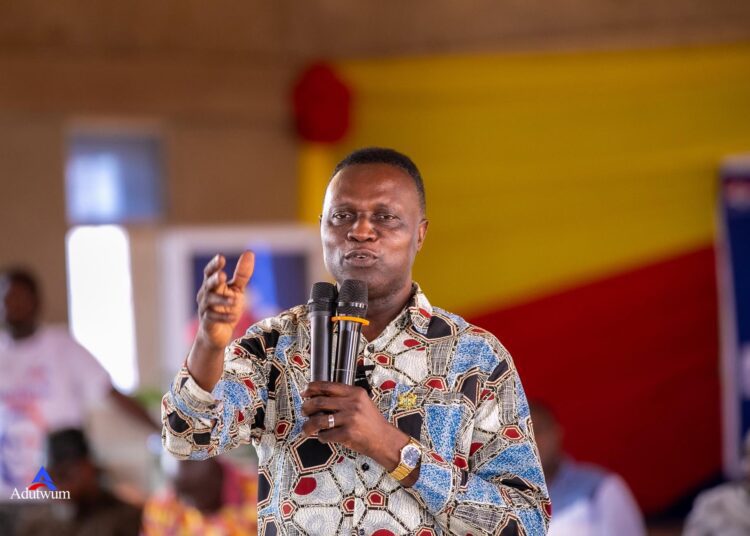
Hon. Dr. Yaw Osei Adutwum, the Member of Parliament for the Bosomtwe constituency, has strongly condemned the emergence of illicit small-scale mining operations, locally referred to as galamsey, within the catchment areas of Lake Bosomtwe.
Expressing grave concern over intelligence indicating that illegal miners have breached the buffer zones of Ghana’s sole natural lake, the lawmaker has formally demanded an immediate, multi-agency crackdown to halt the environmental destruction.
He warned that the state cannot sit idly by while unauthorized mineral extractions compromise a fragile biosphere that acts as a vital lifeline for thousands of citizens.
“I strongly condemn these activities. I have engaged the security agencies and the relevant authorities, and the necessary steps are being taken to stop the operations and deal with those involved. I want to assure the people of Bosomtwe that I will continue to follow this matter closely and work with all stakeholders to protect Lake Bosomtwe for the benefit of present and future generations.”
Hon. Dr. Yaw Osei Adutwum,

In an expanded bid to protect the regional ecosystem, the Member of Parliament clarified that he has already mobilized state security apparatuses and engaged key local government administrators to dismantle all active mining sites around the water body.
Highlighting the immediate threat to the community’s socioeconomic framework, he noted that the ecotourism and local fishing sectors, which rely entirely on the pristine nature of the lake, face complete collapse if heavy metals contaminate the basin.
He further emphasized that preserving this globally recognized biosphere reserve is a non-negotiable ancestral and civic obligation, promising that the legal system will harshly penalize any individual found complicit in the operations.
“Lake Bosomtwe is one of our constituency’s greatest natural treasures. It supports livelihoods, attracts tourists, and is part of our identity. We cannot allow its beauty and environmental value to be destroyed by illegal mining,” the law-maker lamented.
Environmental Safeguards and the Local Crisis
The geopolitical tension surrounding the Bosomtwe basin underscores a wider structural breakdown in local resource management, where short-term illicit profits clash with long-term ecological preservation.
Community watchdogs have reported that heavy machinery and highly toxic chemical inputs are creeping closer to the lake’s banks, threatening to alter its delicate hydrology permanently.
Local elders warn that the continuous encroachment by unregulated prospectors will create an environmental vacuum, stripping local indigenous communities of their primary water supply and historical heritage.
To counteract this existential peril, regional administrators are calling for an airtight security corridor that effectively seals the ecotourism hub from external commercial miners.

Critics point out that standard policing strategies have previously failed to deter persistent syndicates, meaning a more permanent, localized intervention is required.
Law enforcement agents have reportedly received orders to seize unauthorized equipment on sight, signaling a shift toward zero tolerance as state authorities attempt to restore total ecological sanity to the sacred Ashanti lake.
The Institutional Conduit: How GoldBod Facilitates Galamsey
While local leaders combat the physical encroachment of miners on the ground, an overarching national institutional failure significantly fuels the economic engine behind these illegal operations.
The Ghana Gold Board (GoldBod), which was established as the state’s sole authorized regulatory body to purchase, assay, and export precious minerals, has ironically become an institutional conduit that absorbs illegally mined gold into the formal global market.
Because small-scale gold extractions are largely anonymous, GoldBod’s reliance on third-party licensed aggregators creates a systemic money-laundering mechanism for mineral wealth.
These aggregators routinely purchase untraceable, illicitly refined gold from galamsey operators working in prohibited zones such as the Bosomtwe basinand mix it directly into legitimate supply chains.
This regulatory loophole effectively guarantees a ready cash market for environmental outlaws, rendering field-level police crackdowns largely ineffective.
By failing to enforce a rigid, digital, blockchain-based track-and-trace mechanism from the literal point of extraction up to the final export point, the state buyer provides galamsey financiers with seamless validation for their illicit product.
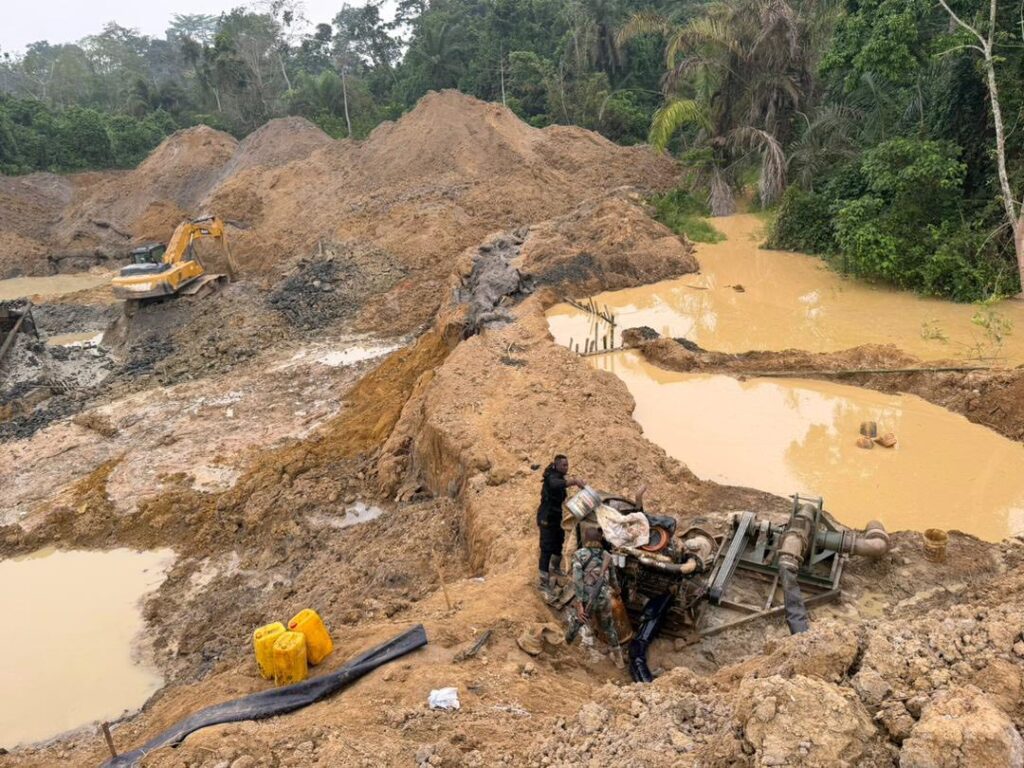
Consequently, despite GoldBod recording an unprecedented output of over 135 metric tonnes of gold yielding over $10 billion in revenue within the past 17 months, a substantial portion of this wealth is directly built upon the destruction of protected forest reserves and sacred water bodies.
Until the state-owned buyer aggressively enforces absolute source verification, its lucrative buying operations will continue to act as the primary financial life support system for the destruction of Ghana’s natural heritage.
Stakeholder Synergy and the Path Forward
Resolving the crisis at Lake Bosomtwe requires a strategic decoupling of local livelihoods from the dangerous financial incentives offered by the unregulated mineral sector.
Environmental experts argue that security actions must be closely paired with alternative livelihood programs, channeling youth energy into sustainable ecotourism, agroforestry, and scientific conservation.
The Bosomtwe constituency cannot afford to win a brief tactical victory against a single mining cell only to succumb to systemic structural degradation a few months down the line.

Ultimately, the long-term survival of this irreplaceable natural asset depends on an unyielding, unified stand by local residents, traditional authorities, and the state apparatus.
By building resilient local oversight frameworks and forcing state regulators to implement stringent supply chain transparency, the community can effectively safeguard its borders.
Protecting the environment is an ongoing, multigenerational task, and the preservation of Bosomtwe will serve as a definitive litmus test for Ghana’s broader environmental governance.
READ ALSO: UN Warns of Disease Risk as Venezuela Earthquake Crisis Deepens