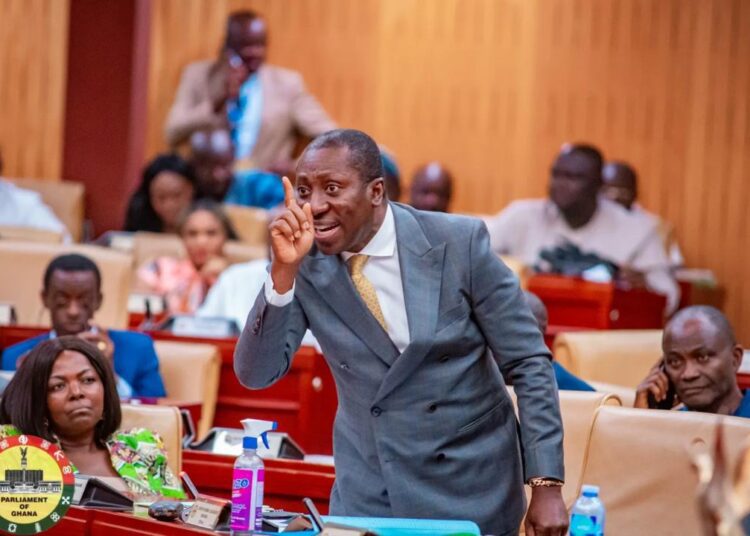
Minority Leader of parliament, Alexander Kwamena Afenyo-Markin has accused the government of using the newly established Ghana Gold Board (GoldBod) to encourage illegal mining, arguing that the administration’s current actions directly contradict its initial pledge to eliminate the menace popularly known as galamsey.
The leader of the minority Caucus raised alarms that an institution designed to sanitize the domestic gold trade has instead become an active enabler of environmental degradation, thereby undermining public trust.
The prominent lawmaker broadened his critique by insisting that the NDC administration has failed to fulfill several promises it made to Ghanaians before the 2024 general elections, pursuing policies that are entirely inconsistent with its campaign commitments.
Hon. Afenyo-Markin heavily criticized the government’s overall performance in critical areas including employment, economic management, women’s empowerment, and the fight against illegal mining, maintaining that the current executive team has fallen short of public expectations and compromised the nation’s environmental health.
“They [the NDC] promised women banking, they have failed. They promised to end galamsey, they have rather established GoldBod and they are using GoldBod to promote galamsey and that is not the country we want.”
Minority Leader of parliament, Alexander Kwamena Afenyo-Markin
The Mandate and Financial Scale of GoldBod
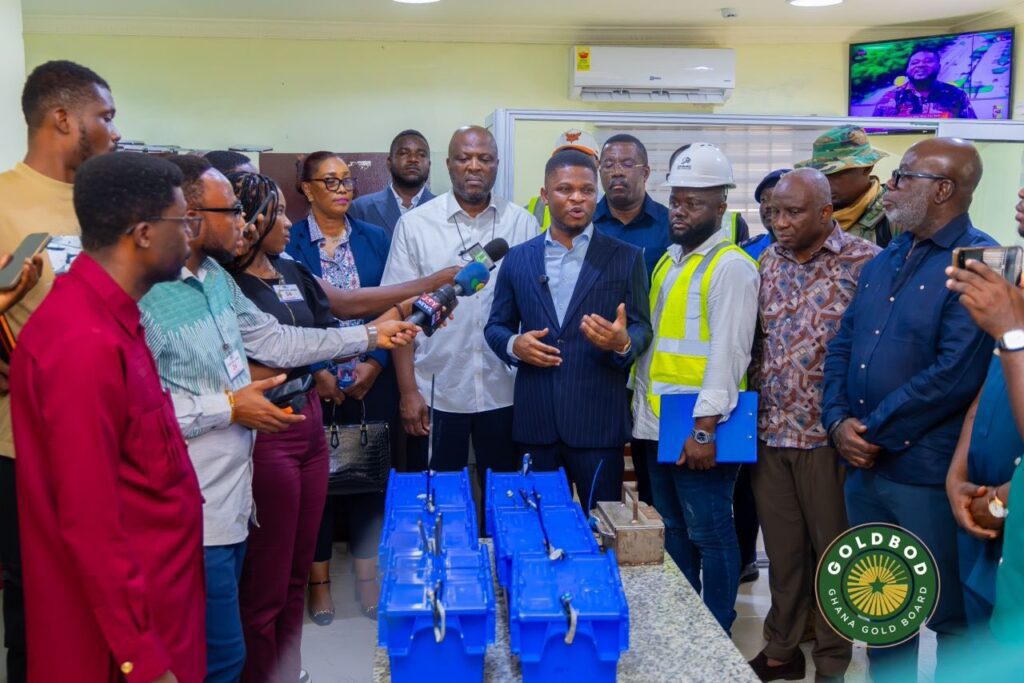
Statutory frameworks established GoldBod as the country’s sole authority with exclusive responsibility for buying, selling, weighing, grading, assaying, valuing, and exporting gold and other precious minerals.
The state institution was specifically created to formalize and regulate Ghana’s volatile gold trade, improve transparency in the artisanal sector, maximize foreign exchange earnings, and strengthen overall oversight of the country’s vast mineral resources.
Operational data released by the Ministry of Finance indicates that the state apparatus has wielded massive financial influence since its inception.

GoldBod purchased a staggering 135.843 metric tonnes of gold between January 2025 and May 2026.
This aggressive volume of state-backed procurement generated more than $10 billion in revenue for the country, illustrating the sheer economic weight the board commands within the local extractive industry.
Mechanization of Galamsey Through State Purchasing
Thorough research into the structural operations of the gold market reveals how the current centralized board indirectly facilitates galamsey activities across the country.
Because GoldBod acts as an institutional monopoly with the exclusive right to purchase small-scale gold, it creates a guaranteed, highly lucrative state market that absorbs precious minerals without rigorous origin tracing.
Illegal miners, armed with heavy machinery and toxic chemicals, are able to easily wash their illicit yields into the official supply chain by selling directly to state-approved aggregators and licensed buyers.
By offering a ready-made, highly capitalized buying window backed by the state’s multi-billion-dollar apparatus, the board inadvertently provides a financial lifeline to rogue operators.

The lack of strict, real-time forensic tracing from the riverbanks to the assaying laboratory means that instead of suppressing illegal operations, the high-volume procurement process shields galamsey actors.
These illicit miners enjoy state-guaranteed cash flow, effectively formalizing environmental destruction under the banner of national revenue generation.
Policy Contradictions and Institutional Failures
The minority bench contends that the government’s current handling of the mining sector completely undermines its core commitment to protecting local water bodies and tackling illegal mining activities.
The Minority argue that by focusing primarily on maximizing foreign exchange liquidity and hitting revenue targets, the state has prioritized short-term economic gains over long-term ecological survival.

This policy misalignment effectively neutralizes active law enforcement on the ground, as the financial incentives provided by the state purchasing agency far outweigh the risks of local regulatory raids.
Furthermore, this dynamic creates a systemic loop where the state profits immensely from the very illegality it swore to eliminate.
As long as GoldBod continues to ingest massive volumes of unverified small-scale gold to bolster its $10 billion balance sheet, the political will to aggressively halt water pollution and forest degradation remains severely compromised.
The minority group insists that this structural contradiction exposes a fundamental failure in executive governance, leaving local communities to bear the toxic brunt of a state-funded mining boom.
READ ALSO: Accra Flood Displaces 38,822 People as Death Toll Reaches 12