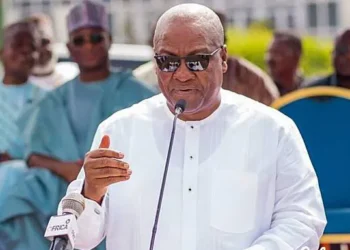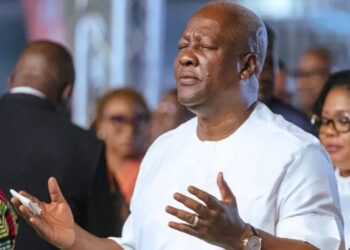
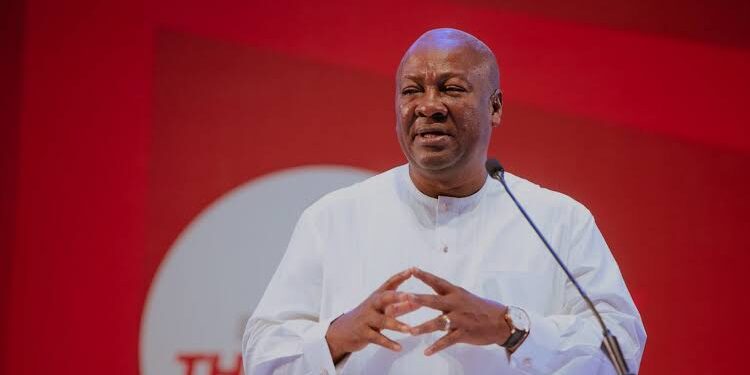
President John Dramani Mahama used Ghana’s National Day of Prayer and Thanksgiving Service to deliver one of his most direct calls for moral renewal, telling Ghanaians that lasting national transformation cannot be achieved through policy alone and that the country’s future depends on millions of ordinary citizens choosing to do the right thing every single day.
The theme chosen for this year’s observance, “Resetting Our Values to Build the Ghana We Want,” gave Mahama the platform to make an argument that runs deeper than budgets and infrastructure.
He told the congregation gathered at the forecourt of the Presidency that laws can regulate behavior but cannot instil integrity, and that governments can implement programmes but cannot legislate honesty, compassion or patriotism.
Those values, he insisted, begin with individuals. He traced the origins of national character not to state institutions but to classrooms where teachers choose to teach with integrity, hospitals where health workers choose to serve with kindness, and farms where honest labor feeds the nation.
He talked about the role of government offices where public servants choose to fulfil their duties without taking bribes, newsrooms where journalists choose to uphold the truth, and homes where parents raise disciplined children.
He described each of these as private decisions that Ghanaians make for themselves, arguing that the cumulative weight of those individual choices either builds or erodes the country.
“The Ghana we seek will not be built solely through big infrastructural projects or economic reform. The Ghana we seek will be built by the millions of ordinary Ghanaians who make the right choices every day to do what is right.”
President John Dramani Mahama
Gratitude Must Show in How We Live
President John Dramani Mahama told the gathering that gratitude expressed only in words falls short of what the day demands.
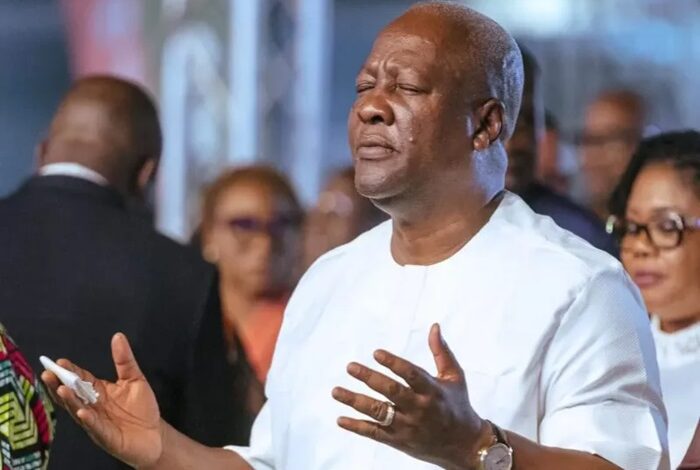
He said the spirit of thanksgiving must instead reflect in the lives Ghanaians lead and the values they uphold, and used that argument to elevate the day’s theme from a one-off message to a national commitment going forward.
He laid out the stakes plainly. Economic transformation without moral transformation, he warned, cannot endure. Prosperity without integrity is fragile. Development without discipline is unsustainable. And growth without justice, he said, leaves too many people behind.
He grounded the argument in scripture, citing Proverbs 14 verse 34, which states that righteousness exalts a nation but sin is a reproach to any people.
He then mapped that principle onto Ghana’s immediate situation, arguing that the country’s ongoing economic recovery has been built on discipline and must now be sustained by integrity, protected by justice and strengthened by national unity.
The Values That Must Define Ghana’s Future
President Mahama called on Ghanaians to recommit to a specific set of values: honesty, accountability, patriotism, compassion, discipline, respect for one another, and an unwavering commitment to the common good.
The list was not framed by the President as aspirational but as necessary, with each value named as a requirement for the kind of country Ghana is trying to become.
He placed particular emphasis on unity, describing it as one of Ghana’s greatest blessings. He acknowledged that Ghanaians practise different faiths and hold different political opinions, but argued that these differences do not define the country’s core identity.
“Before we belong to political parties, we belong to Ghana; Before we identify with tribe or region or religion, we are citizens of one republic, Ghana.”
President John Dramani Mahama
He described the constitution as a binding force and history as a source of shared identity, and warned that the country’s future depends on the ability of its people to work together across those differences rather than allowing them to become permanent fractures.
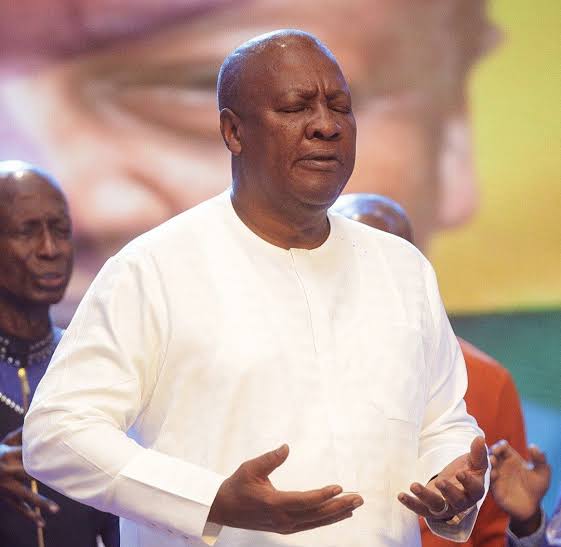
A Direct Rejection of Division and Corruption
President Mahama named several forces he called on Ghanaians to reject: bitterness, intolerance, division, corruption, and cynicism. He paired each rejection with a positive alternative, calling instead for dialogue over hostility, service over self-interest, unity over division, and hope over despair.
He made his reasoning explicit. “No nation has ever achieved greatness by allowing its differences to define its future,” he said, framing division not merely as a social problem but as a structural barrier to national achievement.
The force of that argument came from its directness. President Mahama did not couch the appeal in diplomatic language or soften it with qualifications. He stated clearly what Ghana must choose against and what it must choose for, and he placed that choice in the hands of every Ghanaian rather than in the machinery of government.
Direct Words to Religious and Traditional Leaders
Closing that section of his address, President Mahama turned to speak directly to two of Ghana’s most influential non-governmental institutions. He thanked religious leaders for their prayers and moral leadership, and asked them to continue guiding the nation with wisdom, humility and courage.
He extended a similar appeal to traditional leaders, asking them to keep promoting peace, reconciliation and the values that have sustained Ghanaian communities across generations.

Both appeals pointed toward the same underlying conviction that animate the rest of the speech: that the state alone cannot carry the moral weight of national development.
Churches, mosques, shrines and palaces do work that ministries cannot, reaching into communities and shaping behavior in ways that legislation never will.
For President Mahama, a Ghana that resets its values successfully will do so because its leaders in every sector, elected, appointed, anointed and traditional, choose to pull in the same direction.
READ ALSO: Fuel Price Cuts Reach Pumps as OMCs Begin July Reductions