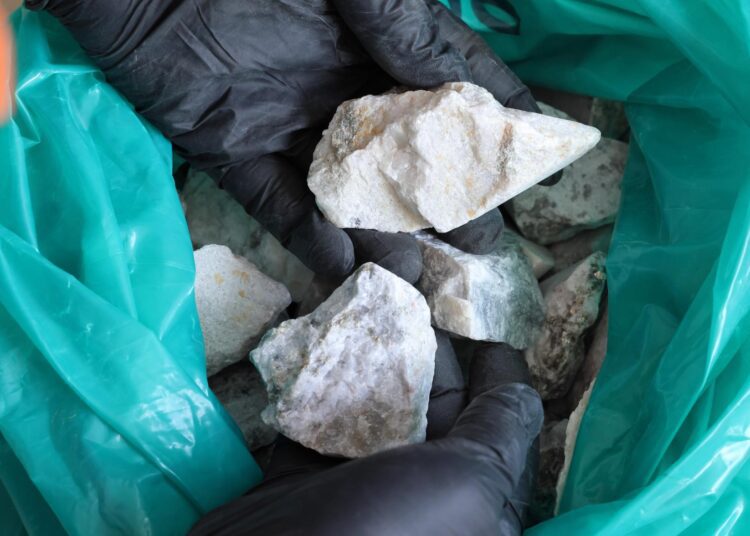
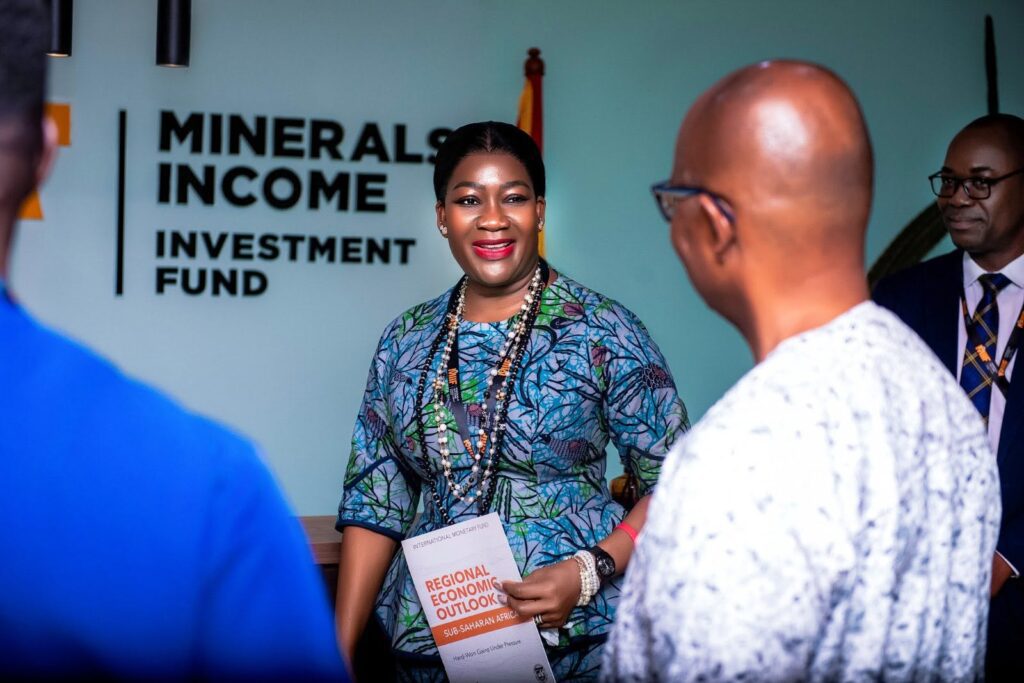
The Minerals Income Investment Fund (MIIF) has underscored a pivotal shift in the global energy paradigm, highlighting that the world’s clean energy future will not be powered by oil, but will instead be fueled by a dramatic surge in critical minerals.
This transition is highlighted by projections indicating that global demand for lithium could escalate by up to eight times by 2030 as the international community aggressively adopts greener infrastructure.
This sudden and exponential rise reflects a broader structural reorientation of transport and grid storage frameworks worldwide, positioning lithium as the quintessential anchor of modern industrial decarbonization strategies.
“The world’s clean energy future will not be powered by oil; it will be powered by critical minerals. At MIIF, we recognise the strategic value of Ghana’s critical minerals and remain committed to investing responsibly to unlock their potential, create lasting value, and secure prosperity for future generations.”
Minerals Income Investment Fund (MIIF)
The market trajectory reveals that this massive demand is primarily propelled by the exponential expansion of electric vehicles (EVs) and large-scale battery storage facilities globally.
In tandem with lithium, other foundational materials such as graphite are anticipated to see their demand grow five times over the same period, creating an unprecedented supply-chain pull for mineral-rich jurisdictions.
As nations race to meet net-zero carbon targets, these critical minerals have rapidly evolved from specialized commodities into the very foundation of the global energy transition, fundamentally altering traditional commodity market dynamics and geopolitical resource strategies.
The Geopolitical and Macroeconomic Windfall for Resource-Rich Nations
For primary lithium-producing nations, this massive demand curve represents an extraordinary macroeconomic windfall capable of reshaping national balance sheets and driving long-term industrialization.
Developing economies endowed with extensive lithium deposits are uniquely positioned to leverage these assets to attract multi-billion-dollar foreign direct investments.

Governments are increasingly looking beyond simple resource extraction, aiming instead to integrate horizontally into high-value segments of the supply chain, such as domestic refining, chemical processing, and the localized assembly of battery cells.
By shifting away from raw ore exports toward high-grade lithium carbonate and hydroxide processing, these countries can capture a significantly larger share of the global clean technology value chain.
Furthermore, the influx of international capital provides producing countries with a unique mechanism to reinforce their national sovereign wealth funds and investment vehicles.
As sovereign entities capture higher royalty revenues and corporate taxes from mining operations, this capital can be strategically reinvested into domestic infrastructure, education, and healthcare systems.
This trend establishes a sustainable economic cushion that helps mitigate the historical vulnerabilities associated with volatile commodity cycles.
Consequently, the lithium boom offers a historic window for mineral-producing states to transition from traditional agrarian or oil-dependent frameworks into highly sophisticated nodes of the global green technology network.
Socio-Environmental Responsibilities and Sustainable Extraction Frameworks
However, the rapid acceleration of mining operations introduces severe environmental and social responsibilities that producing countries must actively manage to avoid local degradation.
Lithium extraction is famously resource-intensive, often requiring millions of gallons of water per ton of mineral produced, which can threaten local water tables in arid mining regions.
Producing states face the delicate task of implementing rigorous regulatory frameworks that mandate water recycling, minimize ecological footprints, and strictly enforce carbon-neutral mining methodologies.
Without these stringent environmental oversights, the global transition toward cleaner technologies could inadvertently trigger localized ecological crises, undermining the moral and practical foundation of the green movement.
On the social front, host governments must establish robust frameworks to ensure that local communities directly benefit from the extraction of critical minerals.
This involves creating binding community development agreements, generating high-skilled local employment, and guaranteeing that indigenous land rights are fully respected and protected throughout the lifecycle of the mine.
Ensuring complete transparency in the distribution of mining revenues is critical to preventing corruption and avoiding the historical pitfalls of the “resource curse.”
By mandating that mining conglomerates adhere to strict Environmental, Social, and Governance (ESG) criteria, lithium-producing jurisdictions can protect their natural heritage while fostering stable, long-term economic prosperity for their citizens.
Market Volatility, Supply Chain Security, and Infrastructure Integration
Finally, lithium-producing nations must strategically navigate severe market volatility and the complex security demands of international supply chains.
The rapid scaling of production capacities can frequently lead to short-term supply gluts or acute shortages, resulting in dramatic price fluctuations that complicate fiscal planning and corporate investment timelines.
To insulate their economies from these unpredictable market shocks, producing nations are actively pursuing long-term off-take agreements and strategic bilateral partnerships with major automotive manufacturers and global technology firms.
These collaborative agreements provide necessary price stability and guaranteed market access, allowing for more reliable planning and execution of large-scale infrastructure projects.

Ultimately, the long-term success of these mineral-rich nations depends on their capacity to build comprehensive, integrated logistics networks that can reliably move refined products to global markets.
Investments in modern deepwater ports, specialized railway systems, and clean energy grids are essential to maintain competitive advantages and ensure seamless supply chain integration.
By combining robust physical infrastructure with progressive regulatory policies, lithium-producing countries can solidify their roles as indispensable pillars of the new energy economy.
Through these coordinated efforts, the transition away from fossil fuels becomes not just a global climate victory, but a powerful engine for equitable industrial development and shared international prosperity.
READ ALSO: UN Voices Grave Concern Over Deadly Russian Attack on Kyiv