
The critical intersection of scientific innovation, climate volatility, and national survival took center stage as the Council for Scientific and Industrial Research (CSIR) issued an urgent mandate for the future of Ghanaian agriculture during a national virtual symposium to commemorate the 2026 Day of Scientific Renaissance of Africa (DSRA).
The nation’s foremost scientific institution delivered a stark warning: while proven, climate-smart solutions exist within research repositories, a lack of aggressive capital investment, strategic partnerships, and immediate field adoption leaves Ghana’s food supply increasingly exposed to environmental shocks.
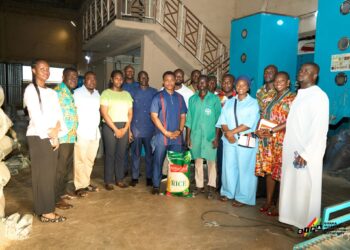
“Organized under the auspices of the Ministry of Environment, Science and Technology (MESTI) and in close collaboration with the Ghana Atomic Energy Commission (GAEC), the national virtual symposium gathered a diverse coalition of scientists, policymakers, development financiers, and grassroots farmer organizations”
Council for Scientific and Industrial Research
United under the urgent theme, “Strengthening Research Partnerships and Scientific Innovation for Climate Resilient Agricultural Development in Ghana,” driven by the operational slogan, “Advancing Science, Transforming Agriculture,” the discourse focused heavily on the harsh environmental disruptions directly breaking down the country’s agricultural baseline.
Providing an expert diagnostic on this systemic vulnerability, Dr. Stephen Yeboah, a leading Climate-Smart Agriculture Expert stationed at the CSIR-Crops Research Institute (CRI), detailed the inescapable link connecting changing microclimates and domestic stability.
Dr. Yeboah argued that agricultural production cannot be looked at in isolation from household economics.
According to him, when weather patterns fluctuate, the immediate result is felt at the family dinner table, as delayed rains disrupt planting schedules, forcing farmers to replant multiple times, exhausting their financial capital on seeds and fertilizers, and lowering the final harvest volume.

“Every delayed rainfall, prolonged drought and unexpected floods have a direct effect on household food security, making the adoption of climate-smart technologies an absolute necessity for survival,” Dr. Yeboah stated.
He explained that the vulnerability of the Ghanaian agricultural landscape stems from its historic reliance on predictable natural patterns, noting the fact that more than 80 percent of Ghana’s agricultural production remains entirely dependent on rain-fed farming.
This heavy reliance exposes the majority of the nation’s food security to the erratic whims of changing weather conditions across all agro-ecological zones.
Rising temperatures, erratic rainfall onset, and truncated growing seasons are shifting from isolated anomalies into a persistent daily reality. For millions of smallholder farmers, these climatic shifts translate directly into lost inputs, diminished yields, and an increasingly precarious economic existence.
The CSIR noted that climate change is no longer a distant threat but a daily reality affecting food production, livelihoods and national food security.
Prolonged droughts, delayed rainfall, shorter growing seasons and floods are increasingly disrupting farming activities, while pest and disease outbreaks, including fall armyworm infestations, continue to deepen production challenges.
Preventive Planning
The symposium participants emphasized that the window for preventive planning is rapidly closing, highlighting that when traditional rain patterns fail or shift unexpectedly, the entire supply chain – from local market availability to macroeconomic stability – suffers an immediate shock.
To ground these warnings in concrete reality, the symposium highlighted recent infrastructural failures brought on by extreme weather anomalies. A stark example analyzed by the scientific community was the destructive flooding at the Weta Irrigation Scheme, located in the Ketu North Municipal of the Volta Region.

The Weta scheme, which manages an expansive 880 hectares of vital rice cultivation, was severely compromised when intense weather events overwhelmed the area.
The resulting deluge did not merely submerge fields; it effectively stripped away topsoil through severe erosion, physically ruined standing crops, and breached local storage facilities, completely destroying harvested produce that had been secured for market distribution.
For the CSIR, this specific disaster perfectly illustrated how climate shocks can instantly erase months of agricultural labor and wipe out regional food buffers.
Researchers were encouraged to engage in field-level crop assessments to identify resilient traits that can withstand extreme environmental stress, physically monitoring crop health and architectural integrity under open-air field conditions to select variations that resist lodging during sudden inundations and remain viable during erratic rainfall shifts.
The crisis at Weta further underscored a broader truth: irrigation systems alone are not an absolute shield if they are not paired with climate-smart management and robust engineering. The destruction of stored produce in the Volta Region demonstrated that post-harvest security is just as vulnerable to climate variability as the cultivation phase itself.
To counter this, a cycle of Alternate Wetting and Drying (AWD) was proposed as an advanced irrigation methodology championed by climate-smart agricultural frameworks to conserve water and manage soil conditions systematically.
By allowing the field to dry out naturally before re-applying irrigation water, farmers can strengthen root structures, minimize water dependency, and reduce the vulnerability of the field to the massive saturation levels that lead to rapid erosion during sudden heavy downpours.

To transition from diagnostic warnings to actionable breakthroughs, the CSIR symposium placed significant emphasis on the library of existing, proven scientific solutions currently waiting for large-scale deployment.
Scientists at the Crops Research Institute and sister institutions have spent years developing short-gestation crop varieties, drought-tolerant maize strains, and high-yielding rice varieties to navigate shorter growing seasons. However, the recurring bottleneck remains the chasm between experimental test plots and the millions of smallholder farms scattered across Ghana’s agro-ecological zones.
The symposium brought together financial institutions and private sector actors to construct new pathways for capital delivery, as bridging this execution gap requires an overhaul of traditional financing and research partnerships.
The CSIR argued that without dedicated financial instruments that lower the risk of adopting new technologies, resource-constrained farmers cannot afford to transition to climate-smart systems, even when confronted with clear climate threats.
The 2026 Day of Scientific Renaissance of Africa served as an important wake-up call for the entire nation.
As science does its part by delivering the technologies and methodologies required to insulate Ghanaian farming from environmental shocks, the burden of action rests with the government, private investors, and development partners to fund the transition from vulnerable rain-fed dependence to resilient, science-led agricultural systems.
READ ALSO: Hamas Dissolves Government In Gaza