President John Dramani Mahama has announced the establishment of a new state Initiative to manage and maintain medical equipment nationwide, saying government has learned from past failures where costly hospital equipment broke down for lack of trained personnel and proper upkeep.
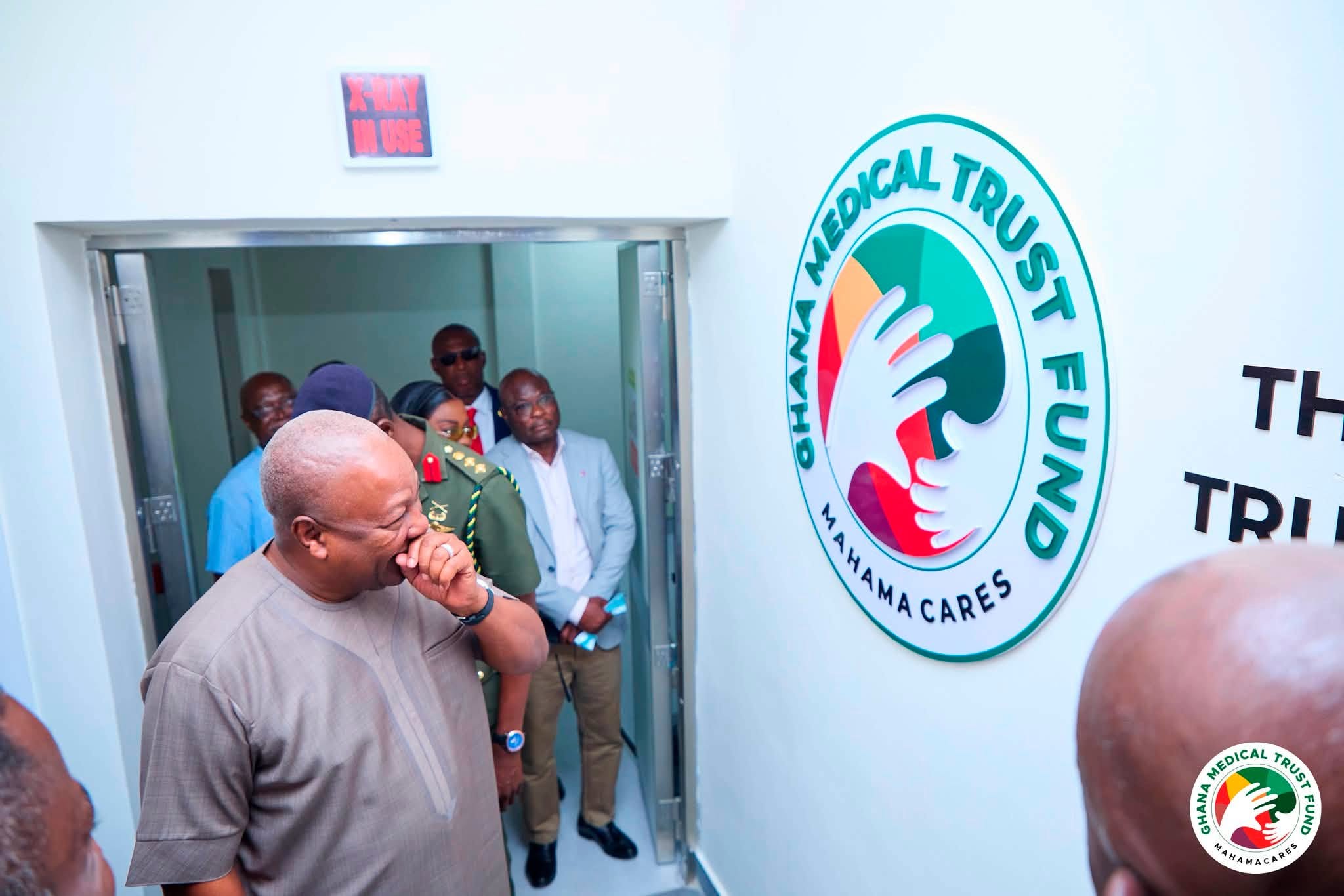
Speaking at the commissioning of the new Catheterisation Laboratory at the National Cardiothoracic Centre, funded by the Ghana Medical Trust Fund, the President said Cabinet has approved the creation of Ghana Medical Equipment Services Limited, a subsidiary of the Medical Trust Fund that will be responsible for supplying, operating and maintaining medical equipment across the country’s health facilities.
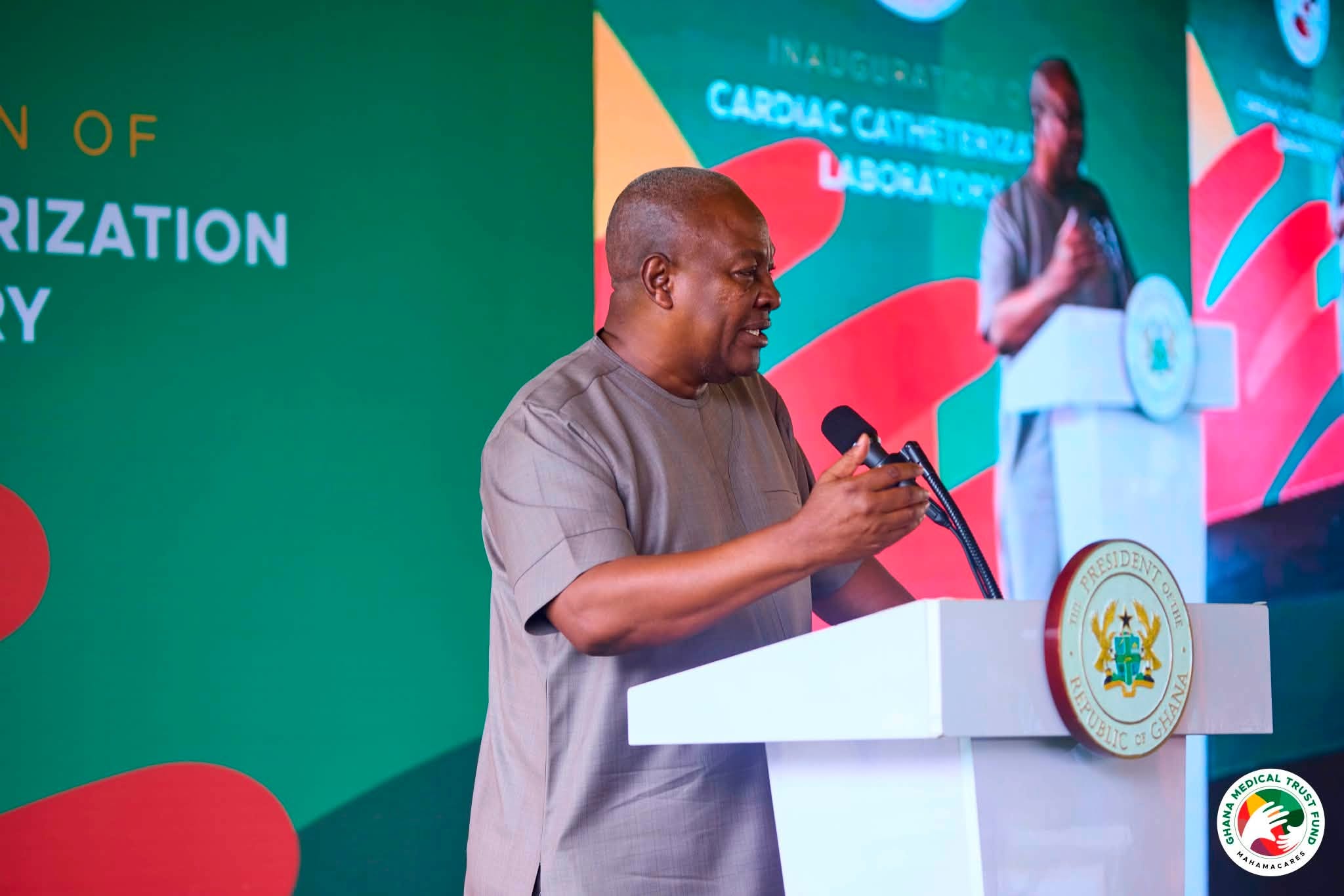
President Mahama traced the idea behind the Fund back to its original conception, explaining that its focus had initially been narrow.
“When we conceptualised the Medical Trust Fund, our attention was focused on the cost of financing the diagnosis and treatment of non-communicable diseases. However, as we worked through the concept, we realised that financing diagnosis and treatment alone was not enough.”
H.E John Dramani Mahama
He said it soon became clear that even where patients could be financed, many facilities lacked the equipment nearby to diagnose and treat them, and that skilled professionals were still needed to operate whatever equipment was provided.
As a result, the Medical Trust Fund’s mandate expanded beyond financing care to also ensuring the availability of diagnostic equipment, essential materials and the trained personnel required to run them, so that patients could access quality healthcare closer to home, ideally at the district level.
A Lesson From a Previous Retooling Programme
The President drew a direct comparison with an earlier national equipment drive he oversaw as Vice President under the late President John Evans Atta Mills, when government spent roughly US$250 million retooling regional and district hospitals with MRI scanners, X-ray machines and other equipment.
“Two years later, however, we discovered that much of the equipment had broken down because personnel had not been adequately trained to operate and maintain it. Many of the machines had to be replaced, and we realised that it was not a sustainable model.”
H.E. John Dramani Mahama
That experience, he said, shaped the design of the current programme, built around the principle that equipment, personnel, financing, diagnostics and treatment all have to work together as one interconnected system rather than as separate interventions.
A New Subsidiary to Manage the Equipment Lifecycle
To avoid repeating that outcome, the President said Cabinet has approved the establishment of Ghana Medical Equipment Services Limited as a subsidiary of the Ghana Medical Trust Fund. The new company will not only supply and maintain medical equipment but will also be responsible for the human resource component needed to operate it effectively, and for replacing equipment that becomes obsolete or is damaged beyond repair.
“We believe this is a far more sustainable model that will protect the investments made by the people of Ghana and ensure they do not go to waste as happened in the past.”
H.E. John Dramani Mahama
Widening Footprint of the Trust Fund
The announcement adds a new institutional layer to the Medical Trust Fund, popularly known as Mahama Cares, that has grown steadily since it was established to help finance the diagnosis and treatment of non-communicable diseases such as cancer, cardiovascular disease, kidney failure and diabetes.
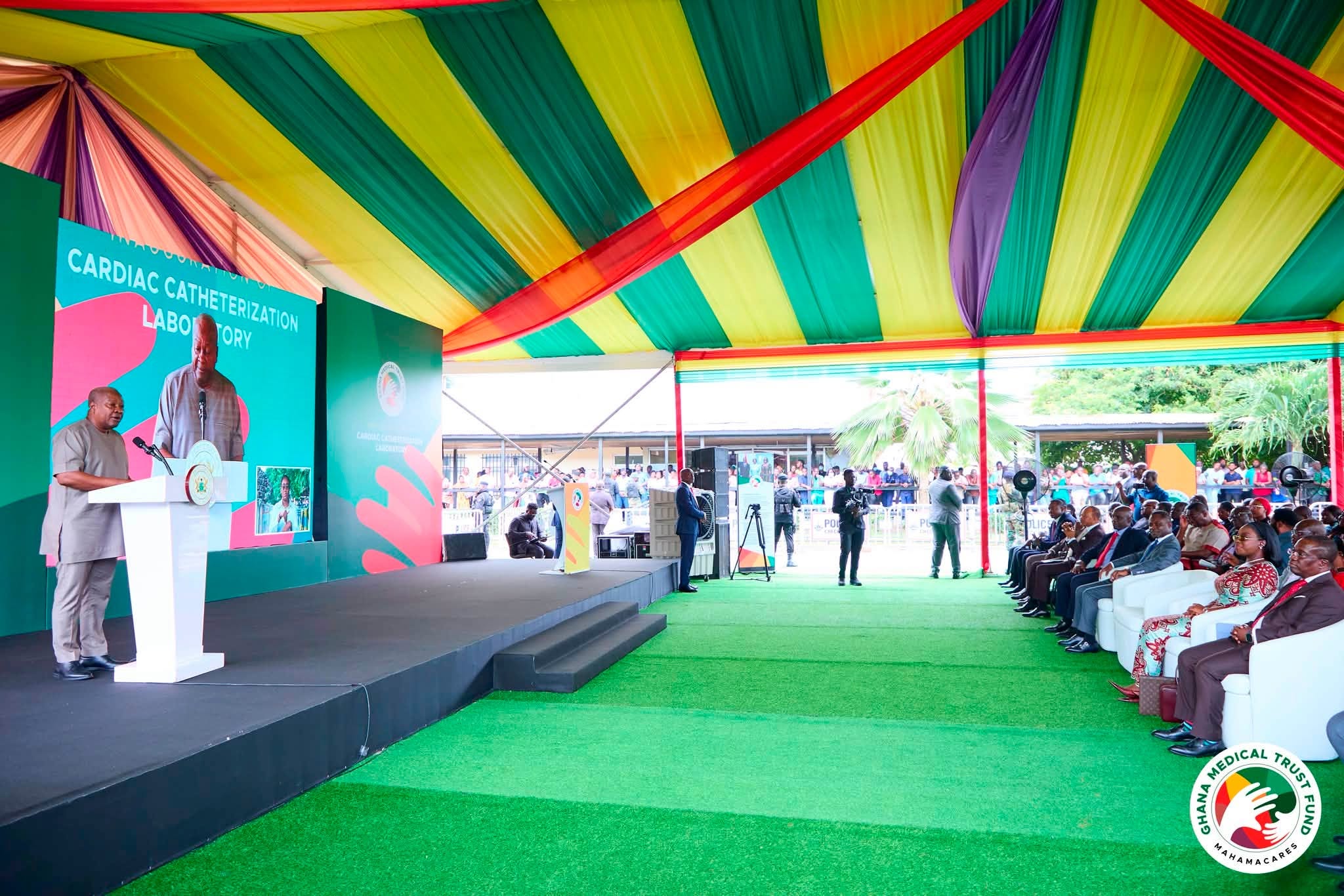
Beyond the Korle Bu Cath Lab commissioned on the day, similar catheterisation facilities are under construction at Komfo Anokye Teaching Hospital in Kumasi and Tamale Teaching Hospital, part of a broader plan to extend specialist cardiac care beyond Accra.
The Fund has also drawn support from outside government, including a recent GH¢2 million contribution from the Ghana Gold Board toward strengthening the country’s health infrastructure, reflecting a widening base of institutional backing for the initiative.
With Cabinet approval secured, attention will now turn to how quickly Ghana Medical Equipment Services Limited becomes operational, and how it integrates with the Fund’s existing work financing treatment for patients with chronic diseases.
For a programme that has already begun rolling out cardiac facilities in three regions, the new subsidiary is intended to ensure that this generation of investment in medical equipment does not suffer the fate of the retooling programme the President recalled from over a decade ago.
Read More: Transforming Specialised Healthcare Requires Action, Not Policy Alone