The Minerals Commission has firmly established that an operating permit will not be issued to GoldCoast GRC Ghana Limited for its proposed offshore mineral reconnaissance activities until all statutory environmental and regulatory obligations are fully met.
This institutional posture ensures that state-approved corporate extraction processes align rigorously with the legislative provisions governing the national maritime territory.
The regulatory directive positions ecological security and local community protection at the forefront of mineral concessions, halting any immediate operational advancement by the mining firm within the sovereign waters of the Republic.
“The Minerals Commission will continue to collaborate with the EPA to ensure GoldCoast GRC Ghana Ltd. meets the highest regulatory standards before any operating permit is issued.”
Deputy Chief Executive Officer of the Minerals Commission, Victoria Awuni
The statutory assessment requires a methodical review under Ghana’s Environmental Impact Assessment (EIA) framework to prevent ecological damage before any mineral mapping or survey work can legally commence.
The ongoing regulatory evaluation by state agencies focuses on balancing corporate exploration goals with the preservation of aquatic resource bases that support coastal populations.

Government regulators are focusing their structural assessments on prospective shocks to marine biodiversity, ocean water quality, and benthic habitats, as well as the migration paths of aquatic species and the socioeconomic stability of artisanal fishing hubs.
This structural oversight underlines a firm policy shift where resource development cannot bypass strict environmental compliance or threaten traditional marine livelihoods.
Regulatory Frameworks and Corporate Environmental Compliance
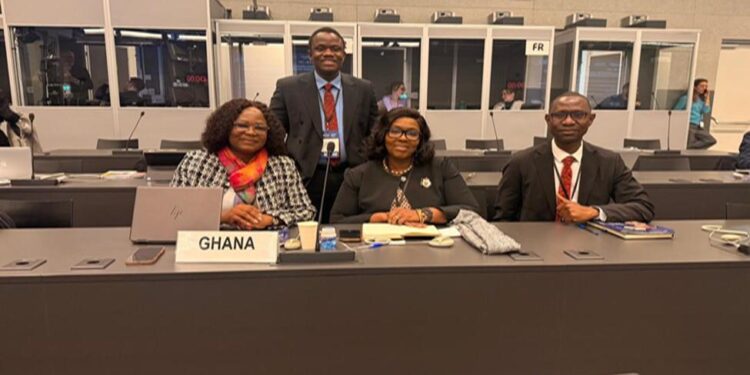
The Deputy Chief Executive Officer of the Minerals Commission, Victoria Awuni, clarified during an Environmental Protection Authority (EPA) stakeholder engagement in Accra that while mineral discovery drives growth in the mining sector, “it must not come at the expense of the country’s marine ecosystems or the livelihoods of coastal communities.”
The state’s administrative mechanism requires a joint regulatory oversight model where the Minerals Commission and the EPA enforce structural check-and-balance protocols.

By deploying this dual-agency framework, regulators can prevent private exploration initiatives from evading national sustainability standards.
The scope of the current corporate application filed by GoldCoast GRC Ghana Limited covers non-invasive offshore reconnaissance, using tools such as bathymetric mapping, hydrographic surveys, remote sensing, and geophysical tracking. According to Ms. Awuni, these techniques are deliberately selected and “designed to minimise disturbance to seabed habitats, marine life and fisheries.”
However, the non-invasive technical nature of these surveys does not exempt the company from rigorous regulatory review, as state scientists evaluate the long-term cumulative impacts of sonar frequencies and underwater imaging equipment on vulnerable marine populations.
The Strategic Importance of Strict Scrutiny in Modern Extractives
Industrial regulatory scrutiny in resource management remains essential for safeguarding public resources, mitigating irreversible environmental degradation, and preventing conflict between corporate entities and host communities.
Historically, unregulated or loosely monitored mineral exploration has caused severe ecological damage, including heavy metal contamination of water bodies, destruction of arable land, and the collapse of local biodiversity.
By enforcing strict, science-based compliance checks before granting concessions, state regulators protect public health and prevent the long-term economic burdens associated with corporate environmental remediation.

Furthermore, a rigorous licensing process protects the sovereign economic interests of the state by ensuring that only financially capable and technologically competent firms operate within the extractive sector.
Comprehensive compliance checks prevent speculative corporate entities from monopolizing mineral concessions without bringing actual development or implementing proper risk-management measures. In an era marked by climate volatility and global ecological strain, strict oversight ensures that extraction projects do not permanently destroy fragile ecosystems, collapse commercial fisheries, or displace indigenous communities dependent on natural resources.
Balancing Extractive Economics with Ecological Sustainability
Ms. Awuni called for a transparent, science-based, and participatory assessment process, emphasizing that responsible mineral development must balance economic opportunities with the protection of Ghana’s coastal and marine environment.
This administrative insistence on empirical verification and open stakeholder involvement forms the cornerstone of modern sustainable resource management.

By including civil society organizations, local fishers, and environmental scientists in the evaluation process, the state builds institutional transparency and strengthens regulatory accountability.
This integrated regulatory approach reduces corporate risk and protects local communities, aligning Ghana’s mining sector with international ESG (Environmental, Social, and Governance) investment principles.
The strict regulatory posture maintained by the Minerals Commission demonstrates that economic expansion and environmental preservation are not mutually exclusive.
Instead, through rigorous enforcement and transparent administrative oversight, the state can secure sustainable development while protecting its natural heritage for future generations.
READ ALSO: Ecobank Makes History With $450 Million World’s First Nature Bond