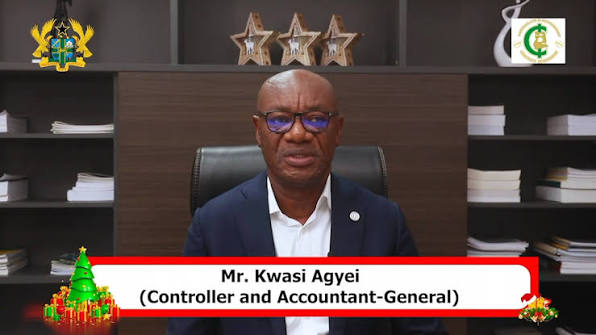
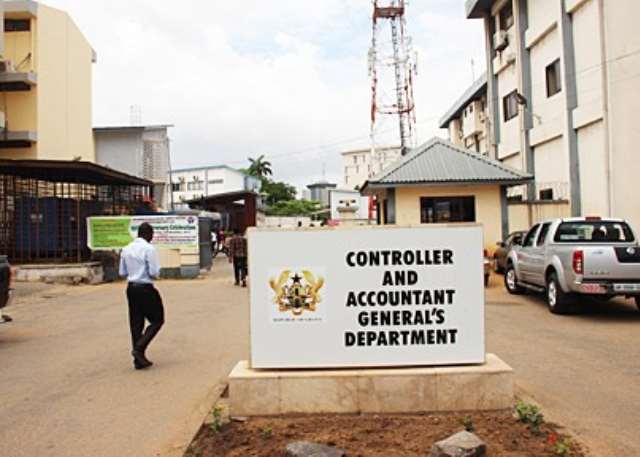
The Controller and Accountant-General’s Department has dismissed claims circulating on social media that government has spent almost GH¢11 billion on the Accra-Kumasi Expressway project, insisting the allegation stems from a misunderstanding of standard government accounting procedures.
In a detailed statement addressing the claims, the CAGD explained that while funds have indeed been earmarked and transferred for the project, none of that money has been paid to any contractor or spent on actual construction works, despite the main works on the expressway not yet having begun.
“The attention of the Controller and Accountant-General’s Department has been drawn to claims circulating on social media suggesting that Government has spent almost GH¢11 billion on the Accra-Kumasi Expressway project even though the main construction works have not started.
“The CAGD wishes to clarify that this claim is based on a misunderstanding of Government accounting procedures”.
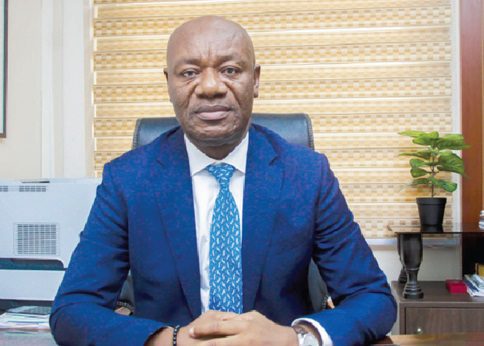
Controller and Accountant-General, Department
A Special Purpose Vehicle Set Up to Manage the Project
The department explained the institutional structure behind the expressway project, describing it as one of government’s flagship infrastructure undertakings.
To avoid the delays, funding challenges, and cost overruns that have plagued similar large-scale projects in the past, the government, acting through the Ghana Infrastructure Investment Fund, established Accra-Kumasi Expressway Limited as a Special Purpose Vehicle to implement the project.
According to the CAGD, this company is classified as a State-Owned Enterprise for funding and accounting purposes, a classification that plays a central role in explaining how the transferred funds appear within government’s financial records.
Funds Earmarked but Not Yet Disbursed
The statement detailed the funding process that followed parliamentary approval of the project’s concession arrangement. Government earmarked proceeds from the Annual Budget Funding Amount and mineral royalties within the 2025 Budget specifically to finance the expressway project.
These approved funds were subsequently transferred from the Consolidated Fund into a dedicated Bank of Ghana account established for the project. The CAGD was explicit in stressing that this transfer does not equate to actual expenditure on construction.
“The CAGD wishes to emphasise that these funds have not been paid to any contractor or spent on construction works. They remain in the dedicated Bank of Ghana account pending project execution”.
Controller and Accountant-General, Department
Right of Way Clearing Separate From Project Funds
Addressing another point of public confusion, the department clarified that the ongoing right-of-way clearing currently being carried out by the Ghana Armed Forces along the expressway route is a separate preparatory activity, distinct from the funds transferred for the main construction project.

This distinction addresses concerns that visible activity along the project route, such as land clearing, might have been mistakenly linked to the billions of cedis referenced in the social media claims, when in fact the two are financed and managed independently of each other.
Understanding Ghana’s Three-Tier Government Accounting Structure
To further explain the source of the confusion, the Controller & Accountant-General’s Department (CAGD) outlined the structure of government accounting across three distinct levels.
These include Central Government, comprising Ministries, Departments and Agencies, Local Government, comprising Metropolitan, Municipal and District Assemblies, and Government Business Entities, comprising State-Owned Enterprises, the category under which Accra-Kumasi Expressway Limited falls.
The department explained that under established government accounting rules, any transfer of money from the Central Government to another government entity outside the Central Government accounting group is recorded as Grant Expenditure in the books of the Central Government and simultaneously as Grant Revenue in the books of the receiving entity.
“This is a standard accounting treatment and does not mean the receiving entity has spent the funds. The same principle applies to transfers made to institutions such as the District Assemblies Common Fund, GETFund and the National Health Insurance Authority.”
Controller and Accountant-General Department
Correcting the Interpretation of Government Books
Building on this explanation, the CAGD directly addressed the flawed reasoning behind the viral claims, stating clearly that the appearance of the transfer as expenditure within Central Government’s accounts should not be mistaken for actual construction spending.
“It is therefore incorrect to conclude that because the transfer appears as expenditure in the accounts of Central Government, the funds have already been spent on the construction of the Accra-Kumasi Expressway”.
Controller and Accountant-General, Department
The department closed its clarification by reaffirming its confidence in the integrity of the accounting approach applied to the project, describing it as fully aligned with established national standards.
The Allegation That Triggered the Clarification
The CAGD’s statement follows public claims made by Kofi Tonto, an aide to former Vice President Dr Mahamudu Bawumia, who alleged that government had already spent close to one billion dollars on the expressway project without laying a single kilometre of asphalt.
According to the allegation, Kofi Tonto described the spending as covering only pre-construction works and land clearing, using strong language to characterise the situation as suspicious.
“Without laying a kilometer of asphalt, the Gov has already spent about $1 Billion on the Kumasi-Accra Expressway. Just pre-construction works and clearing of woods. Won’t mince words, these guys are criminals”.
Kofi Tonto, Aide to former Vice President Dr Mahamudu Bawumia
Setting the Record Straight on Project Progress
The CAGD’s detailed response effectively separates the technical realities of government accounting from the political narrative that had gained traction on social media, offering a clearer picture of how funds allocated for the expressway have been managed so far.
According to the department’s explanation, the money remains intact within a dedicated Bank of Ghana account, awaiting actual project execution rather than having already been disbursed toward construction costs.
As the Accra-Kumasi Expressway project moves toward its construction phase, the CAGD’s clarification is likely to shape ongoing public discourse around the project’s financing, particularly as scrutiny over major infrastructure spending continues to feature prominently in Ghana’s political and economic conversations.
READ ALSO: UK Sanctions Sudan Gold Networks Accused of Funding War