The United States has attacked Iran for the ninth consecutive night.
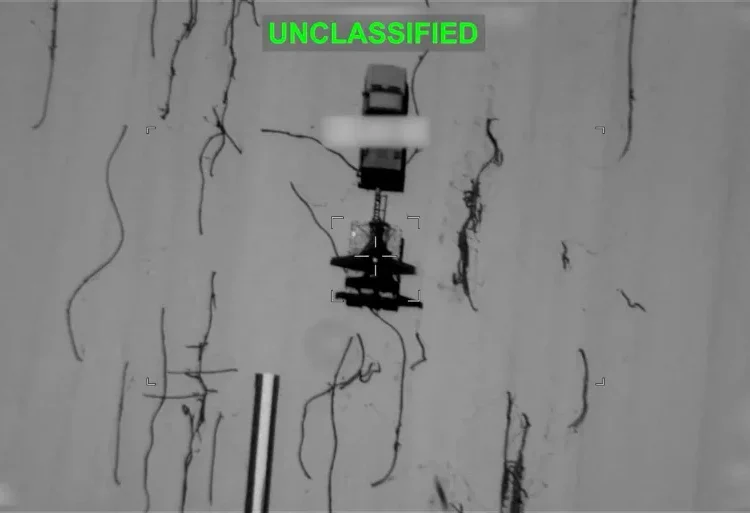
The US military revealed that the attacks on Iran were aimed at “degrading Iranian military capabilities used to attack commercial vessels and mariners transiting the Strait of Hormuz.” It said that it targeted “Iranian military command centers, air defense and coastal surveillance sites, maritime capabilities, missile and drone launch sites” as well as “communications networks.”
The attacks came as the US military confirmed the death of a third soldier in recent days. According to CENTCOM, A US service member has died in northern Iraq after a controlled detonation of unexploded ordnance from a downed Iranian drone.
In Washington, DC, US President Donald Trump told reporters that the Pentagon was hitting Iran “very hard” to honour the three service members who have been killed in Jordan and Iraq.
Trump told reporters after returning to the US capital following the World Cup final, “We hit them very hard again tonight, and we did that in honour of the, probably three, it’s probably three great patriots.” He admitted that “we feel very badly” about the deaths, adding that “Iran cannot have a nuclear weapon.”
Meanwhile, US Secretary of State Marco Rubio told reporters in the Philippines that Washington was still open to diplomacy, but “it has to be real.” Rubio also urged other countries to “step up” to help protect shipping in the Strait of Hormuz, whether by providing “hardware or finances.”

Iranian media reported explosions in multiple cities. Iran’s state-run news agency reported that the American strikes killed at least one person around Tabriz, a northwestern city about 520 kilometers (325 miles) from the capital, Tehran. Tabriz is believed to host underground missile bases run by Iran’s paramilitary Revolutionary Guard.
Explosions were also reported from the port cities of Bandar Mahshahr and Bandar Imam Khomeini in the Gulf to Jask and Sirik near the Strait of Hormuz. Air-defence systems were also activated amid the sound of explosions in the southeastern cities of Konarak and Chabahar. Further explosions were heard near the city of Khvormuj in Bushehr province and as far north as the city of Tabriz.
Iran’s Islamic Revolutionary Guard Corps (IRGC) said it retaliated with fresh missile and drone strikes on Jordan and Kuwait, while sirens sounded again in Bahrain. The IRGC said it had struck US aircraft at Jordan’s Aqaba airport and while also claiming to have destroyed hangars at the Muwaffaq Salti Air Base, which is also known as Al Azraq. It also claimed to have hit US military facilities at Ali Al Salem Air Base in Kuwait.
Iran, US Take Aim At Shipping Traffic

Separately, both Iran and the US have also taken aim at shipping traffic, with Washington saying that it is enforcing a naval blockade on Iranian ports, and Tehran saying that it targets vessels violating its rules on navigating the Strait of Hormuz.
The month-old ceasefire agreement has unravelled amid a fight for the control of the Strait of Hormuz. The latest attacks again showed how, step by step, the US and Iran have inched closer to all-out war as last month’s interim deal meant to permanently end the fighting has crumbled and shipping traffic in the Strait of Hormuz has largely stalled. also, benchmark Brent crude rose today above $90 a barrel, further fueling a global energy crisis sparked by the conflict.
The British military said that as the strikes began, a ship caught fire early today in the Strait of Hormuz near the coastline of Oman. It was unclear what sparked the blaze off Oman, which has been a route the U.S. military has encouraged ships to travel to avoid Iran’s control. The Guard later claimed that it was targeting tankers in the strait.

The IRGC also said today that two oil tankers attempting to transit the waterway the previous night had “exploded”, while attempting to use an “unsafe” corridor there.
It said that the ships did so under what it described as US coercion. “This passage is unsafe for the transport of chemical fertiliser or even a single drop of oil and gas,” the IRGC also warned, adding that the corridor would remain unsafe as long as US military operations in the region continue.
US Central Command (CENTCOM) said on Sunday it has redirected six commercial vessels and disabled another ship to ensure “full compliance” with its blockade.
READ ALSO: Ho Airport Set For Revival With New Development Plans, Transport Minister Reveals