
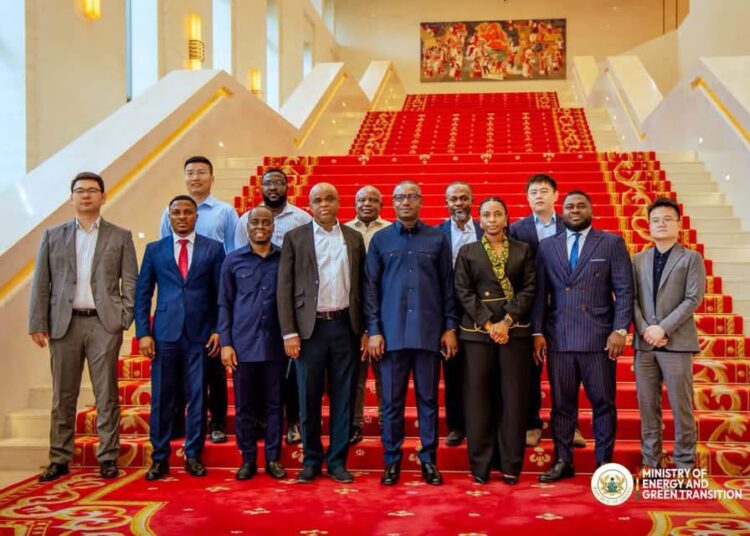
Ghana is stepping up preparations for one of its most significant power sector investments in recent years, with the Ministry of Energy and Green Transition embarking on a strategic international benchmarking mission to study world-class battery energy storage systems ahead of the rollout of the country’s landmark 200-megawatt Battery Energy Storage System (BESS).
The move signals government’s determination to complement expanding renewable energy generation with modern storage technology capable of improving grid stability, enhancing energy security and accelerating Ghana’s transition towards a more resilient electricity system.
The project is expected to become a cornerstone of efforts to integrate larger volumes of solar power into the national grid while reducing supply interruptions associated with renewable energy intermittency.
Energy and Green Transition Minister Dr. John Abdulai Jinapor, who is leading the working visit, said the engagements are providing Ghana with practical operational experience that will directly shape the deployment of the country’s first utility-scale battery storage project.
This hands-on benchmarking is vital as the government rolls out the first phase of Ghana’s landmark 200MW Battery Energy Storage System.
Energy and Green Transition Minister Dr. John Abdulai Jinapor
The Minister noted that studying established battery storage facilities would enable Ghana to adopt proven operational models rather than relying solely on theoretical planning as it modernises its electricity infrastructure.
Preparing for Grid Transformation
According to Dr. Jinapor, the benchmarking exercise is exposing the Ghanaian delegation to advanced operational frameworks, cutting-edge technologies and international best practices in battery energy storage.
The mission forms part of government’s broader strategy to strengthen the country’s electricity network as renewable energy assumes a larger role within Ghana’s generation mix.

Witnessing these sophisticated, utility-scale setups in action is giving us the exact blueprints needed to ensure our upcoming solar-integrated grid deployment is resilient, highly efficient and built to world-class standards.
Energy and Green Transition Minister Dr. John Abdulai Jinapor
Battery Energy Storage Systems have increasingly become a critical component of modern electricity networks because they help balance fluctuations in renewable generation, store excess electricity during periods of high production and release it when demand rises or generation falls.
Unlike conventional thermal plants that provide continuous generation, solar facilities only produce electricity during daylight hours. Large-scale battery storage therefore provides a mechanism for preserving surplus electricity while improving overall grid flexibility.
Supporting Ghana’s Renewable Energy Ambitions
The 200MW Battery Energy Storage System is expected to complement government’s broader renewable energy expansion agenda, which includes increased deployment of solar infrastructure across public institutions, irrigation systems, households and industrial facilities.
Recent government initiatives, including the establishment of the Renewable Energy and Green Transition Fund, expanded solar programmes and investments in electric vehicle infrastructure, have signalled a policy shift towards cleaner energy technologies while maintaining grid reliability.
Battery storage is increasingly viewed as the missing link that allows renewable electricity to be deployed at scale without compromising system stability.
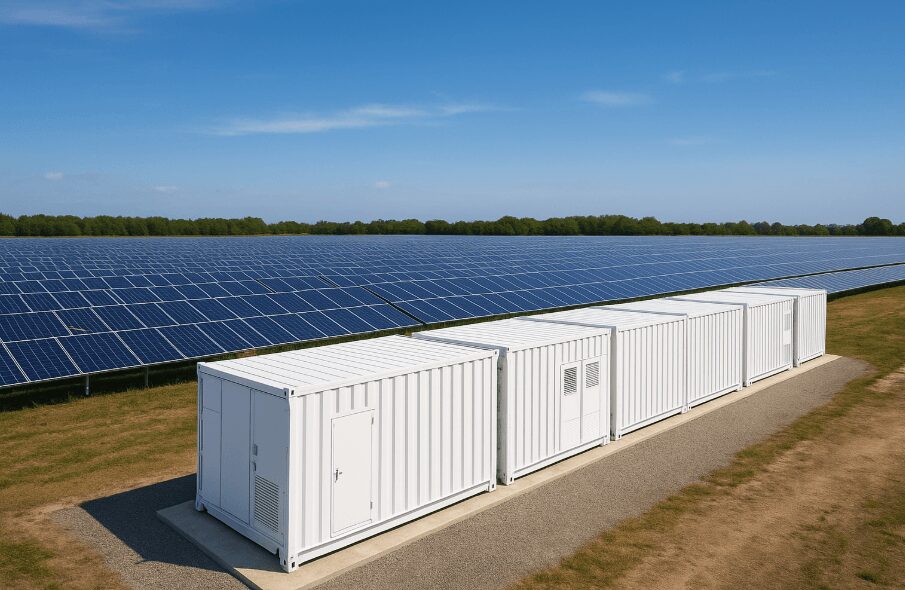
By storing surplus renewable electricity during periods of strong generation and releasing it when required, battery systems reduce dependence on conventional backup generation while improving overall network resilience.
The technology also provides ancillary grid services, including frequency regulation, voltage support and reserve capacity, functions that become increasingly important as renewable energy penetration rises.
Global Lessons for Local Deployment
Rather than developing the project in isolation, the Ministry’s decision to study established international battery installations reflects growing recognition that successful energy transition projects require not only investment but also institutional and operational capacity.
Countries that have rapidly expanded battery storage have done so alongside investments in digital monitoring systems, advanced grid management software and sophisticated operational protocols.

Benchmarking these systems allows Ghana to identify technical standards, maintenance practices and operational models suited to local conditions while avoiding costly implementation mistakes.
The approach also strengthens institutional knowledge within the energy sector, ensuring that future battery projects benefit from accumulated technical experience.
Modernising Ghana’s Electricity Network
The Battery Energy Storage System represents part of a wider transformation taking place across Ghana’s electricity infrastructure.
Government has simultaneously embarked on transmission upgrades, rural electrification projects, renewable energy expansion and efforts to improve operational efficiency within the power sector.
Together, these initiatives suggest that Ghana’s electricity policy is evolving beyond simply increasing generation capacity towards creating a smarter, more flexible and technologically advanced grid.
Energy storage is expected to play an increasingly important role within that transition.
Globally, utility-scale battery installations have become an essential feature of electricity systems seeking to integrate higher levels of renewable generation while reducing exposure to fuel price volatility and greenhouse gas emissions.
For Ghana, whose electricity demand continues to grow alongside industrialisation, storage technology offers an opportunity to improve system resilience while supporting long-term energy security.
More Than Infrastructure
The significance of the benchmarking mission extends beyond the immediate 200MW project.
It signals a recognition that future electricity systems will depend not only on power generation but also on intelligent management of electricity supply and demand.
Battery storage is increasingly becoming an enabling technology for modern electricity markets, allowing utilities to optimise generation, improve reliability and reduce operating costs over time.
As Ghana pursues its energy transition objectives, investments in storage infrastructure could also strengthen investor confidence in renewable energy projects by improving grid integration and reducing curtailment risks.

For policymakers, the current benchmarking exercise therefore represents an investment in institutional capability as much as physical infrastructure.
The experience gained from studying mature battery storage systems is expected to inform not only the initial 200MW deployment but also future expansion of energy storage technologies as Ghana continues modernising its electricity network.
If successfully implemented, the Battery Energy Storage System could become one of the defining projects underpinning Ghana’s transition towards a cleaner, smarter and more resilient power sector, one capable of supporting economic growth while accommodating the increasing role of renewable energy in the country’s electricity future.
READ ALSO: Prof. Frimpong Boateng: Ghana’s Poverty Gap Is a Technology Gap