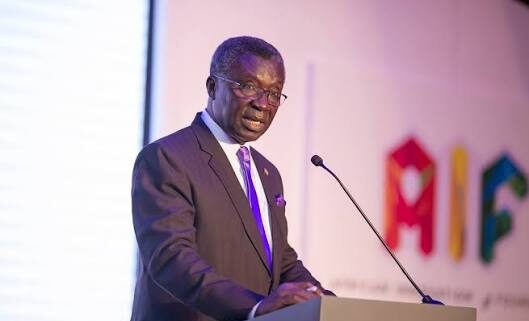
Professor Kwabena Frimpong Boateng, former Minister of Environment, Science, Technology and Innovation, delivered a sweeping critique of Ghana’s development trajectory, arguing that the country’s poverty stems fundamentally from a technology gap rather than a lack of resources.
He made the remarks as inaugural speaker at the 14th Commemorative Lecture in honour of the late President Professor John Evans Atta Mills, organised by the Atta Mills Heritage at the University of Professional Studies, Accra, on July 22, 2026.
Prof. Frimpong Boateng identified Ghana’s first major missed opportunity as the collapse of Dr Kwame Nkrumah’s Seven-Year Development Plan, presented to Parliament in 1963.
“It was a program designed to carry Ghana towards import substitution and industrial job creation and with time, towards the export of industrial goods and services.
“It was a deliberate effort to root the nation’s growth in its own productive and scientific capacity, drawing on the work of CSIR and Ghana Atomic Energy Commission and the universities, particularly Kwame Nkrumah University of Science and Technology”.
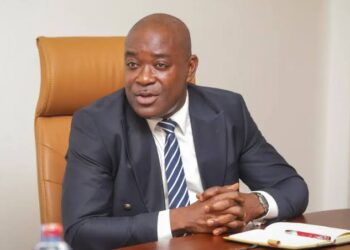
Professor Kwabena Frimpong Boateng, former Minister of Environment, Science, Technology and Innovation
He explained that the plan collapsed after Nkrumah’s overthrow, cutting short Ghana’s path toward self-reliant, technology-driven growth. “The plan survived barely three years of implementation. When Nkrumah was overthrown, the seven-year development plan terminated with him, and Ghana’s path towards a self-reliant, technologically driven economy was abandoned along with it,” he said.
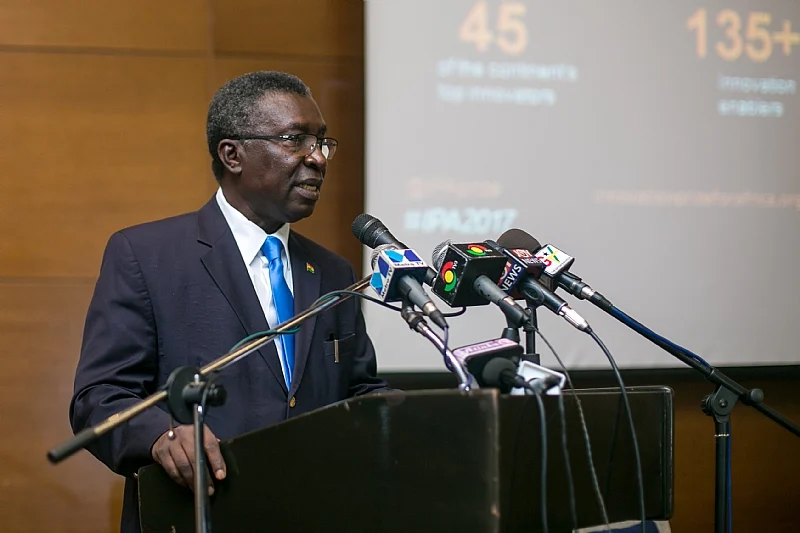
He contrasted Ghana’s trajectory with that of Korea and Malaysia, nations that entered the 1960s at comparable or lower levels of development. “Had the plan been allowed to run its course, and had successive governments built upon it rather than discard it, Ghana might well have kept pace with countries such as Korea and Malaysia. Instead, those countries pulled ahead and Ghana’s research institutions were left to wither,” he said.
Kofi Annan’s UN Legacy Left Unused
Turning to Ghana’s relationship with the United Nations, Prof. Frimpong Boateng argued that the country failed to convert Kofi Annan’s nine years as UN Secretary-General into meaningful development partnerships.
He noted that Ghana’s first substantive industrial partnership with the United Nations Industrial Development Organization only materialised in 2019, financed by Europe rather than Ghana itself. He compared this to India’s decades-long engagement with UNIDO, which transformed the country from an aid recipient into one of the organisation’s top donors.
“Compare that to India, which spent over 50 years building on that relationship, government after government, until it became one of UNIDO’s top 10 donors, paying into the Industrial Development Fund. Thus, India went from asking for help to giving it. That is what future years of discipline look like. Ghana has no such story to tell”.
Professor Kwabena Frimpong Boateng, former Minister of Environment, Science, Technology and Innovation
A School of Mines Without a National Plan
Prof. Frimpong Boateng highlighted Ghana’s University of Mines and Technology as another example of untapped potential, noting that the country possesses an institution comparable to globally respected mining schools without a corresponding national strategy for its graduates.
Among them are Colorado School of Mines in the USA, Western Australia School of Mines at Creighton University, McGill in Canada, Central South University in China, University of Whitewater-Sterling in South Africa, TU-Beck Academy in Freiburg, Germany, and the Camborne School of Mines in the UK.
“The countries on that list have good sustainable mining industries using indigenous technology and locally developed human capital. Ghana has not. Instead of advancing sustainable mining with graduates from our own university, we are content with promoting the type of mining that destroys our environment, our rivers, and our biodiversity”.
Professor Kwabena Frimpong Boateng, former Minister of Environment, Science, Technology and Innovation
Reflecting on a conversation he had with Professor Mills in June 2001, Prof. Frimpong Boateng argued that the true divide between developed and underdeveloped nations lies not in natural resources but in technological capability.
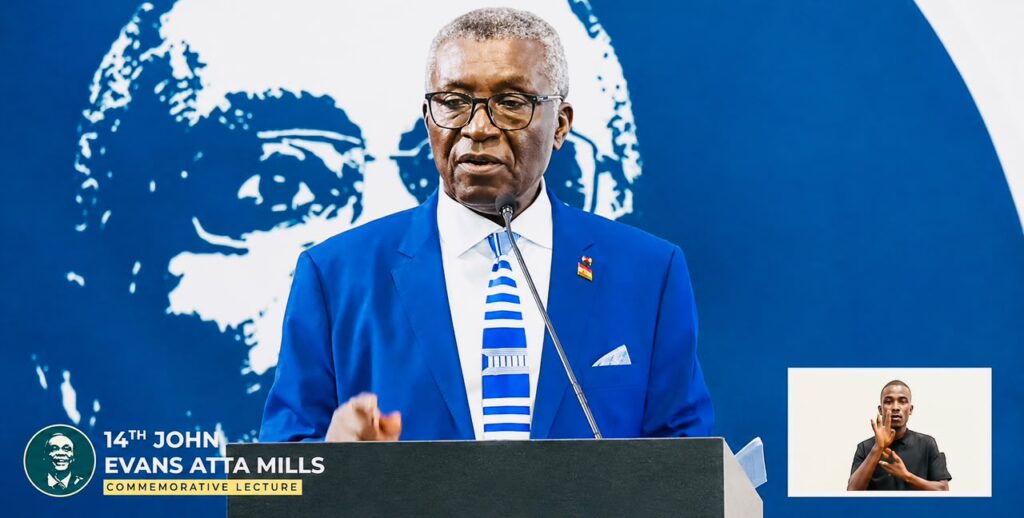
“Africa is the second largest and second most populous continent, covering an area of 20.4% of the Earth’s land surface, and is home to at least 16% of the world’s population. Yet, Africa’s contribution to world commerce is less than 1%,” .
Professor Kwabena Frimpong Boateng, former Minister of Environment, Science, Technology and Innovation
He also pointed to the paradox of Ghana spending heavily on foreign expertise while its own skilled citizens emigrate for lower wages elsewhere. “We spend $4 billion recruiting and paying 100,000 expatriates, whilst at the same time we look on and 250,000 equally qualified Africans leave the continent to work elsewhere for lower salaries,” he said.
Ghana’s Population Size Masks Development Failures
Prof. Frimpong Boateng noted that while Ghana ranks as the world’s 47th most populous country, its standing collapses dramatically when measured against the Human Development Index, which takes into account life expectancy, income, and education, with Ghana ranking 148th out of 181 countries. “In other words, we are a big population, not developed,” he said.
Korea and China Offer Contrasting Examples
To illustrate what deliberate technological investment can achieve, Prof. Frimpong Boateng traced Korea’s transformation from a low-income exporter of textiles and plywood in 1970 into a global leader in semiconductors and shipbuilding.
He singled out Samsung as a striking example of what sustained industrial investment can produce over time. “Samsung started 87 years ago selling dried fish. Now, it accounts for 23% of Korea’s GDP with annual revenue of $240 billion. One company, $240 billion, more than the GDP of 150 countries, including Ghana,” he said.
He offered China’s solar industry as a parallel example, tracing its rapid rise following a 1986 letter from Chinese scientists warning of technological stagnation. “China had virtually no solar production in 2003, but five years later, it was producing more solar panels than the countries that invented them. Neither country succeeded by accident. Both made deliberate long-term investment in research, science, technology and innovation infrastructure, sustained across successive governments,” he said.
Ghana’s Pattern of Abandoned Programmes
Prof. Frimpong Boateng criticised what he described as a recurring pattern in Ghanaian governance, where politically branded programmes fail to outlast the administrations that launched them.
He connected this critique to Professor Mills’ Better Ghana Agenda, which he said reflected a deeper understanding of long-term national planning rarely grasped by the wider public. He listed several government initiatives that he argued shared the same structural weakness of being tied to individual political administrations rather than sustained national strategy.
“What we have instead is a succession of politically named programs that disappear when the President who launched them leaves office. Planting for Food and Jobs was supposed to benefit an average of 1.2 million farmers between 2017 and 2022.
“Yet by 2025, virtually nothing remains of it. One district, one factory, agenda 111, the 24-hour economy, the Nkokonkinkiti are all cut from the same cloth, intentionally, politically announced and structurally incapable of outlasting a changing government”.
Professor Kwabena Frimpong Boateng, former Minister of Environment, Science, Technology and Innovation
A Call for Sustained National Vision
Prof. Frimpong Boateng’s lecture wove together historical analysis, international comparisons, and personal recollection to argue that Ghana’s development challenges are rooted not in a shortage of resources or ideas, but in a persistent failure to sustain long-term technological and industrial strategy across successive governments.
His remarks position Professor Mills’ Better Ghana Agenda as an example of the kind of durable national vision he believes Ghana has consistently failed to build upon, even as the country continues cycling through new politically branded development programmes.
READ ALSO: British-Based Millionaires Call on Burnham to Tax the Wealthiest