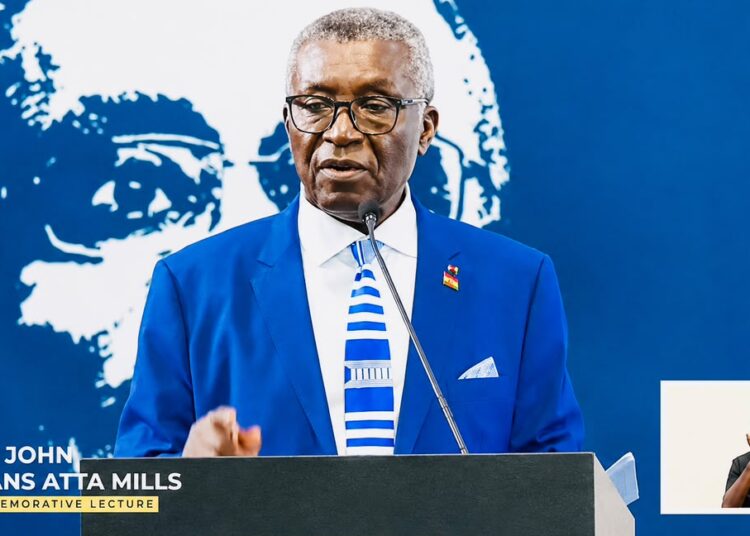
Professor Kwabena Frimpong Boateng, former Minister of Environment, Science, Technology and Innovation has argued that Ghana’s constitutional weaknesses stem from an incomplete adoption of the American presidential system, delivering the inaugural address at the 14th Commemorative Lecture in honour of the late President Professor John Evans Atta Mills.
The event, organised by the Atta Mills Heritage, was held at the University of Professional Studies, Accra. Prof. Frimpong Boateng traced the philosophical roots of the American presidential system, arguing that Ghana adopted its structure without adequately studying the cultural and spiritual principles underlying it.
“Our presidential system of government is mirrored after the American system, just as the Second Republic was mirrored on the Westminster system. But in adopting the American system, Ghana did not adequately research into its cultural and spiritual foundations”.
Professor Kwabena Frimpong Boateng, former Minister of Environment, Science, Technology and Innovation
He explained that the American system rests on a biblical understanding of human fallibility, a belief that shaped the country’s approach to distributing power across separate branches of government.
“The American system is built on biblical understanding of human nature. Specifically, that man is fallible and prone to sin. It is precisely this understanding that produced the elaborate system of checks and balances, independence of the executive, legislature, and judicial branches, each limiting the power of the others”.
Professor Kwabena Frimpong Boateng, former Minister of Environment, Science, Technology and Innovation
Separation of Powers Traced to Scripture
Prof. Frimpong Boateng linked the American doctrine of separation of powers directly to a specific biblical passage, citing Isaiah Chapter 33, verse 22. “The separation of powers was taken from the book of the Prophet Isaiah Chapter 33 and verse 22. For the Lord is our judge, the Lord is our lawgiver, the Lord is our king, it is He who will save us,” he said.
He interpreted the verse as assigning each function of governance, judicial, legislative and executive, to God alone, arguing that this theological insight informed the American founders’ reluctance to concentrate power in any single individual.
Ghana’s Constitution Criticised for Excessive Presidential Power
Turning his attention to Ghana’s Fourth Republican Constitution, Prof. Frimpong Boateng argued that it grants the President excessive influence over the judiciary and Parliament, creating conditions that shield presidents from accountability even after leaving office.
“Ghana prepared a fourth republican constitution that made the president so powerful that he is able to exert influence everywhere, on the judiciary and parliament and almost everywhere .
“To protect the excesses and corruption of a president and strange provisions are crafted to shield the president from the reach of the law after he exists the presidency. This is not how democracy looks like”
Professor Kwabena Frimpong Boateng, former Minister of Environment, Science, Technology and Innovation
Prof. Frimpong Boateng pointed to Ghana’s traditional governance systems as examples of structures deeply rooted in spiritual accountability, citing the Ashanti Kingdom’s use of sacred oaths as a mechanism that carries genuine consequences for those who violate them.
Comparing the American and French Revolutions
To reinforce his argument about the importance of spiritual and cultural foundations to constitutional stability, Prof. Frimpong Boateng contrasted the outcomes of the American Revolution of 1776 with the French Revolution of 1789.
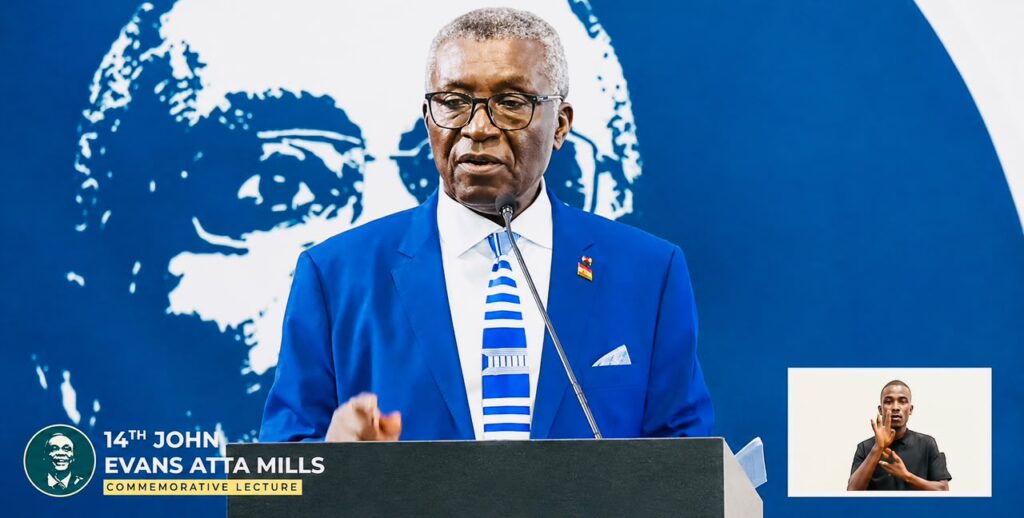
“The American Revolution began with an appeal to the sovereignty of God. The French was founded on the sovereignty of man, on the liberal humanistic theories of Voltaire, Rousseau, Montesquieu and the rest. The French Revolution was a catastrophe. Chaos, anarchy and tyranny left 40,000 people dead, and the resulting constitution lasted only two years”.
Professor Kwabena Frimpong Boateng, former Minister of Environment, Science, Technology and Innovation
He noted that this instability produced a pattern of repeated constitutional change in France, in sharp contrast to the durability of the American constitutional framework. “Indeed, the French have had seven constitutions the same time that the Americans have had one. So Ghana, independent for almost 70 years only, has had four constitutions, and the fourth one is under review,” he said.
Biblical Standards for Leadership Selection
Having established his argument about the spiritual foundations of durable governance, Prof. Frimpong Boateng turned to what he described as biblical guidance on selecting leaders, citing instructions given to Moses in the Book of Exodus.
“In Exodus 18:21, Moses received these instructions, select capable men, men who fear God, trustworthy men who hate dishonest gain, and appoint them as officials. Deuteronomy 1:13 echoes the same sentiments, choose wise, understanding men, and I will set them over you”.
Professor Kwabena Frimpong Boateng, former Minister of Environment, Science, Technology and Innovation
Professor Mills Held Up as a Model Leader
Prof Frimpong Boateng closed his lecture by connecting these principles directly to the legacy of the late President John Evans Atta Mills, describing him as a leader who embodied the standards outlined in the scriptural passages he had cited.
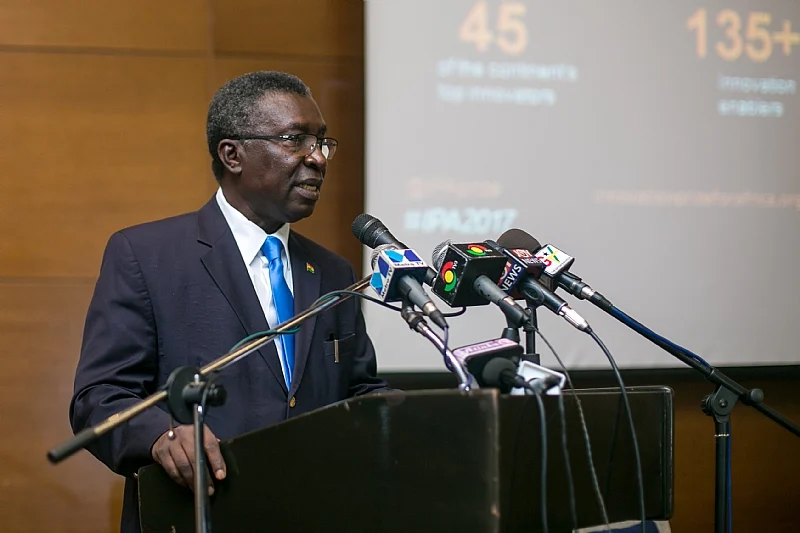
“Professor Mills was such a man. He understood the eternal principles that guaranteed good governance. He understood bribery as both a legal infraction and as moral offense against his people. This understanding shaped every decision in his public life”.
Professor Kwabena Frimpong Boateng, former Minister of Environment, Science, Technology and Innovation
He ended with a broader reflection on the relationship between professed faith and genuine leadership commitment. “A leader who professes faith but is not genuinely committed to God is merely a pretender,” he said.
Prof. Frimpong Boateng’s address, delivered as the inaugural lecture in this year’s commemorative series, wove together constitutional analysis, biblical interpretation and personal tribute to the late President, positioning Mills as an example of the kind of principled leadership he argued Ghana’s current constitutional framework struggles to consistently produce.
His remarks add to a growing body of commentary examining Ghana’s Fourth Republican Constitution at a time when the country’s own Constitutional Review Committee continues its work toward potential reforms
READ ALSO: ACEP Cautions Ghana Against Measuring Jubilee Recovery Only by Higher Production