British-based millionaires have called on Prime Minister Andy Burnham to introduce higher taxes on the country’s wealthiest citizens, arguing that those with the greatest fortunes should contribute more towards rebuilding Britain’s economy, strengthening public services and tackling widening inequality.
More than 100 wealthy individuals, including former England footballer and broadcaster Gary Lineker, screenwriter Richard Curtis, crime novelist Val McDermid and former City trader Gary Stevenson, signed an open letter on urging Burnham’s newly installed Labour government to pursue a comprehensive wealth tax as part of its wider economic reform agenda.
The appeal comes just days after Burnham took office as Prime Minister, having already unveiled a series of headline policy commitments aimed at easing the cost-of-living crisis.
His administration has announced a £2 cap on most bus fares across England and pledged an £850 million reduction in electricity bills, measures that have prompted questions from political opponents over how the government intends to finance its spending plans.
The group, organised by Patriotic Millionaires UK, argued that asking Britain’s wealthiest citizens to contribute more through taxation would provide a fair and sustainable way of funding those commitments while reducing economic inequality.
“We want you to tax us. We can afford it. We’re not talking about higher taxes on those who get up and go to work for their income every day, but on the very richest whose income is derived from the wealth they hold.”
Patriotic Millionaires UK
The letter describes the signatories as patriotic citizens who believe stronger public finances and fairer taxation are essential for Britain’s future.
It tells Burnham that millionaires are a “patriotic bunch” who “love this country and we want it to succeed”.
“As we embrace this new road, please consider taxing us properly as our contribution to it. We love this country. It’s time for a better Britain; it’s time for everyone here to feel Great Britain. It’s time to tax us, the super rich.”
Patriotic Millionaires UK
The intervention adds momentum to an increasingly prominent debate over wealth taxation in the United Kingdom, with economists, campaigners and political leaders offering competing proposals on how to balance public finances while addressing growing inequality.
Burnham has previously proposed that the tax system be changed to ensure that individuals with the broadest shoulders contribute more to national priorities, even if he has not committed to enacting a wealth tax.
In an interview with Gary Lineker earlier this month, Burnham indicated his government would “ask for a little more,” but he declined to rule out additional wealth taxes.
His remarks have fuelled speculation that Labour could consider introducing a levy on high-value assets as part of a broader overhaul of the tax system designed to finance investment in transport, healthcare, energy and public services.
Among the proposals attracting growing support is a two percent annual tax on wealth above £10 million, an idea that campaigners believe would generate billions of pounds in additional government revenue without affecting the overwhelming majority of taxpayers.
Gary Lineker stated that the country’s wealthiest citizens arguably have the ability and responsibility to contribute more.
“Paying your fair share is a basic British value, but so many ordinary people are already paying more than they can afford. Our richest people can do more and most want to. To live up to our national values our new government must raise taxes on extreme levels of wealth for a fairer, better, more hopeful Britain.”
Gary Lineker
Burnham’s Government Faces Funding Questions Amid Wealth Tax Debate
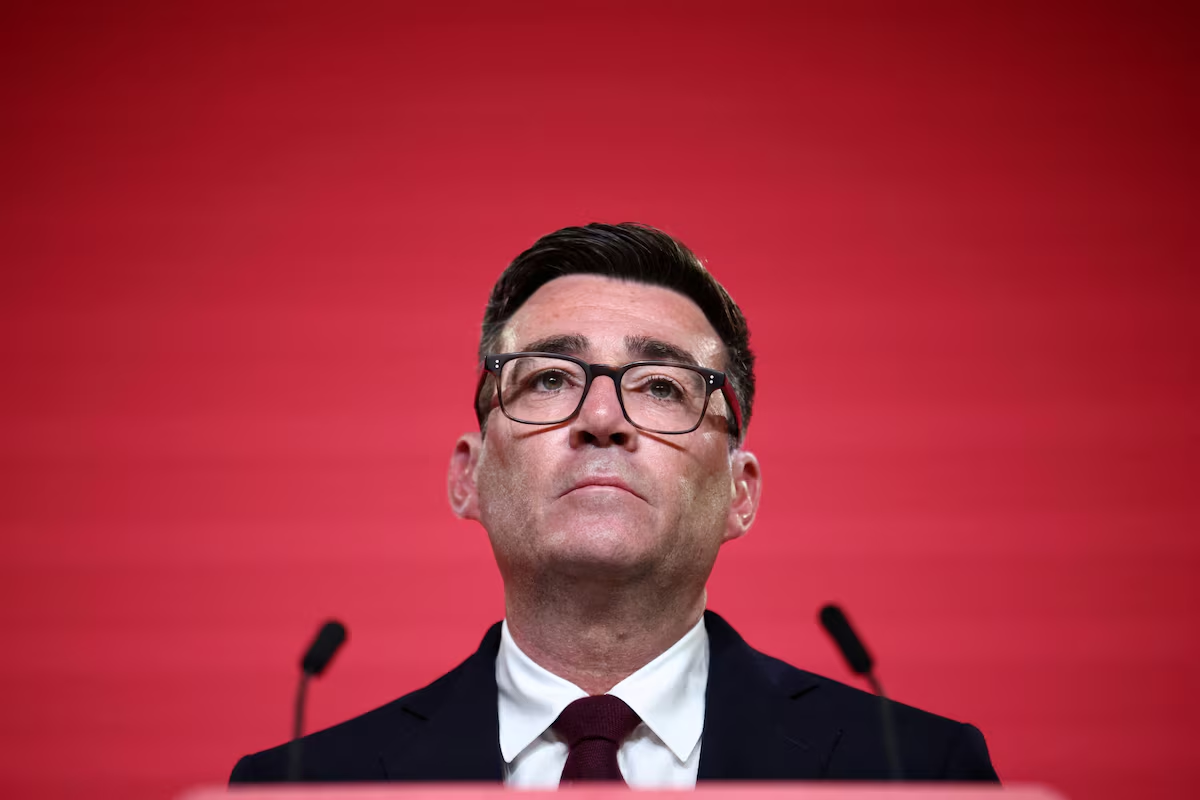
The renewed calls for a wealth tax come as Burnham’s government faces increasing scrutiny over how it plans to finance its ambitious policy programme.
Since entering Downing Street, the Prime Minister, Andy Burnham has announced measures intended to reduce living costs for households while promising wider economic reforms aimed at boosting regional growth and improving public services.
However, opposition politicians and some economists have questioned whether sufficient funding has been identified to support those commitments.
Former Treasury minister Darren Jones, a close ally of former Prime Minister, Keir Starmer, argued that the government’s proposed electricity bill tax cut lacked a clear funding strategy.
The government has responded by stating that a portion of the financing will come from scrapping Sir Keir’s proposed national digital identity initiative.
Officials estimate that discontinuing the initiative would save around £600 million per year for three years, but critics contend that the savings would still fall short of covering the entire cost of the government’s energy support package.
Sir Mel Stride, the Conservative Shadow Chancellor, added that ministers need to be more transparent about their financial objectives.
“And in the context of a very constrained economy at the moment, in terms of debt, debt servicing costs, and so on, and a very fragile fiscal situation, you cannot be a government that goes out there and makes lots of spending commitments without being able to explain exactly how those commitments are going to be funded.”
Sir Mel Stride
One potential approach, according to proponents of wealth taxes, is to tax the wealthiest households in the nation.
A 2% annual tax on wealth above £10 million has been proposed by Patriotic Millionaires UK. According to the organization, this tax could bring in about £24 billion annually.
The campaign group also supports changes to capital gains taxation, such as matching income tax rates with capital gains tax rates, which it estimates could generate an extra £12 billion a year.
According to Julia Davies, a British-Based Millionaire and a member of Patriotic Millionaires UK, “we millionaires are here to be taxed more and we urge our new PM to grab this opportunity with both hands and tax our wealth.”
“This is a fresh opportunity for our country. A chance for the prime minister to help rebalance power, reduce the shocking levels of wealth inequality which intensifies the cost of living crisis, and raise much-needed revenue for our public services, improving life for everyone.
Julia Davies
READ ALSO: Beyond the Millions: Why CAF’s WAFCON Investment Could Reshape Women’s Football