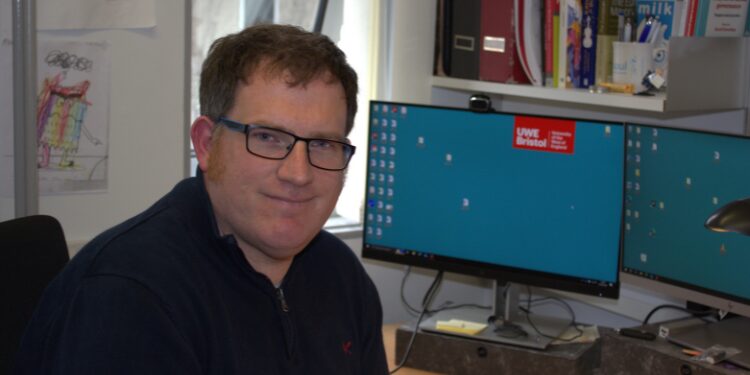
Andy Burnham’s arrival in Downing Street begins from a position of strength, with Labour firmly behind him and a decisive parliamentary majority at his disposal, but rebuilding public trust will be the defining challenge of his premiership, according to a British political analyst.
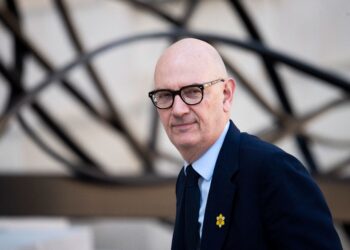
Dr. Thom Oliver, Senior Lecturer in Politics at the University of the West of England, stated in an exclusive interview with the Vaultz News that Burnham takes office at a critical juncture in British politics, inheriting not only the expectations of his parliamentary colleagues but also a nation that is becoming more doubtful of governments’ ability to improve people’s lives.
Andy Burnham becomes Britain’s new Prime Minister after rapidly securing Labour’s leadership following Keir Starmer’s resignation, ending what could have become a divisive contest within the governing party.
His swift ascent has been widely interpreted as a sign of Labour’s determination to reset its political direction after disappointing local election performances and growing pressure from within its parliamentary ranks.
For Dr. Oliver, Burnham’s emergence was not simply the product of party politics but the result of Labour MPs searching for a leader capable of reconnecting with voters while preserving unity within the governing party.
“Andy Burnham has emerged as the consensus choice because he appeared to offer Labour three things it urgently needed: electoral appeal, a clearer political identity and the prospect of internal unity.”
Dr. Thom Oliver
He argues that dissatisfaction with Labour’s political trajectory under Starmer intensified after poor local election results earlier this year, prompting many MPs to conclude that the party required a leader who could communicate more effectively with voters who feel economically insecure, politically disillusioned or increasingly attracted to Reform UK.
“Starmer had come into power little over two years ago following a landslide election victory, on a poorly defined narrative of change but over the last two years, that change has not been felt by voters in their day-to-day lives.”
Dr. Thom Oliver
Burnham’s record as Mayor of Greater Manchester, he explained, allows him to cultivate an image distinct from Westminster politics by focusing on public service delivery and local governance.
“His leadership style is more emotionally expressive and politically intuitive than Keir Starmer’s, which may bolster Labour’s capacity to connect, while his experience in both national and regional government reassured MPs that he was not an untested outsider.”
Dr. Thom Oliver
According to Dr. Oliver, Burnham’s pragmatic approach to governing also enabled him to attract support from across Labour’s ideological spectrum.
“Burnham comes from Labour’s soft left, but he has generally governed pragmatically, working with local authorities, businesses, universities and civil-society organisations. That allowed MPs from different parts of Labour to see something in his candidacy.”
Dr. Thom Oliver
Moreover, the political scientist indicated that, Burnham’s promise to preserve Labour as a “broad church,” combined with MPs’ desire to avoid a prolonged leadership battle, helped generate overwhelming parliamentary support.
However, he cautioned that parliamentary backing should not be mistaken for a fully established democratic mandate.
“I would therefore describe it as a powerful but incomplete mandate. He possesses the constitutional authority to govern, but he will need to build broader democratic legitimacy through delivery.”
Dr. Thom Oliver
Dr. Oliver noted that unlike Prime Ministers who secure office through a general election victory, Burnham assumes power without having personally led Labour into a national electoral contest.
He warned that Burnham would need to govern carefully within the broad framework of Labour’s existing electoral commitments to avoid mounting pressure for an early general election.
Burnham’s Premiership Hinges on Economy, Public Services and Political Trust
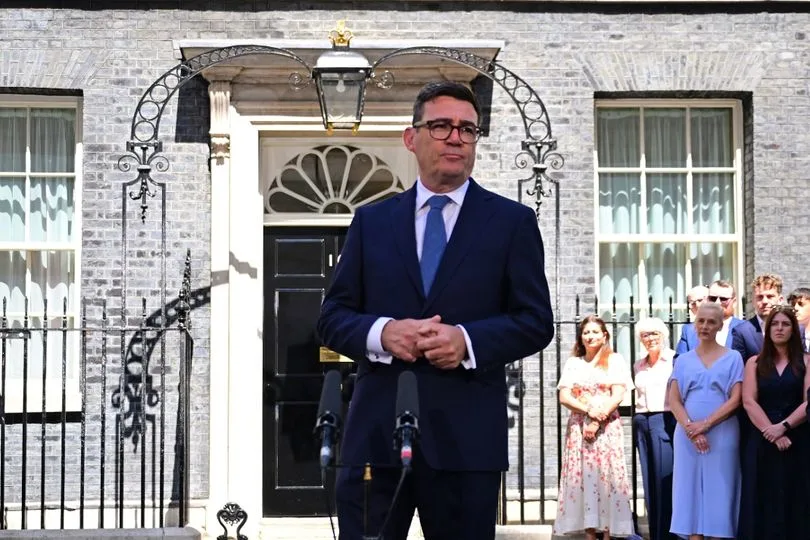
As Burnham begins his tenure, Dr Oliver pointed to three immediate issues that could shape the direction of his government and its efforts to rebuild trust in British politics.
“Put simply the three most pressing challenges are economic insecurity, the condition of public services and the erosion of political trust.”
Dr. Thom Oliver
He argues that economic management should dominate Burnham’s opening months in office, warning that Britain faces sluggish economic growth, historically high levels of public debt and extremely limited room for additional public spending.
Citing the Office for Budget Responsibility, Dr. Oliver noted that debt-interest payments now consume around £110 billion annually, making them the third-largest area of government expenditure after health and welfare.
He also pointed to unresolved questions surrounding defence spending, social care and welfare reform as examples of competing demands that will stretch the new government’s finances.
“The recent battle over the long awaiting Defence Investment Plan led to damaging resignations within Keir Starmer’s government. Many will already be asking how a Burnham government might address the funding shortfall, and do so without raising the tax burden.”
Dr. Thom Oliver
While some political voices may advocate reducing welfare expenditure, Dr. Oliver suggested such decisions would present particular difficulties for a Labour administration that also wishes to strengthen public services and reform social care.
Public services, he argues, represent Burnham’s second major challenge.
“The National Health Service, social care, local government, housing and other public institutions are dealing with accumulated pressures that cannot be solved by a change of leadership alone.”
Dr. Thom Oliver
Given Burnham’s reputation as a defender of public services during his tenure as Mayor of Greater Manchester, expectations for rapid improvements are likely to be exceptionally high.
Dr. Oliver noted that, “the public will therefore expect visible improvements, not merely a new narrative.”
Perhaps the greatest political test, however, lies in rebuilding trust between government and citizens after years of political turbulence.
“Many voters no longer believe that governments can materially improve their lives. Burnham must demonstrate that democratic politics can still deliver practical change while also restoring a sense of direction and political honesty.”
Dr. Thom Oliver
Although strengthening economic growth remains essential, Dr. Oliver stressed that voters judge economic performance not through headline statistics but through everyday living conditions.
“Politically and day to day people experience the economy through wages, rents, mortgages, food prices, energy costs, public transport and the availability of secure employment.”
Dr. Thom Oliver
He argues that Burnham’s success will ultimately depend on making economic improvements tangible for ordinary households while balancing immediate relief with longer-term structural reforms.
In conclusion, Dr Oliver noted that the lack of a divisive leadership battle gives Burnham an immediate opportunity to govern decisively, but it also places greater pressure on him to deliver, adding that, “ He is being presented not simply as another Labour Prime Minister, but as the politician capable of changing Labour’s direction, rebuilding trust and confronting the rise of populist opposition. That is a considerable burden to carry.”
READ ALSO: GSE Opens Week with Sharp Trading Decline