
The expected recovery of Ghana’s Jubilee oil field must be assessed beyond increased production figures, with attention placed on whether higher petroleum output can deliver sustainable economic benefits through effective revenue management, the Africa Centre for Energy Policy (ACEP) has cautioned.
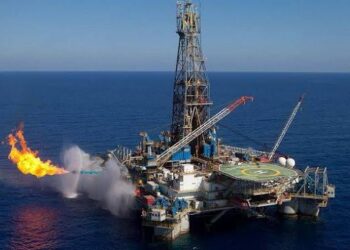
The comment follows an operational update from Kosmos Energy indicating improved production performance at the Jubilee Field after a new drilling campaign, with the company projecting stronger output levels following the commissioning of new wells.
However, Head of Petroleum and Conventional Energy at ACEP, Mr Kodzo Yaotse, said Ghana’s experience with previous production forecasts shows the need for caution, arguing that increased output projections must translate into sustained improvements in overall national production.
Speaking in an interview with The Vaultz News, Mr Yaotse said while the latest development presents an opportunity for Ghana’s upstream sector, similar expectations have emerged in the past without fully reversing the decline trajectory of the country’s oil production.
We have heard this kind of news from the producers over and over again. When Jubilee South East was commissioned, we were promised that it was going to deliver an additional 33,000 barrels of oil. But two years down the line, the decline in Ghana’s total production, of which Jubilee is the biggest production field, has not been arrested.
Head of Petroleum and Conventional Energy at ACEP, Mr Kodzo Yaotse
Production recovery must prove sustainable
Mr Yaotse explained that the latest drilling campaign provides renewed optimism but said the industry must wait to determine whether the additional production will be sustained over time.
He noted that Ghana’s oil sector has experienced declining production since 2019, making consistent output growth critical to restoring confidence in the sector and improving petroleum revenue prospects.

We can only hope that this time round, the additional campaign that has been done would result in increased production to really stem the tide in the decline that we have witnessed in Ghana’s oil space since 2019.
Head of Petroleum and Conventional Energy at ACEP, Mr Kodzo Yaotse
Jubilee, Ghana’s largest producing oil field, has historically been a major contributor to the country’s crude oil output and petroleum revenues since commercial production began in 2010.
Any sustained recovery from the field could therefore have implications for government revenues, foreign exchange earnings and funding for national development priorities.
Revenue allocation already defined under PRMA
While increased production could result in higher petroleum revenues, Mr Yaotse stressed that Ghana already has a legal framework governing how petroleum receipts are allocated and utilised.
Under the Petroleum Revenue Management Act (PRMA), petroleum revenues are distributed among various designated areas, including the Annual Budget Funding Amount (ABFA), the Ghana National Petroleum Corporation (GNPC), and the Ghana Petroleum Funds.

For petroleum revenues, there is a mechanism for how petroleum revenues are spent in Ghana through the PRMA. So that means that for each of these purposes, there is going to be more money to share to them.
Head of Petroleum and Conventional Energy at ACEP, Mr Kodzo Yaotse
He explained that the focus should therefore not necessarily be on changing the allocation formula but on assessing whether funds reaching the various areas are being used effectively.
According to him, the proportions prescribed under the law are largely being followed, but questions around impact require value-for-money assessments.
As to when the money gets into those places, whether they are being used for the further purpose that is supposed to be used for, that is when you need to conduct value for money assessments on each of these to be able to arrive at that determination.
Head of Petroleum and Conventional Energy at ACEP, Mr Kodzo Yaotse
Focus shifts from revenue collection to impact
Mr Yaotse noted that petroleum revenues have supported several national programmes over the years, including infrastructure and social interventions funded through the ABFA.
He added that Ghana’s petroleum revenue framework also provides mechanisms that allow citizens and stakeholders to track how funds are managed.
He pointed to the Heritage Fund and other petroleum funds as examples of structures established to ensure accountability and long-term benefit from the country’s natural resources.

According to him, the ability to trace petroleum revenues remains one of the key advantages of having a structured revenue management framework.
That is the advantage of having the PRMA spell out what you should do with the money. So, you will be able to follow the money to see where the money goes.
Head of Petroleum and Conventional Energy at ACEP, Mr Kodzo Yaotse
Jubilee recovery presents opportunity and responsibility
The potential increase in Jubilee production comes at a time when Ghana continues to seek ways to maximise value from its petroleum resources while addressing fiscal pressures.

For ACEP, the recovery represents an opportunity, but the ultimate measure of success will depend on whether additional oil production leads to stronger economic outcomes.
As Ghana anticipates improved petroleum receipts from increased production, stakeholders say attention must extend beyond the number of barrels produced to how revenues generated are managed, invested and translated into national development.
READ ALSO: Jeff Bezos Linked to Liverpool Minority Investment Talks