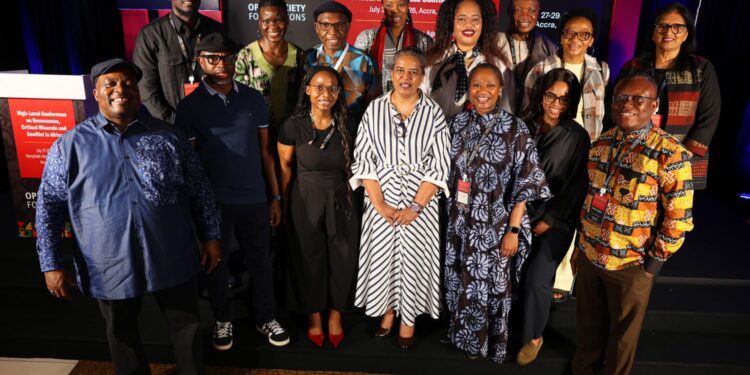
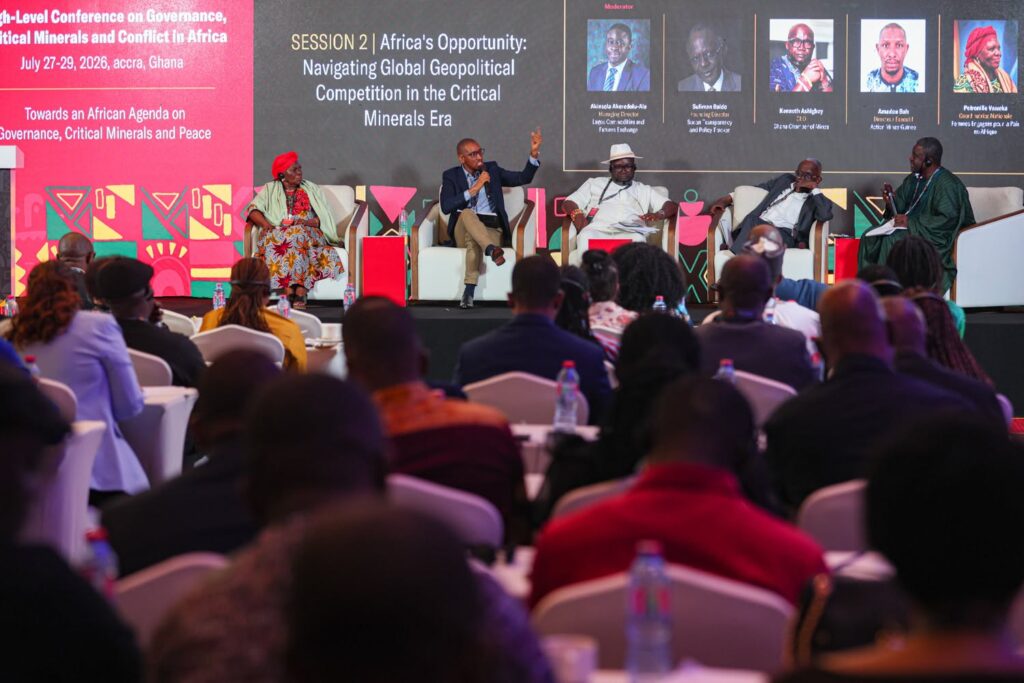
Participants at the High-Level Conference on Governance, Critical Minerals, and Conflict in Africa have formally adopted a comprehensive implementation and accountability framework designed to reshape how the continent manages its vast natural resources.
Convened in Accra, Ghana, the landmark gathering concluded with a unanimous call for African nations to leverage the surging global demand for green transition minerals by placing democratic principles, peace, industrialization, and citizen welfare at the forefront of extraction policies.
“An implementation and accountability framework was also adopted to guide action by governments, regional institutions, and other stakeholders. Priority commitments include supporting countries to develop integrated national critical minerals strategies, strengthening transparency, revenue governance, and parliamentary oversight, protecting the rights of mining communities, and advancing the participation of women and young people in mineral governance. Africa’s mineral wealth belongs to its people, and public participation is essential to realizing a long-term continental agenda.”
Open Society-Africa
Expanding on this historic consensus, delegates emphasized that the global rush for energy-transition resources must be treated as a defining political movement rather than a mere commercial windfall.

The newly endorsed structure establishes targeted priority commitments ranging from building integrated national mineral strategies and enforcing revenue transparency to eradicating illicit financial flows and safeguarding host communities.
By aligning continental policy with actionable milestones, the framework seeks to ensure that resource extraction strengthens national sovereignty and fosters sustainable development across all member states.
The Imperative for a Unified Mineral Strategy
The rush for critical minerals like lithium, cobalt, nickel, and manganese has historically exposed Africa to the “resource curse” a cycle where immense mineral riches coexist with economic instability, environmental degradation, and armed conflict.
Without a structured blueprint, African nations risk repeating historical patterns of raw material exportation, leaving domestic economies vulnerable to external market shocks and supply chain exploitation.
A strategic implementation framework acts as a vital protective shield, establishing clear rules of engagement for international investors while enforcing rigorous environmental, social, and governance (ESG) standards across all extraction projects.
Moreover, a coordinated governance framework directly mitigates security threats and geopolitical friction in mining regions.
Unregulated extraction frequently fuels insurgencies, illegal mining networks, and cross-border illicit mineral flows that drain national treasuries and destabilize fragile territories.
By embedding conflict prevention mechanisms into national mineral policies and establishing robust parliamentary oversight, the framework equips governments with the tools necessary to dismantle illegal trade routes, safeguard local populations, and convert mineral wealth into domestic stability.
Fostering Industrialization and Value Addition
A core pillar of the newly adopted strategy is a decisive departure from raw resource export in favor of local beneficiation and value addition.
Historically, Africa has retained only a fraction of the value generated along global technology supply chains. Under the new guidelines, governments are urged to build domestic refining, processing, and manufacturing capacities.

This transition is essential for transforming extractive sectors from isolated enclave economies into dynamic engines of domestic job creation, technological transfer, and sustainable GDP growth.
Leveraging regional trade mechanisms represents another critical pathway toward economic transformation. By utilizing the framework provided by the African Continental Free Trade Area (AfCFTA), African states can harmonize mining codes, pool industrial resources, and construct cross-border value chains.
This unified economic front allows the continent to command greater bargaining power in global trade negotiations, moving from price-takers to key market makers in the global clean energy economy.
Centering Democratic Accountability and Social Equity
Resource governance cannot succeed without active public participation, inclusive decision-making, and equity.
For decades, host communities near mining sites have borne the brunt of environmental degradation and displacement while receiving minimal economic returns.
The framework addresses this systemic imbalance by mandating strong protections for community rights, guaranteeing equitable revenue sharing, and opening decision-making spaces to marginalized groups, particularly women and youth.

Ultimately, transparent resource management forms the bedrock of long-term social cohesion and civic trust. Enforcing strict revenue tracking, public contract disclosures, and anti-corruption measures ensures that mining windfalls directly fund vital public infrastructure, healthcare, and education.
As African stakeholders unite behind this strategic framework, the continent takes a monumental step toward asserting its economic independence, ensuring its mineral wealth delivers a lasting legacy of justice, peace, and prosperity for all its citizens.
READ ALSO: Diddy’s Prison Release Date Advances to January 2028 Despite Fight