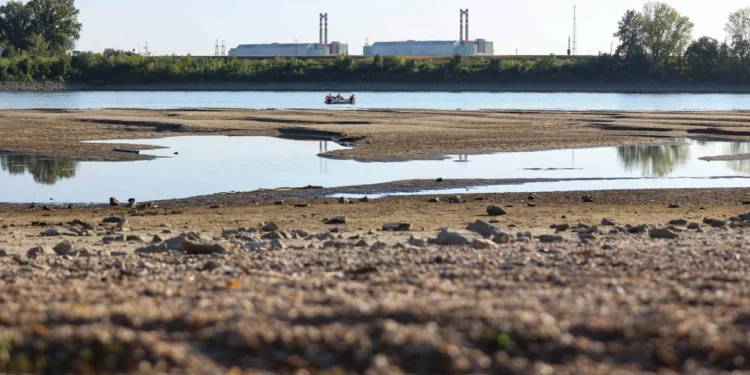
Hungary’s Prime Minister Péter Magyar has said that he was hopeful that “a potentially significant amount of rain could fall in the Austrian catchment areas sometime around Thursday,” which could help alleviate some of the immediate drought pressure on the Danube.
If it happens, he said, the water level downstream in Hungary should increase within a week. However, he added that “several factors” will determine whether Hungary’s critical nuclear power plant will be able to avoid a complete shutdown in the coming days, as country remains gripped by another heatwave. He said that the water level remained three centimetres above the lowest possible point.
The current temperature in Budapest is 39C, and it’s expected to stay at this level for the next two to three days, putting extra strain on the country’s stretched energy grid.

Earlier, the Hungarian Prime Minister praised the solidarity of Hungarians after the country faced “the most difficult and critical night” amid a heatwave energy crunch.
In a video on Facebook, Magyar repeated that the Paks power plant was just “millimetres away” from being shut down overnight, but the water levels started rising again as of this morning. He praised the “solidarity” shown by Hungarians when reducing their energy consumption, and thanked people working to stabilise the country’s energy grid in these challenging circumstances. “Tonight’s turn of events gives us cause for optimism, but the hardest days are still ahead of us,” he warned, as Hungary faces a few more days of extreme temperatures.
“Scorching heat of over 40C, drought, and further hardships await, but light now can be seen at the end of the tunnel as cooler weather arrives from Friday, and hopefully much-needed rain in the upper areas of the Danube.”
Péter Magyar
Other countries are also growing concerned about the impact of the current heatwaves and droughts on their economies.
The European Commission said that it was “monitoring very closely” the situation in Bulgaria, Hungary and Romania as the region faces an energy crunch caused by the ongoing heatwave and drought.
Energy Spokesperson Anna-Kaisa Itkonen said that “the low Danube levels will clearly have an impact on nuclear generation along the route,” and this “concerns several member states.” The commission was ready to “convene an electricity coordination group as soon as there is a need for that.”
“Generally speaking, climate risks, extreme weather events, have already been embedded in many of our policies related to energy transport already for some time, so we will obviously include, include these aspects in any of our future work as well.”
Anna-Kaisa Itkonen
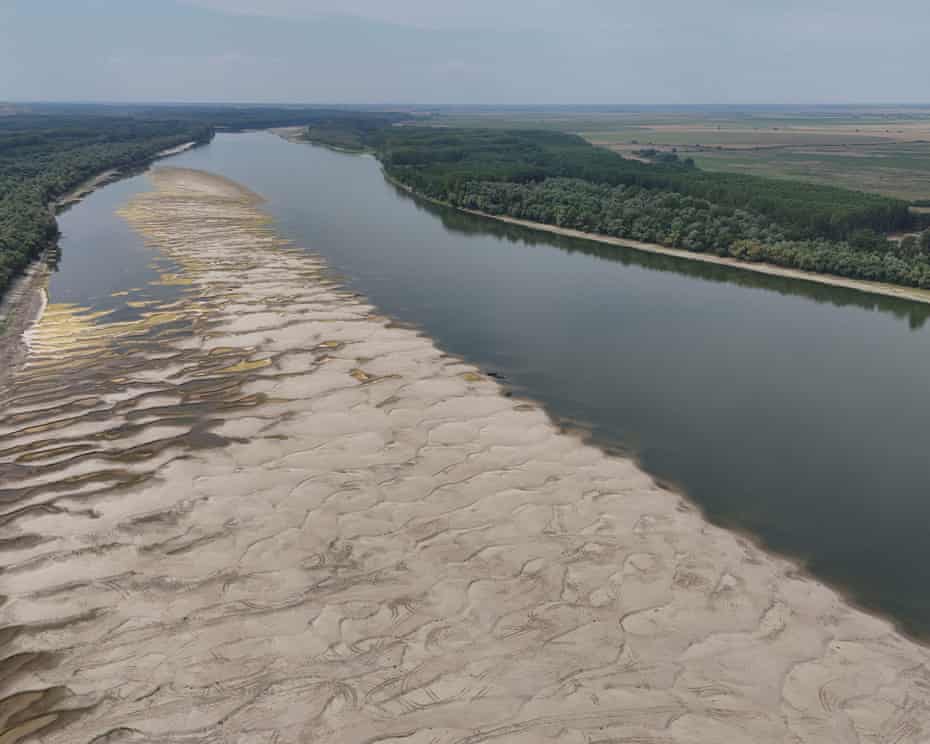
Over in Germany, ING warned that record low water levels in the Rhine could shave 0.3% off Germany’s GDP growth this year. In a note, Carsten Brzeski, Global Head of Macro at ING, said that the Rhine is “Europe’s most important logistics corridor after the open seas,” connecting Rotterdam “directly with three of Germany’s largest industrial clusters.”

ING warned that when the Rhine runs low, “the impact extends far beyond supply chains; it strikes at the heart of German industry.” It said that the river’s “historic importance also means there are no real alternatives.”
Record Breaking Temperatures
Meanwhile, Austria become the latest country to report record-breaking temperatures today (12:48). A new all-time high of 41C was measured in Vienna-Stammersdorf, surpassing the previous record of 40.8C reported earlier today, and 40.5C set in Bad Deutsch-Altenburg in 2013.
Other countries in central and eastern Europe also reported disruptions caused by the extreme weather conditions.The Czech Republic has recorded the highest nighttime temperature since records began, with 27.9 C in Bystřice pod Hostýnem.
Similar record was broken across the border, in Slovakia, with 27.5 C overnight in Plavecký Peter, surpassing the previous record from 2013, Pravda reported. Temperatures are expected to rise up to 39C later today.
Authorities across the region continue to encourage responsible water use as they monitor conditions closely. Governments have also been reviewing contingency measures to manage water supplies amid extreme heat and if the drought persists into the coming weeks.
READ ALSO: Big Push Agenda Must Benefit Every Sector of Economy – Hon Iddrisu