
The newly released audited 2025 financial statements of the Electricity Company of Ghana (ECG) paint a stark picture of a utility that remains central to the country’s economy but is operating under mounting financial strain.
The accounts suggest that ECG’s difficulties go far beyond ordinary commercial underperformance.
They point instead to a combination of structural and policy-related challenges, including high technical and commercial losses, weak revenue collection, foreign-exchange exposure, rising trade payables, legacy debt obligations and tariffs that do not always fully reflect the actual cost of supplying electricity.
Taken together, the balance sheet and income statement indicate that the utility is increasingly relying on borrowing and supplier credit to sustain operations.
Revenue rises, but the business moves deeper into loss
ECG generated GH¢22.109 billion in revenue during 2025, reflecting continued growth in electricity demand from households, businesses and industry.
However, the company’s cost of sales climbed to GH¢34.767 billion, resulting in a gross loss of GH¢12.658 billion.

The scale of the reversal is striking when compared with 2024, when ECG reported a gross profit of GH¢4.601 billion.
The difference was not primarily the result of a dramatic operational turnaround in 2024.
That year, the government provided ECG with a GH¢17.035 billion grant, which substantially supported the utility’s financial position.
In 2025, government support came largely through repayable loans rather than grants, and those borrowings significantly increased the company’s long-term liabilities.
Power purchases remain the dominant pressure point
The biggest burden on ECG’s finances continues to be the cost of buying electricity from the Volta River Authority (VRA), Independent Power Producers (IPPs) and other suppliers.
Because a large share of Ghana’s power generation is tied to dollar-denominated power purchase agreements, any depreciation of the cedi immediately raises ECG’s procurement costs.
In 2025, ECG spent GH¢26.719 billion on power purchases, which was GH¢5.877 billion more than the revenue generated from selling that electricity.
That gap highlights the core problem confronting the utility: electricity is being purchased at a cost that is not being fully recovered through sales.
The accounts show that the company’s most significant financial pressure is not a collapse in demand, but the widening mismatch between the cost of purchased power and the revenue recovered from customers.
This is a critical distinction. ECG is not struggling because consumers are using less electricity.
It is struggling because the economics of buying and distributing power have become increasingly unfavourable.
Administrative costs show some improvement
Not all the numbers deteriorated.
Administrative expenses declined to GH¢2.307 billion in 2025 from GH¢2.869 billion in 2024.

The reduction suggests that some cost-control measures may be taking effect, even though the company still carries substantial personnel, maintenance, customer-service and information-technology costs associated with operating a nationwide distribution network.
The decline is important because it demonstrates that administrative spending is not the main driver of ECG’s financial crisis.
The much larger problem lies in power procurement, system losses and revenue recovery.
Borrowing is becoming a substitute for solvency
One of the most concerning signals in the accounts is the sharp rise in long-term liabilities.
Amounts due after one year increased to GH¢21.910 billion at the end of 2025, compared with GH¢2.587 billion a year earlier.
This reflects the replacement of grant support with loan financing.
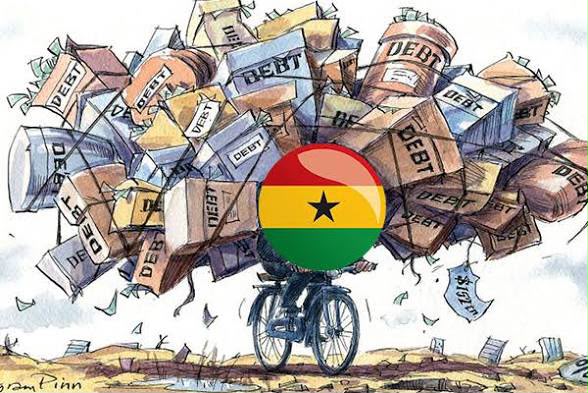
The implication is significant: what was previously absorbed by the state as non-repayable support is increasingly being carried on ECG’s balance sheet as debt.
Finance costs remain elevated as the utility continues to rely on borrowing and supplier credit to fund operations.
ECG recorded a net finance cost of GH¢297.717 million in 2025, an improvement from GH¢366.697 million in 2024, but still a substantial burden for a company already operating at a gross loss.
The problem is bigger than tariffs alone
It is tempting to conclude that higher tariffs would solve the crisis.
The accounts suggest otherwise.
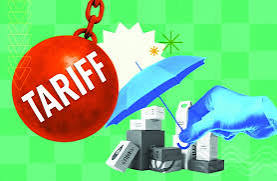
Even if tariffs were increased, ECG would still face major structural weaknesses, particularly technical and commercial losses estimated to exceed 30 percent of potential revenue recovery.
Electricity that is generated but not billed, or billed but not collected, represents a direct erosion of cash flow.
The utility also faces the politically sensitive challenge of disconnecting indebted public institutions and vulnerable consumers, making revenue enforcement more difficult than in a purely commercial business.
A warning for Ghana’s energy reforms
The 2025 accounts arrive at a time when the government is pursuing broader energy-sector reforms, including discussions around private participation in parts of ECG’s operations.
The numbers strengthen the argument that the utility’s crisis is not merely a temporary liquidity problem.
It is a solvency and governance challenge.
If the current trajectory continues, increasing borrowing could eventually crowd out investment in network upgrades, smart metering, loss reduction and service-quality improvements.
That would create a vicious cycle in which weak infrastructure contributes to higher losses, which then worsen the company’s finances.
The deeper economic risk
ECG remains operationally indispensable.
A financially unstable distribution utility poses risks not only to the power sector but to the entire economy.

Delayed payments to generators can undermine confidence in the electricity market, increase the cost of future power contracts and complicate investment decisions across industry and commerce.
The accounts also raise a broader policy question: should Ghana continue to support ECG primarily through periodic financial injections, or should support be tied to measurable improvements in loss reduction, revenue collection, procurement discipline and operational efficiency?
The latter approach is gaining traction among energy analysts because it links public support to performance rather than simply covering deficits.
A utility that still matters too much to fail
The audited statements do not suggest that ECG is on the verge of operational collapse.
They do, however, show a company whose financial foundations remain dangerously weak.
Revenue is growing, administrative costs have shown some improvement and the utility continues to perform a critical national function.
Yet those positives are being overwhelmed by rising power procurement costs, foreign-exchange exposure, persistent losses and a rapidly expanding debt burden.
The central lesson of the 2025 accounts is that Ghana’s electricity challenge is no longer just about generating enough power.
It is about whether the country can build a distribution utility capable of purchasing electricity, delivering it efficiently, collecting the revenue and financing its obligations without repeatedly returning to the state for rescue.
As first reported by norvan reports, the audited statements provide one of the clearest indicators yet that ECG’s future will depend less on temporary financial support and more on whether long-discussed structural reforms are finally translated into measurable operational change.
READ ALSO: Governor Calls for Confidence in Business Restructuring