West Africa’s energy future is unlikely to be shaped by a single refinery, a single fuel, or a single dominant country.
Instead, the region is moving toward a more complex landscape in which deeper market integration and intensifying competition will unfold at the same time, according to a regional petroleum and energy expert in an exclusive interview with The Vaultz News.
The assessment comes at a moment of significant change across the sub-region.
Ghana is pursuing the revival and expansion of the Tema Oil Refinery (TOR), Nigeria is scaling up large-scale private refining capacity led by the Dangote Refinery, and several African countries are accelerating investment in natural gas, renewable energy, and in some cases exploring future nuclear power options.
Rather than seeing these developments as contradictory, the expert argues that they are likely to reinforce each other.
I expect both integration and competition to increase simultaneously. Healthy competition will drive investment, innovation and efficiency, while regional integration will lower transaction costs and improve energy security.
Energy Expert
The interview suggests that the next 10 to 15 years could produce a fundamentally different West African energy system, one that is more interconnected, more commercially competitive, and less dependent on imported petroleum products from outside the continent.
The false choice between refining and energy transition
One of the most important arguments emerging from the interview is that refinery expansion is not necessarily incompatible with the transition to cleaner energy.
In many international policy debates, investments in refining are often portrayed as being at odds with renewable energy goals.

The expert rejects that framing for Africa, arguing that the continent’s energy transition must be understood in the context of persistent energy poverty, affordability constraints, and the need for industrial development.
Africa’s energy transition differs from that of developed economies because the continent continues to face significant energy access and affordability challenges.
Energy Expert
Under this framework, hydrocarbons remain part of the development equation, even as cleaner technologies expand.
Natural gas is expected to continue playing a central role in electricity generation and industrialization, while renewable energy and, where technically and financially feasible, nuclear power are likely to complement rather than immediately replace conventional fuels.
This perspective is particularly relevant for Ghana, which is simultaneously pursuing gas-to-power expansion, renewable energy targets, and discussions around future nuclear generation.
The real danger is standing still
The expert identifies a different long-term risk, one that receives less attention than the debate over whether to invest in hydrocarbons.
The real risk lies in failing to diversify refinery operations over time.
Energy Expert
According to the analysis, future refineries will need to evolve beyond traditional fuel production.
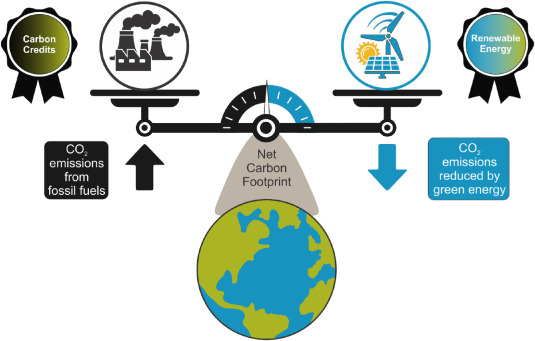
That means improving energy efficiency, reducing emissions, integrating carbon-management technologies, and gradually adapting to the processing of lower-carbon fuels as markets and regulations change.
For Ghana, this raises a strategic question that goes beyond the immediate revival of TOR: should the refinery be rebuilt solely for today’s gasoline and diesel market, or should it be designed as a platform capable of adapting to future fuel-quality standards, petrochemical opportunities, and lower-carbon energy pathways?
The answer could determine whether TOR becomes a long-term industrial asset or a facility that eventually struggles to remain relevant in a changing global energy market.
Nigeria may lead in scale, but not in every segment
The interview acknowledges that Nigeria is likely to remain the region’s largest refining and export hub because of its crude reserves, market size, and refining capacity.
Nigeria is likely to remain the region’s largest refining and export hub because of its crude reserves and refining capacity.
Energy Expert
However, the analysis does not support a winner-takes-all scenario.

Instead, it points to the emergence of specialized roles across the region.
Ghana is seen as having strong potential to position itself as a trading, logistics and financial hub for petroleum and energy markets, while Côte d’Ivoire is expected to deepen its role in refining and petroleum distribution within Francophone West Africa.
This would create a regional system in which countries compete in some areas while complementing each other in others.
Such specialization could reduce unnecessary duplication of infrastructure and allow each country to build on its comparative advantages rather than attempting to dominate every segment of the value chain.
Integration will not happen automatically
The expert cautions that regional integration is not guaranteed.
Success will depend on harmonised regulations, cross-border infrastructure, efficient transportation networks, and implementation of AfCFTA and ECOWAS energy market reforms.
Energy Expert
Without those reforms, competition could become fragmented and politically driven, limiting the benefits of integration.

The warning is particularly important because West Africa has a history of announcing ambitious regional projects that later encounter financing, regulatory, or coordination challenges.
Cross-border pipelines, electricity interconnections, storage infrastructure, and transport corridors will all require sustained political commitment and institutional cooperation if the region is to achieve a genuinely integrated energy market.
What this means for Ghana
For Ghana, the interview points to a strategy that is broader than simply competing with Nigeria’s refining scale.
The opportunity may lie in becoming a gateway economy for regional energy trade, leveraging ports, storage infrastructure, financial services, and regulatory credibility to attract trading, logistics, and investment activity.
That approach would align with Ghana’s ambitions under the African Continental Free Trade Area and could allow the country to play a disproportionately important role in regional energy commerce even if its refining capacity remains far smaller than Nigeria’s.
The broader conclusion is that West Africa’s energy future is likely to be hybrid rather than binary.

Hydrocarbons, natural gas, renewables, and eventually nuclear power may coexist for decades, while countries develop different but interconnected roles within a gradually more integrated regional market.
For Ghana, the strategic challenge is therefore not only to revive TOR, but to determine where the country wants to sit in the emerging architecture of West African energy trade.
The more important race may not be for the biggest refinery.
It may be for the most resilient, connected, and strategically positioned energy economy in the region.
READ ALSO: IMF Details Billion-Dollar Loss Behind Stronger Cedi