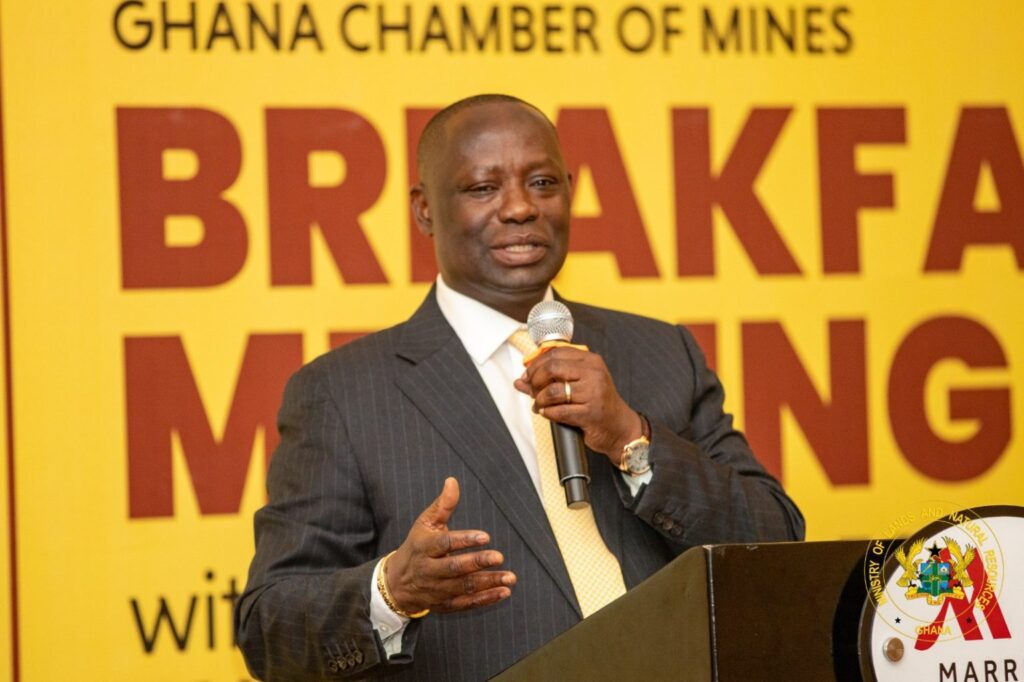
Honourable Emmanuel Armah-Kofi Buah, the Minister for Lands and Natural Resources, has given a firm assurance to members of the National Concerned Small Scale Miners Association regarding the Government’s unyielding commitment to safeguarding and backing regulated, responsible small-scale mining operations across Ghana.
Speaking during a formal engagement with leadership from the association, the Minister emphasized that the state recognizes legitimate local miners as vital drivers of community development and natural resource stewardship.
Hon. Buah noted that while illegal operations must be systematically eradicated, law-abiding miners who strictly follow statutory protocols will receive robust institutional backing to thrive.
“We remain committed to protecting legitimate small-scale mining and will continue to work with stakeholders to build a responsible, transparent and sustainable mining sector.”
Honourable Emmanuel Armah-Kofi Buah

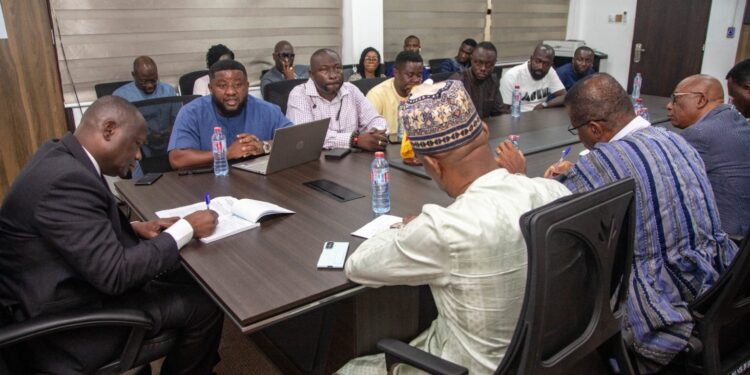
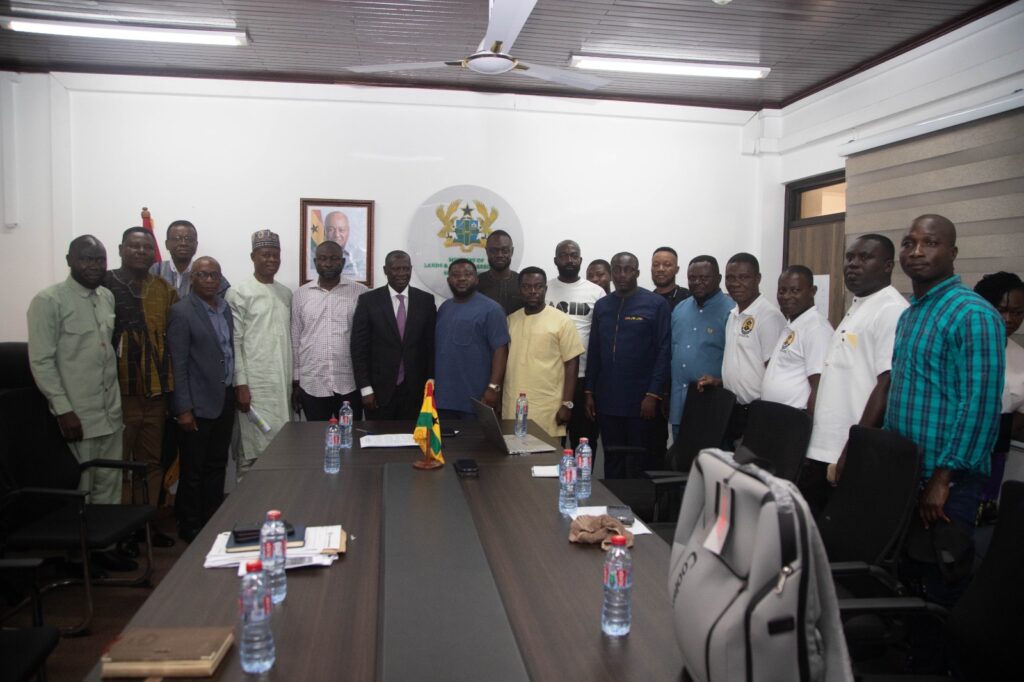
The high-level assurance unfolded during a courtesy call paid by the executive delegation of the National Concerned Small Scale Miners Association on Wednesday, August 5, 2026, held at the Minister’s conference room.
Led by its President, Mr. Michael Peprah, the mining group used the meeting to applaud the Ministry’s newly introduced sector reform roadmap aimed at modernizing domestic mineral extraction.
However, Mr. Peprah simultaneously tabled critical operational bottlenecks burdening his members, notably citing instances of harassment by security operatives, the heavy-handed confiscation of excavators, administrative hold-ups in clearing essential machinery at the ports, and bureaucratic friction during small-scale licensing cycles.
Sector Reforms and Machinery Tracking Framework
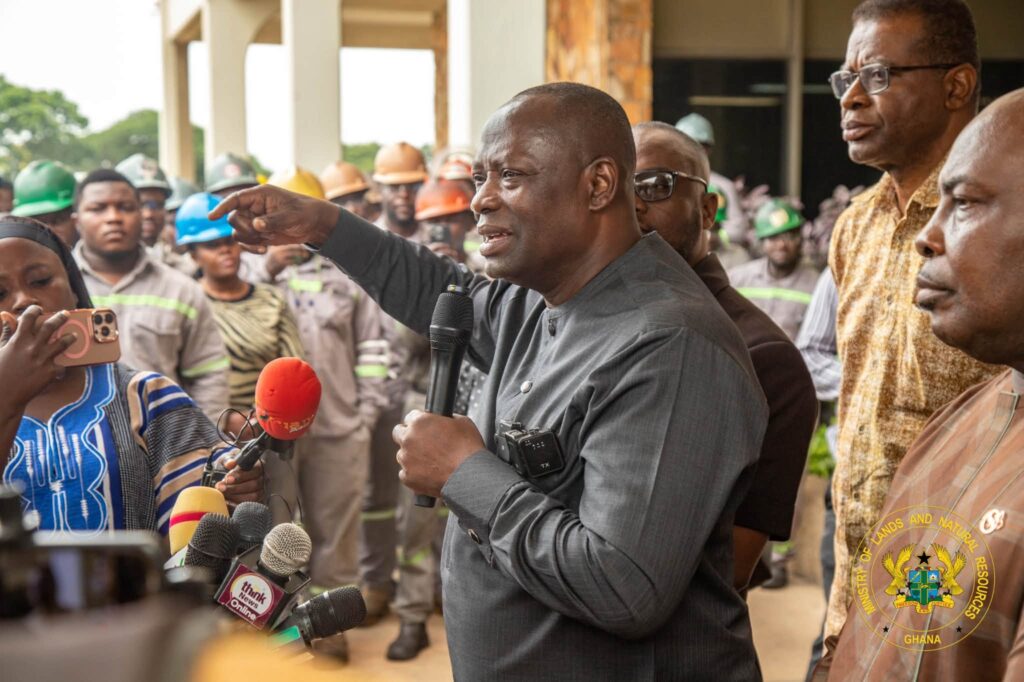
Addressing the grievances raised by the association, Hon. Buah clarified the governance structures overseeing mining enforcement, explicitly stating that the National Anti-Illegal Mining Operations Secretariat (NAIMOS) stands as the single, exclusive institution legally mandated to handle illegal mining interventions.
The Minister cautioned against unauthorized security actions, assuring operators that legitimate businesses will be insulated from arbitrary raids.
Furthermore, he outlined a new regulatory framework governing heavy machinery, announcing that all excavators imported or deployed for mining must undergo mandatory registration and be fitted with tracking devices to guarantee real-time monitoring, curb illegal site incursions, and enforce operational accountability.
To eliminate chronic administrative delays in processing mining permits, the Minister highlighted the operationalization of District Mining Committees.
Hon. Buah explained that these decentralized bodies are tasked with carrying out rigorous on-ground investigations into prospective concessions before submitting vetted recommendations directly to the Minerals Commission for final licensing approval.
Additionally, he spotlighted the Government’s expanded medium-scale mining policy framework, which strategically permits domestic enterprises to form joint partnerships with foreign investors, injecting much-needed capital and technical expertise into local operations.
Stakeholder Engagement and Technical Capacity Building
Regarding human capital development and regulatory compliance, the Minister addressed progress under the Responsible Community Mining and Skills Empowerment Programme (RCOMSEP).
Hon. Buah noted that specialized training initiatives have already been rolled out to equip small-scale miners with modern, environmentally sound extraction techniques.
Reaffirming the Ministry’s open-door policy, he promised the executive delegation that further high-level stakeholder sessions would be scheduled nationwide to refine RCOMSEP’s implementation, strengthen multi-sector collaboration, and ensure zero disruption to compliant mining businesses.
Imperative of Sustaining the Small-Scale Extraction Sector
The imperative to support and formalize artisanal and small-scale mining (ASM) in Ghana extends far beyond routine policy declarations; it serves as a critical economic pillar driving national resilience, regional stability, and rural development.
Small-scale mining is no longer a peripheral economic activity it constitutes a major share of total domestic gold output, contributing substantially to national foreign exchange reserves and providing foreign currency inflows that stabilize the Ghanaian cedi.
Beyond macro-level monetary benefits, the sector acts as a direct employer for hundreds of thousands of citizens, sustaining livelihoods across remote hinterlands where traditional formal employment opportunities remain scarce.
However, realizing the full potential of this vital sector requires shifting away from punitive blanket bans toward proactive structural support.
Unregulated operations traditionally suffer from low mineral recovery rates due to crude equipment, leading to unnecessary land degradation and safety hazards.
By establishing modern processing centers, accelerating decentralized licensing, and integrating state-backed technical training, the government directly bridges the gap between environmental protection and economic survival.
Equipping small-scale operators with capital pathways, excavator tracking systems, and formal joint-venture capabilities converts informal labor into a transparent, high-yield industry that safeguards natural ecosystems while guaranteeing long-term prosperity for mining communities.
READ ALSO: Government Undermined Our Petition — NPP Deputy Secretary