
The Food and Agriculture Organization of the United Nations (FAO) has warned that most countries are falling behind in efforts to transform their food systems, with the majority unlikely to meet internationally agreed targets by 2030.
Covering 197 countries and 44 indicators across five major themes, the study finds that the world is making insufficient progress on most of the measures needed to create healthier, more sustainable and equitable food systems.
The report offers a timely assessment for countries confronting multiple threats to food security, including climate change, environmental degradation, rising costs and unequal access to nutritious foods. Although governments have made commitments to change food systems, the results indicate that these commitments have not been implemented quickly enough.
Of the 30 indicators used to assess whether countries are likely to meet global targets or benchmarks by 2030, only one mobile phone subscriptions, used as a measure of connectedness and resilience is expected to be achieved by a majority of countries.
For 22 indicators, fewer than one-third of countries are on course to meet the relevant target or benchmark.
The findings underline the enormous challenge facing governments as they attempt to reconcile the need to feed growing populations with the equally urgent requirement to reduce the environmental damage associated with food production, distribution and consumption.
According to Bianca Carducci, the lead author, “what makes this Countdown paper different is that it doesn’t just tell countries whether they’re moving in the right direction.”
“It tells them how far they still have to go, and against a benchmark that’s actually within reach. That distinction between tracking trends and measuring performance is what turns a monitoring exercise into a tool for accountability.”
Bianca Carducci
The FSCI, a global interdisciplinary research collaboration co-led by Johns Hopkins University, Cornell University, the Food and Agriculture Organization of the United Nations and the Global Alliance for Improved Nutrition, assessed food systems across five broad areas: diets, nutrition and health; environment, natural resources and production; livelihoods, poverty and equity; governance; and resilience.
The study’s significance lies not simply in determining whether countries are improving but in measuring how far they remain from achievable benchmarks and calculating the pace of change required to close those gaps.
For many countries, that pace is now dramatically higher than current progress.
Africa faces one of the most demanding trajectories. The study indicates that countries across the continent would need to achieve improvements of at least 15% to 20% across 23 indicators every year to reach the relevant 2030 targets.
The scale of the challenge is particularly stark in relation to food insecurity. Across Asia, for example, countries would need to reduce food insecurity by more than 63% every year to reach the 2030 benchmark.
Yet the situation is not limited to developing regions. High-income countries also face substantial shortcomings, with 19 indicators in Europe remaining unattainable by 2030 at the current pace of change.
The report also identifies several indicators that are moving in the wrong direction. These include civil society participation, government accountability, sales of ultra-processed foods, agricultural water withdrawal, pesticide use and changes in greenhouse gas emissions from food systems.
The combination of stalled progress and worsening performance in some areas has raised concerns that existing approaches may be insufficient to deliver the transformation promised by governments and international institutions.
According to Mario Herrero, Professor at the Ashley School of Global Development and the Environment at Cornell University, “accountability for food systems transformation requires accelerated progress without it, efforts risk becoming performative rather than transformative.”
He added, “we can no longer afford to continue at the present pace.”
Africa Urged to Act Faster as Food Costs Rise
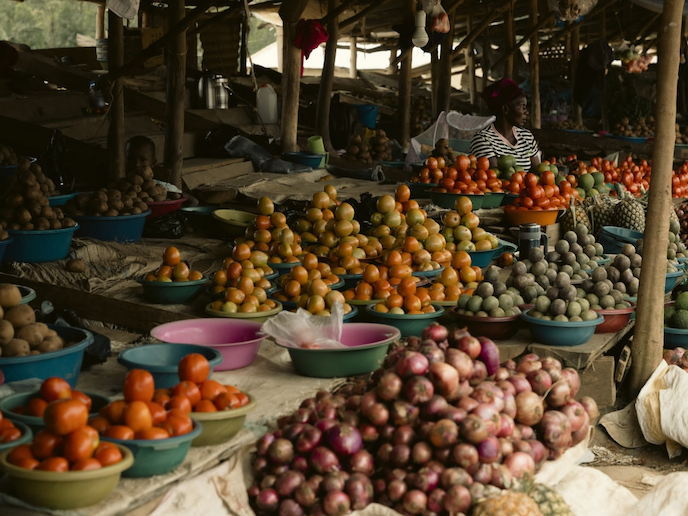
While the overall findings paint a worrying picture, the study also identifies areas of progress that could provide a pathway towards more achievable food-system transformation.
Researchers found that seven of 33 indicators already have at least one-third of countries on track to meet their 2030 targets. At the global level, half of the indicators have also been moving in a desirable direction.
These developments suggest that the transformation of food systems is not impossible, but that governments need to identify what is working, scale up successful interventions and dramatically increase the pace of change.
The researchers argue that regional and income-group benchmarks could play an important role in making global targets more practical for countries facing different starting conditions.
This is particularly relevant for Africa, where the gap between current performance and global benchmarks can appear overwhelming.
On affordability of a healthy diet, African countries are, on average, 58.7% away from the global benchmark. However, when performance is measured against a regional benchmark based on the average of the top fifth of African countries, the gap falls to 32.2%.
The difference demonstrates how regional comparisons can provide governments with more realistic examples of what can be achieved within similar economic and social environments.
According to Jessica Fanzo, James Anderson Professor of Food Policy and Climate at the Johns Hopkins University School of Advanced International Studies Europe, “bold global targets are vital for inspiring ambition.”
“But they can become a source of inertia if they seem permanently out of reach. Therefore, regional and income-group benchmarks keep progress within sight and help identify the exemplar countries that can show others how it is achievable.”
Jessica Fanzo
The findings also place governance at the centre of the food-systems transformation challenge.
Researchers identified government effectiveness and accountability as critical leverage points because improvements in these areas could influence progress across a much wider range of food-system indicators.
Rather than treating governance as a separate component of food policy, the study argues that stronger institutions, greater accountability and meaningful civil society participation can help unlock improvements in food security, environmental sustainability, livelihoods and resilience.
Moreover, Lawrence Haddad, Executive Director of the Global Alliance for Improved Nutrition stated that, “food systems transformation is a shared responsibility.”
“The governance indicators including government effectiveness, accountability and civil society participation are not just one category among five. They are the enablers. Improving them unlocks progress across the entire system.”
Lawrence Haddad
The challenge is particularly urgent as food systems continue to face pressure from climate change, population growth, economic instability and unequal access to resources.
The study calls for countries to prioritise areas where progress is furthest off track, including food affordability, food insecurity, government effectiveness and food-system emissions.
READ ALSO: How Black Queens Can Still Qualify for the World Cup Despite Shock WAFCON Exit