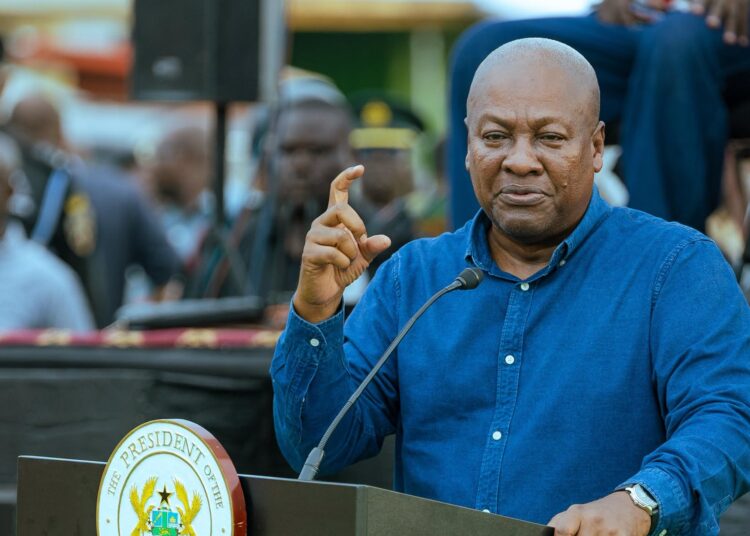
President John Dramani Mahama has announced that the government has made provision in this year’s budget for the completion of 30 abandoned E-Block projects, and will build a further 30 new ones under a secondary education programme carrying an investment of three billion cedis.
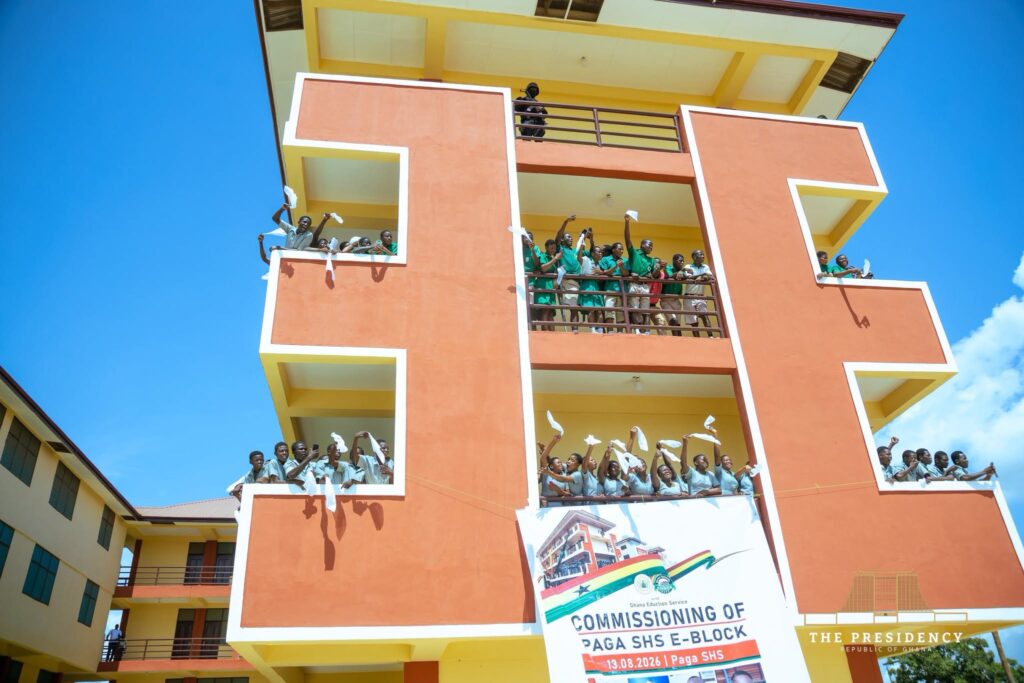
He spoke at the inspection of the completed E-Block at Paga during his Resetting Ghana Tour of the Upper East Region. The President framed the work as the route to ending double-track in Ghana’s senior high schools by 2027, arguing that the shift system cuts the hours students spend with their teachers and depresses performance in the West African Examinations Council examinations.
He also announced that the Paga school will become a boarding institution from next academic year, with dormitories, a dining hall and a 60-seater bus. President Mahama returned to the reasoning behind the programme his previous administration started, tying it directly to the expansion of secondary enrolment.
“We started the e-block concept. That was to expand access to secondary education because we realised at that time that a little over 500 and something secondary schools were not enough to contain the number of children that were to be expected under the Free Senior High School Programme”.
President John Dramani Mahama
The target then was to build ahead of the intake. “So we wanted to accelerate the construction of 200 new e-blocks so that the children would have enough space in secondary and not let it end up in double track,” he said.
How the country arrived at double track
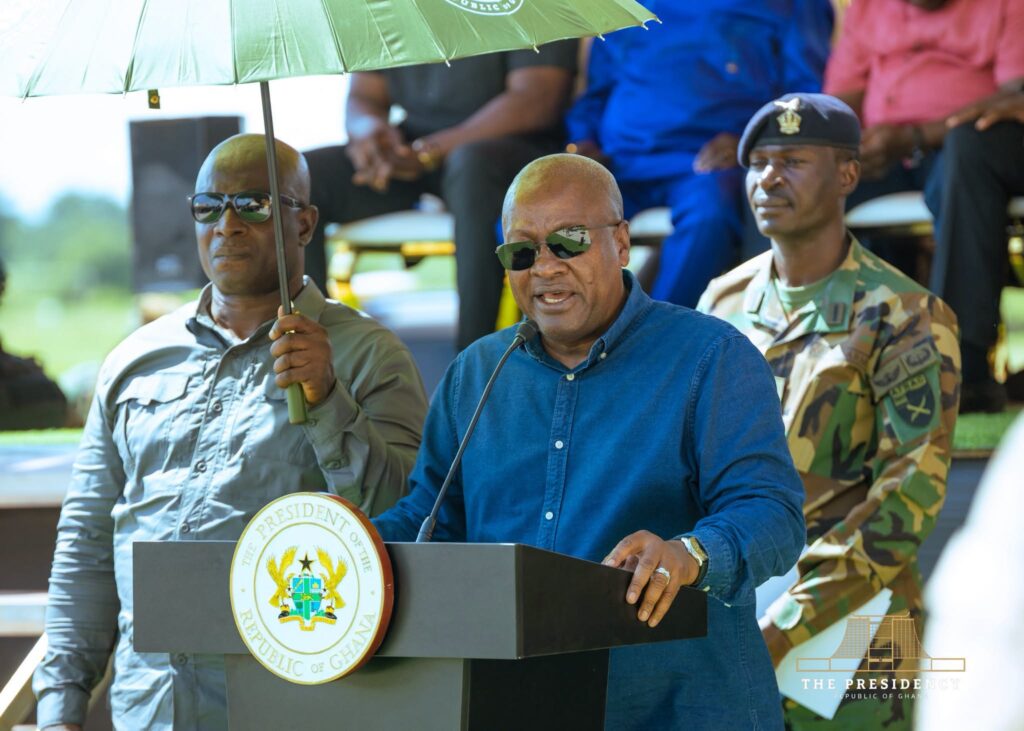
The President attributed the shift system to a policy choice made after his administration left office, and to the abandonment of the construction programme.
“Unfortunately, our colleagues did not agree with us when they came up with the Fast Track Free Senior High School without any major expansion of the existing secondary schools and also abandoned all the e-block projects that we were doing. And so where did it end us? It ended us in double track”.
President John Dramani Mahama
He then set the deadline his government has adopted. “This government has come, and we say by 2027 no secondary school in Ghana will be practising double track. All our children will go to school at the same time.”
President Mahama grounded the commitment in classroom time, arguing that the shift system shortened the period students spend with teachers. “They will have the same amount of teacher contact hours because we realised that one of the things affecting the Free Senior High School was the reduced contact hours between the students and their teachers,” he said.
He linked that directly to examination performance. “And so if we end the double track, it will increase the students’ teacher contact hours, and we believe that will improve their performance in the WAEC exams,” he said.
Three billion cedis under the STAR-J project
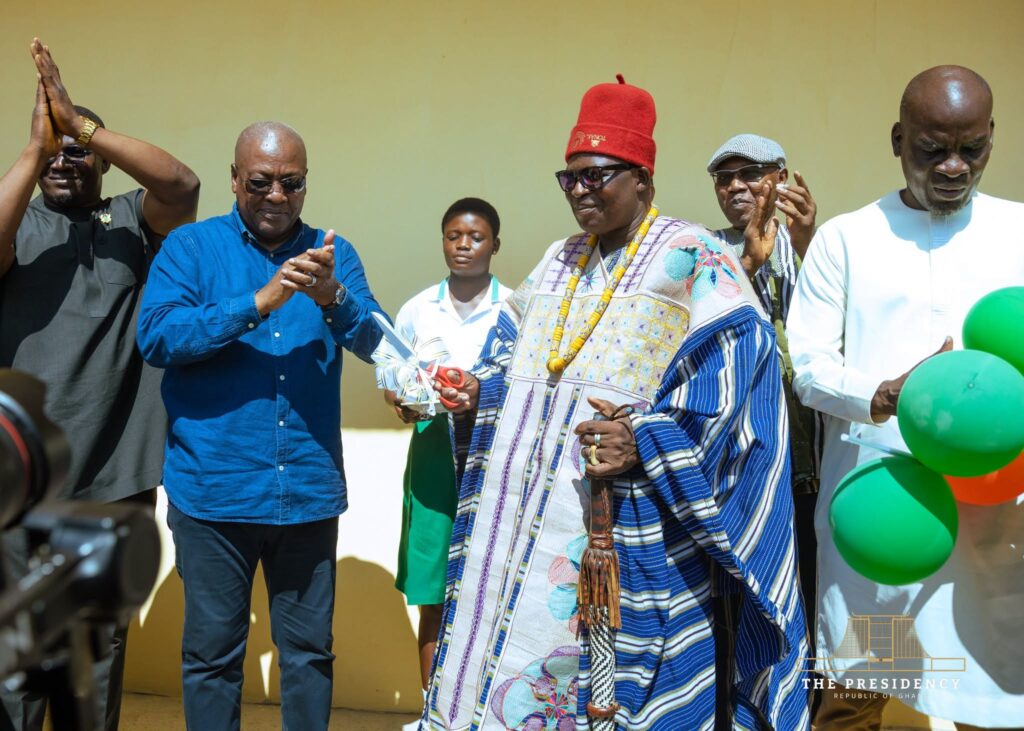
The President identified the vehicle carrying the investment and its intended result. “So as the Minister was talking, we have what we call the STAR-J project. It is a project in which we are investing 3 billion Cedis in secondary education. The outcome of that project is to end congestion in our secondary schools and also end the double track in our secondary schools,” he said.
“And so in this year’s budget we made provision for completion of 30 of the abandoned e-blocks. As we said in 2024, any project into which government has funded taxpayers’ money must be completed, and so we’re going to finish the e-blocks that we started in batches. And so this year we allocated for the completion of 30 of them, and this school is one of them”.
President John Dramani Mahama
He described conditions at Paga before the work concluded. “The children were using part of the facility in very, very terrible conditions. Today they have a very beautiful, brand-new school which will improve their learning and outcomes,” he said, adding that he had asked the GETFund to fast-track furniture and equipment so the school can start in earnest.
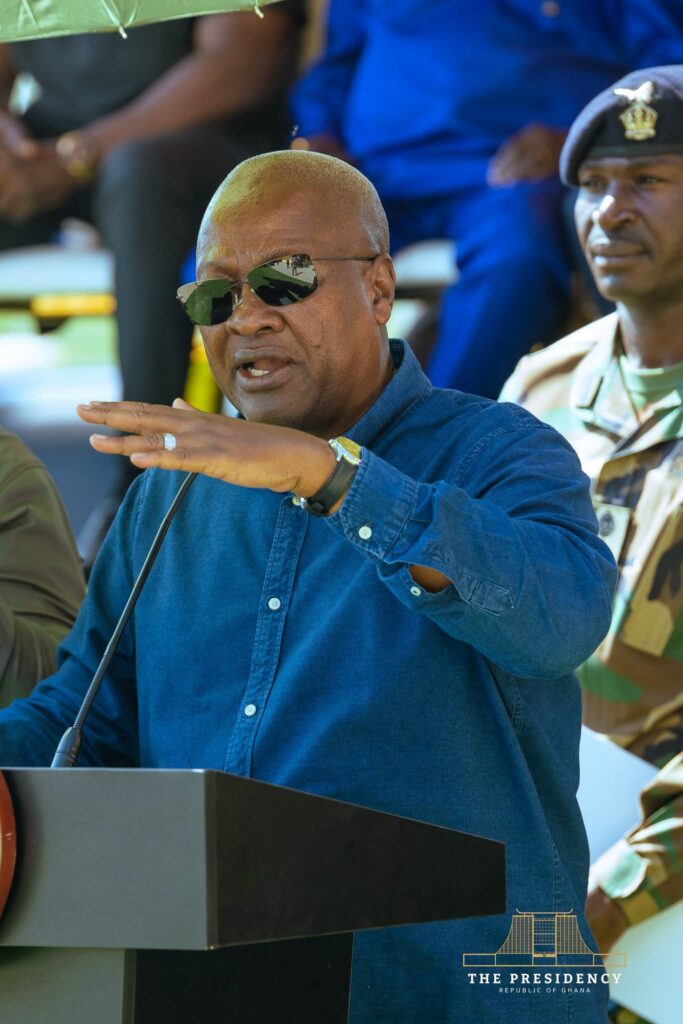
The second component adds capacity rather than recovering it, and targets cities rather than rural districts. “Now, under the STAR-J project, we’re going to build another 30 new e-blocks. These ones 30 from scratch. The ones I talked about were finishing the abandoned ones. We’re going to build another 30 new e-blocks across the country,” he said.
“A lot of these new ones are going to be in high population density areas. So in some of the major cities across the country, we will put e-blocks in high-density areas so that those will be community day schools. It means the children can even walk from home to the secondary school”.
President John Dramani Mahama
Paga becomes a boarding school
For schools built in rural districts under the earlier phase, distance made day attendance impractical, and the President said those institutions are being converted to boarding.
“And so I just want to reiterate what the minister told you. That from next academic year, we’ll absorb this school as a boarding school. And so the GETFund is going to build three projects.
“There’s going to be a girls’ dormitory. There’s going to be a boys’ dormitory, and there’s going to be a dining hall. And in addition, this is a bonus. I’m going to give you a 60-seater bus for this school.”
President John Dramani Mahama
President Mahama closed by shifting attention from the buildings to what happens inside them. “I’ll just ask that those who will be put in charge of the school, we want this school to be a centre of excellence. We want to see that in the results of the children. It’s not just about the brick and mortar and building the school,” he said.
His measure of success was specific. “This school will be judged by the outcome of what the students become when they do the West African Examinations Council School Certificate. I want to see that the children here pass 100%.”
READ ALSO: Iran Rejects Trump’s Claim of Hormuz Control