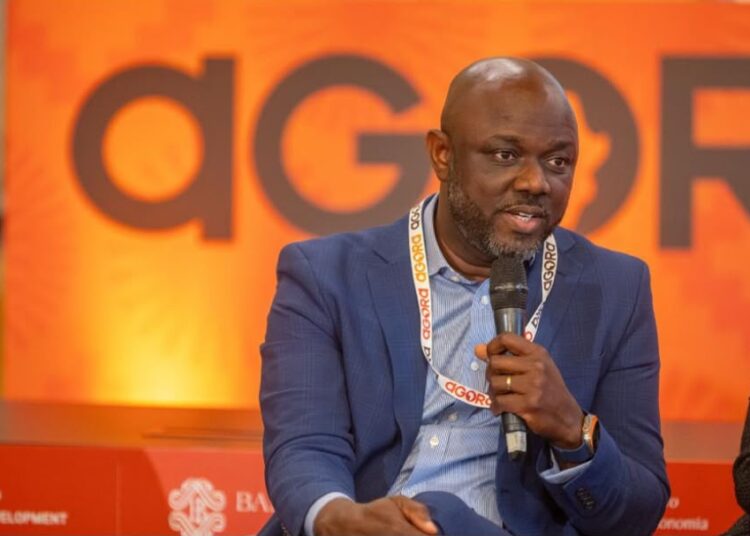
Ghana’s approval of the AKSA power project is facing renewed scrutiny over whether the country secured sufficient commercial value from the agreement, with energy policy analyst and Africa Centre for Energy Policy (ACEP) Executive Director, Benjamin Boakye arguing that the deal should be subjected to closer examination.
The concern goes beyond the circumstances surrounding the project’s approval.
At its centre is a broader question about how Ghana evaluates the financial, technical and contractual implications of major power agreements before committing public resources over the long term.
Mr Boakye argues that the approval process for the AKSA project did not adequately demonstrate that Ghana had secured the best possible commercial terms.
There was clearly no value for money in the approval for Aksa power plants deal.
Benjamin Boakye, Executive Director, ACEP
The assertion places Parliament’s role under particular scrutiny.
Parliament’s approval of major agreements is intended to provide an additional layer of oversight over transactions that can create significant obligations for the state.
For Boakye, the AKSA case raises questions about whether that scrutiny was sufficiently rigorous, particularly in assessing the economics of the agreement before approval.
That matters because power-sector contracts are not ordinary government purchases.
Electricity agreements can create obligations extending across several years, meaning weaknesses in pricing, risk allocation or demand assumptions can continue affecting consumers and public finances long after the original administration has left office.
Beyond the AKSA agreement
The immediate controversy also feeds into a much larger debate over Ghana’s independent power producer arrangements and the cost of securing generation capacity.
Ghana’s experience with IPPs has demonstrated the importance of attracting private capital into electricity generation, particularly when public resources alone are insufficient to finance the infrastructure required by a growing economy.
But the commercial certainty provided to investors must be matched by disciplined procurement on the part of the state.

This is where the AKSA debate becomes relevant beyond one power plant.
A government negotiating from a position of urgency may prioritise speed and additional generation capacity.
Yet the eventual contract can become a long-term fiscal commitment.
The critical issue is therefore whether the state’s immediate need for electricity resulted in terms that remained economically defensible over the life of the agreement.
Boakye’s position effectively calls for the commercial assumptions behind the agreement to be reconstructed and tested.
That would include examining how the project was valued, how the tariff and other contractual obligations were determined, what risks were allocated to the state and whether the procurement process provided sufficient competition and transparency.
Such scrutiny would also help separate two issues that are sometimes conflated: whether wrongdoing occurred during the approval process and whether the resulting contract represented good value for Ghana.
A finding on one question does not automatically establish the other.
Parliament’s oversight under the spotlight
The parliamentary dimension is particularly significant because legislative approval is one of the institutional safeguards available when the state enters major commercial agreements.
If Parliament approves a transaction without sufficiently interrogating its underlying economics, the approval process can become largely procedural rather than a meaningful test of value for money.
That would have implications well beyond the AKSA agreement.
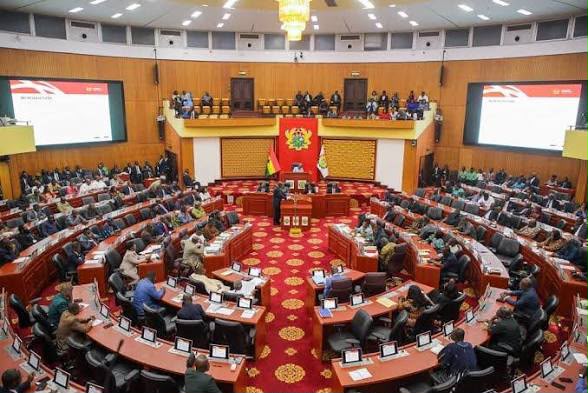
Why was Parliament not able to do the checks to make sure Ghana got the best deal?
Benjamin Boakye, Executive Director, ACEP
The question goes to the quality of Ghana’s public-sector contracting system.
Effective oversight should not stop at determining whether an agreement satisfies the formal requirements for approval.
It should also interrogate whether the state is accepting commercially reasonable obligations and whether the proposed project fits into a financially sustainable electricity plan.
Corruption concerns raise a separate question
The renewed scrutiny follows a bribery case involving former Tema Oil Refinery Managing Director Asante Kwaku Berko and an AKSA-related power project.
Berko was convicted in the United States in connection with a bribery scheme involving efforts to secure approvals for the project.
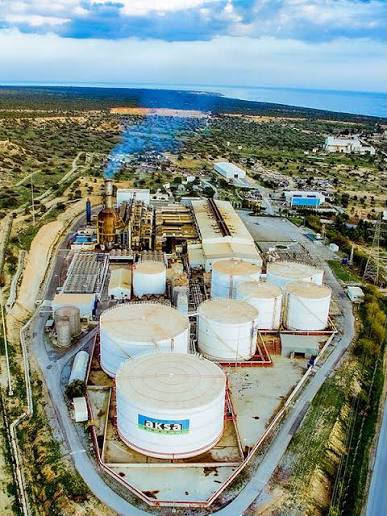
That development makes examination of the broader transaction particularly consequential, but it should not be treated as automatic proof that every element of Ghana’s AKSA agreement was improperly negotiated or approved.
The appropriate response is a fact-based review of the agreements, approval process and financial consequences.
Such a review could establish whether the state obtained reasonable value, whether procurement procedures were properly followed and whether any contractual risks were disproportionately transferred to Ghana.
A wider lesson for Ghana’s power sector
The AKSA controversy ultimately exposes a recurring weakness in Ghana’s electricity debate: the country has often focused heavily on obtaining additional generation without giving equal attention to the quality and cost of the contracts used to secure it.
Power generation is essential to economic development, but additional megawatts are not automatically beneficial if they are acquired at excessive cost or under contractual arrangements that the electricity market cannot sustainably support.
That is particularly relevant as Ghana continues to grapple with financial pressures across the energy value chain and seeks to improve the terms of existing power-sector obligations.
A credible review of the AKSA arrangement, therefore, should not be driven solely by political pressure or the desire to invalidate a controversial deal.
The stronger approach would be to establish the facts, quantify the obligations and determine whether the agreement remains commercially justified.
If weaknesses are identified, the evidence could provide a basis for renegotiation, restructuring or stronger safeguards for future transactions.
If the agreement withstands scrutiny, that conclusion would also strengthen confidence in the procurement process.
The larger lesson is that Ghana cannot afford to treat parliamentary approval as the end of commercial due diligence.
For a country carrying substantial energy-sector financial obligations, every major generation contract must answer three basic questions: what is Ghana buying, what is Ghana paying, and does the resulting value justify the liability being placed on the public?
The renewed AKSA debate provides an opportunity to demand clear answers to all three.
READ ALSO: At Least 38 Killed as 7.7-Magnitude Quake Strikes Indonesia