The United Nations has raised fresh alarm over the escalating dangers facing humanitarian workers around the world, warning that aid personnel are increasingly being killed, injured and kidnapped while delivering lifesaving assistance in some of the world’s most dangerous conflict zones.
The UN Office for the Coordination of Humanitarian Affairs (OCHA), marking World Humanitarian Day, revealed that 907 aid workers were victims of violence in 2025 as humanitarian operations faced growing threats from armed groups, intensified warfare and restrictions on access to populations in need.
Although the number of humanitarian workers killed declined slightly last year, the 350 deaths recorded in 2025 represented the second-highest annual toll ever documented.
The figure highlight the increasingly dangerous environment in which humanitarian personnel operate, particularly in areas affected by prolonged armed conflict and political instability.
Beyond fatalities, 322 aid workers were injured and another 235 were kidnapped during the year, according to Humanitarian Outcomes’ Aid Worker Security Database, which is funded by the governments of Australia and Canada.
The figures demonstrate that violence against humanitarian personnel has become a persistent feature of modern conflicts, threatening not only the lives of aid workers but also the ability of international organisations and local partners to reach vulnerable populations.
The danger has continued into 2026. So far this year, 82 aid workers have been killed, while another 97 have been injured and 39 kidnapped across the world. The continuing attacks have reinforced concerns that the environment for humanitarian operations is deteriorating despite repeated international calls for greater protection of civilians and aid personnel.
UN Secretary-General António Guterres, in his message marking World Humanitarian Day, paid tribute to humanitarian workers operating in increasingly difficult circumstances while highlighting the pressures threatening the delivery of assistance.
“Disinformation is eroding trust. Humanitarian funding is being cut. And humanitarian access is being restricted.”
António Guterres
He called on governments to protect humanitarian workers as they provide assistance to millions of people affected by conflict, displacement, hunger and natural disasters.
The warning comes as humanitarian agencies confront simultaneous crises across Africa, the Middle East, Europe and other regions, stretching already limited resources while exposing aid workers to increasingly sophisticated forms of violence.
For the third consecutive year, Gaza remained the deadliest environment for humanitarian workers in 2025. A total of 186 aid workers were killed there, with 68% of the deaths attributed to aerial bombardment.
Sudan also recorded a sharp deterioration in security for humanitarian workers, with 71 aid personnel killed in 2025, the highest annual figure recorded in the country. Most of those deaths were caused by small-arms fire as the conflict continued to disrupt communities and humanitarian operations.
Other countries identified among the high-insecurity contexts included Ukraine, Ethiopia, Syria, Haiti, Chad and Cameroon, where aid personnel faced threats including kidnapping, armed attacks and aerial bombardment.
The situation has raised renewed questions about whether existing international mechanisms are sufficient to protect humanitarian personnel in increasingly complex conflicts.

Tom Fletcher, the UN Under-Secretary-General for Humanitarian Affairs and Emergency Relief Coordinator, indicated that the scale of the killings should no longer be treated as an unavoidable consequence of humanitarian work.
“More than 1,000 aid workers have been killed in just three years and that is utterly unacceptable. But just calling it out will not protect the next aid worker.
“States must uphold international humanitarian law and use every tool to protect civilians and our colleagues. And for those who break the rules, there must be real consequences.”
Tom Fletcher
Weaponised Drones Expand Threat to Humanitarians Across Conflict Zones
One of the most significant developments highlighted by the UN is the rapid proliferation of cheap and adaptable armed drones, which have changed the nature of warfare and expanded the ability of armed actors to launch attacks against populated areas.
The UN Office for the Coordination of Humanitarian Affairs (OCHA), warned that the technology is putting lethal capabilities into the hands of more actors and allowing explosive attacks to reach deeper into towns and cities.
The consequences have been particularly severe in Sudan, where armed drones were responsible for 80% of civilian deaths recorded during the first four months of 2026, according to OCHA.
Markets and healthcare facilities have been among the locations struck, raising concerns about the safety of civilians and the humanitarian personnel working to support them.
In Ukraine, drone warfare has similarly created new risks for both civilians and aid workers. Drone attacks killed 80 civilians in April alone, while attacks in the Russian Federation have also killed civilians and damaged civilian infrastructure.
Colombia has experienced another worrying trend, with attacks involving weaponised drones quadrupling between 2024 and 2025.
The expanding use of drones means humanitarian workers are increasingly exposed to threats that can strike without warning and from significant distances. Aid convoys, residential buildings and other locations previously considered relatively safer are becoming potential targets.
In March 2026, an aid worker was killed when a drone struck a residential building in the Democratic Republic of the Congo. In Ukraine, four humanitarian convoys were attacked within a single week in May, highlighting the growing risks faced by personnel moving supplies and assistance to communities affected by war.
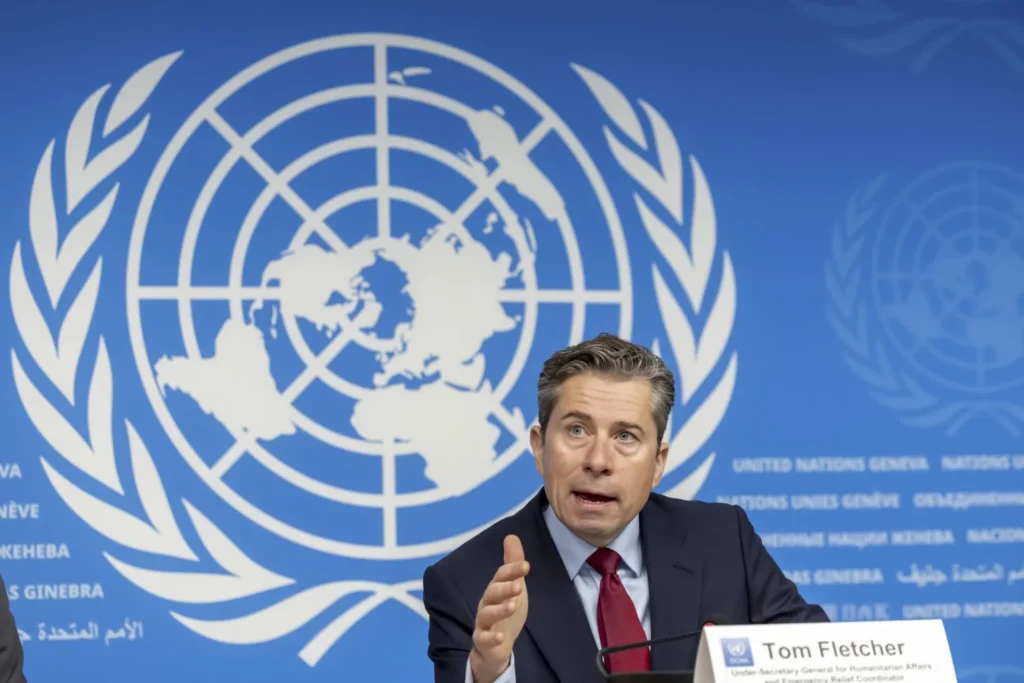
The UN Under-Secretary-General for Humanitarian Affairs and Emergency Relief Coordinator, described the proliferation of weaponised drones as a new manifestation of an old problem: attacks that endanger civilian life.
“Weaponised drones have become the new face of an old danger: the deliberate or reckless destruction of civilian life, The technology may change, but the laws of war do not.”
Tom Fletcher
This year’s World Humanitarian Day campaign, Act for Humanity, is placing a human face on the growing toll. The campaign highlights aid workers who have been killed through interviews with their families, emphasising that behind every statistic is an individual whose death leaves relatives, colleagues and communities facing profound loss.
READ ALSO: Ghana’s Energy Transition Needs More Than Renewable Targets