
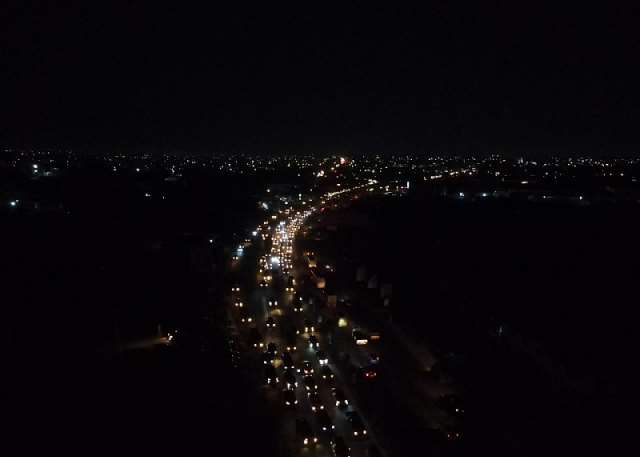
Several parts of Ghana experienced fresh electricity interruptions in the early hours of Thursday, August 20, extending a pattern of widespread system disruptions that has placed renewed attention on the reliability of the national power network.
The latest outage affected communities across Greater Accra, including Adabraka, Weija, Kasoa, Tesano, Achimota, Dzorwulu, Legon, Madina, Adenta and Oyarifa, with reports indicating that some areas lost supply from about 4:15 a.m. Similar disruptions were reported in Aburi in the Eastern Region, Tamale in the Northern Region and parts of the Central and Ashanti regions.
The immediate cause of Thursday’s disruption had not been publicly established at the time of reporting.
That distinction is important: there is currently no verified basis to attribute the latest outage to a transmission fault, generation shortfall or distribution problem.
The recurrence, however, gives the incident significance beyond a routine localised power fault.
Recurrence Raises System Reliability Questions
The latest disruption comes barely three weeks after a much wider power system disturbance on July 29, when electricity supply was interrupted across several parts of Ghana.
On that occasion, the Ghana Grid Company Limited (GRIDCo) said the National Interconnected Transmission System experienced a disturbance at approximately 3:11 a.m., resulting in the simultaneous tripping of some generating plants connected to the national system.
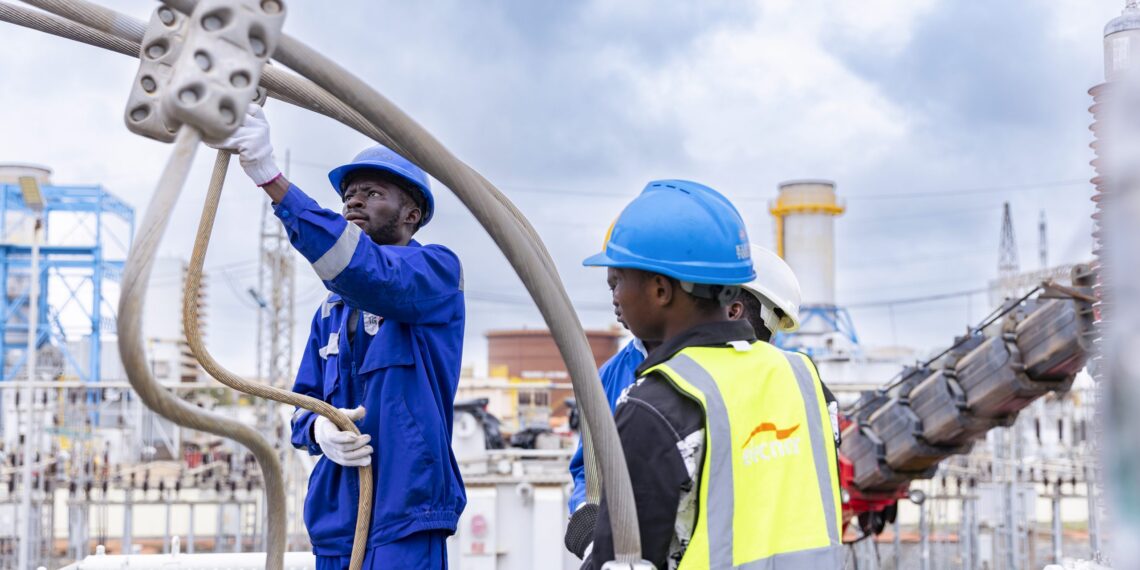
GRIDCo subsequently activated its restoration procedures and began a technical investigation into the event.
“The disturbance resulted in the simultaneous tripping of some generating plants across the national power system, leading to interruption of electricity supply.”
Ghana Grid Company Limited (GRIDCo), in its statement on the July 29 disturbance.
The July event was eventually followed by restoration of supply, with the Ghana News Agency reporting that power had been restored by about 1:30 p.m. in the affected areas.
ECG also advised customers to exercise caution and switch off appliances where necessary while restoration was ongoing.
Thursday’s outage is not necessarily evidence that the July system disturbance and the latest interruption have the same cause.
Establishing such a connection would require technical findings from GRIDCo and ECG.
What can reasonably be said is that repeated broad-area interruptions increase the importance of understanding how the national system responds to disturbances.
Transmission Stability Matters Beyond the Grid
Ghana’s electricity system is interconnected, meaning an incident affecting a critical part of the network can have consequences beyond the immediate location of a fault.
That makes transmission reliability particularly important.
Generation capacity alone does not guarantee reliable electricity supply if power cannot be transmitted and distributed effectively to consumers.
The July 29 incident demonstrated this distinction clearly.
GRIDCo’s account showed that the disturbance was associated with generating plants tripping across the national system, rather than simply a neighbourhood-level distribution fault.
The energy-sector implication is straightforward: Ghana’s reliability challenge must be assessed across the entire electricity chain, from generation and fuel availability to transmission, distribution, system protection and operational resilience.
For businesses, the consequences extend beyond the period during which the lights are off.
Interruptions can affect production schedules, refrigeration, telecommunications, digital services and commercial operations.
For water utilities, electricity disruptions can also affect pumping and treatment operations.
During the July outage, Ghana Water Limited said power challenges had rendered several water production systems and pumping stations non-operational.
The Real Test is System Resilience
The latest interruption also comes at a time when Ghana is pursuing reforms aimed at making the electricity sector more financially sustainable and operationally resilient.
That makes system reliability more than a consumer-service issue.
It is central to the credibility of the country’s broader energy-sector recovery effort.
Ghana has significant generation infrastructure, including hydro and thermal plants, but the value of that capacity ultimately depends on the ability of the system to move electricity reliably to demand centres.
The increasing integration of the network brings efficiency and flexibility, but it also makes system protection, maintenance, monitoring and contingency planning increasingly important.
The July experience provides a useful benchmark for what the public should expect from the response to Thursday’s event: a clear explanation of what happened, evidence-based findings from any technical investigation, and information on measures being taken to prevent recurrence.
GRIDCo made a similar commitment after the July disturbance.
“A comprehensive technical investigation has commenced to determine the precise cause of this system event.”
GRIDCo, following the July 29 national power system disturbance.
That level of technical transparency matters because repeated unexplained interruptions can quickly become a confidence problem for households and industry.
Ghana Needs Answers, Not Just Restoration
Restoring electricity is the immediate priority whenever a major interruption occurs.
But restoration alone does not resolve the underlying energy-security question.
The more important measure of performance is whether the sector can identify vulnerabilities, correct them and strengthen the grid before the next disturbance occurs.
It is therefore too early to label Thursday’s outage as another national grid failure without an official technical explanation.
The affected locations and scale of the reported interruptions warrant attention, but the cause remains a matter for the responsible power-sector institutions to establish.
For Ghana’s energy sector, the episode reinforces a basic reality: reliable electricity is not determined only by how much power the country can generate, but by how resilient the entire system is when something goes wrong.
That is where the latest outage deserves scrutiny.
The immediate darkness may be temporary, but the quality of the technical explanation that follows will determine whether the incident becomes another isolated disruption or an opportunity to strengthen Ghana’s power system.
READ ALSO: Nigeria’s Presidential, Governorship Candidates Face ₦571bn Spending Cap