UK Housing, Communities and Local Government Secretary Angela Rayner has admitted that Labour’s pledge to build 1.5 million new homes during the current parliament was “always a stretch target,” as the government faces mounting pressure over housing delivery, construction costs and the country’s economic outlook.
In an interview, Angela Rayner defended the government’s housing plans, pointing to £10 billion already allocated to support its social and affordable housing programme and saying the forthcoming budget could reinforce its commitment to expanding council housing.
According to Angela Rayner, Labour’s ambition to build 1.5 million homes over the parliamentary term has always been challenging.
“That target was always a stretch target,” she stated, adding that the government was seeking to support the housing market and help developers build the homes the country needed.
The housing secretary’s remarks follow Labour’s election pledge to expand housing supply, with the government under pressure to show progress on affordability and social housing availability.
Asked about reports that the upcoming budget could include an additional £1 billion for social and affordable housing, Rayner stopped short of confirming the figure but stressed the government’s commitment to increasing supply.
“We know the pressures that are on social housing at the moment, and the Prime Minister was very clear that we need to build more council housing.”
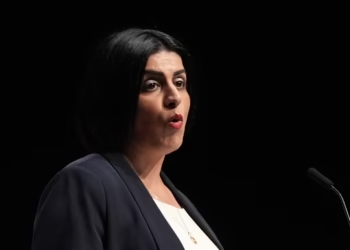
Angela Rayner
She added that the government had already allocated £10 billion to get its social and affordable homes programme moving, expressing hope that the budget would demonstrate its determination to deliver “the biggest wave of council housing since the 1980s.”
Rayner Defends Economic Strategy Amid Liz Truss-Style Crisis Warnings
Also, UK Housing, Communities and Local Government Secretary Angela Rayner defended the government’s economic record after former Bank of England Chief Economist Andy Haldane warned that Prime Minister Keir Starmer and Chancellor John Healey could postpone major economic decisions needed to strengthen the UK economy.
Andy Haldane has argued that the government must make difficult choices on public spending in its forthcoming budget, warning that failure to do so could trigger a Liz Truss-style crisis that would “crater” the economy.
Responding to the concerns, Rayner argued that Labour had inherited a difficult economic situation from the previous Conservative administration.
“Well what Andy Haldane also said very clearly was that the way in which the previous government acted was an act of vandalism on our economy. And I agree with him on that. We inherited a really terrible situation.”
Angela Rayner
She pointed to the government’s regional development plans, including an announced £285 million allocation for the Regional Growth Fund, which she indicated will help advance devolution and support economic growth.
Rayner also cited International Monetary Fund data indicating that the UK is “one of the strongest growing economies in the G7” and has “the best deficit reduction plans.”
She argued that investment in housebuilding, green energy and future employment was helping to strengthen market confidence and demonstrate the economy’s resilience amid global challenges.
“We’re showing that our economy is resilient, notwithstanding the challenges that are the global challenges that many other countries are facing at the moment,” she stated.
However, Rayner repeatedly declined to comment on potential tax increases in the upcoming budget, leaving uncertainty over the government’s approach to raising revenue and balancing its spending commitments.
The interview also touched on defence spending, with Rayner defending Healey’s record and insisting that the government remained committed to meeting its NATO spending targets.
She noted, “where the Conservatives cut defence, we’ve increased defence spending already. We’re not waiting until 2030 or 2035 – we are putting in investment in now.”
Rosebank Decision Puts Jobs and Energy Transition Under Scrutiny

In addition, Angela Rayner also addressed the government’s approach to North Sea energy development, as a decision on the Rosebank oil field remains pending following approval for drilling at the Jackdaw gas field.
The Jackdaw approval was announced by the Energy Secretary, with the government indicating that revenues will support renewable energy investment and efforts to reduce energy bills.
Asked why the government had not approved Rosebank, which could generate hundreds of millions of pounds in tax revenue for the Treasury and create hundreds of jobs, Rayner emphasised the need to protect British employment while managing the transition from fossil fuels to renewable energy.
She cited the government’s approach to employment in the steel industry and its support for renewable energy as examples of its efforts to protect workers while transitioning the economy towards cleaner energy sources.
READ ALSO: FIFA U-17 WWC: Maidens Beat Canada to Reach Last 16