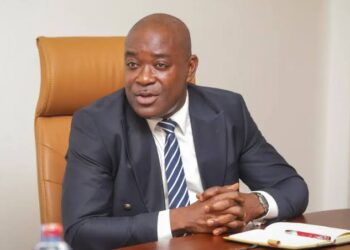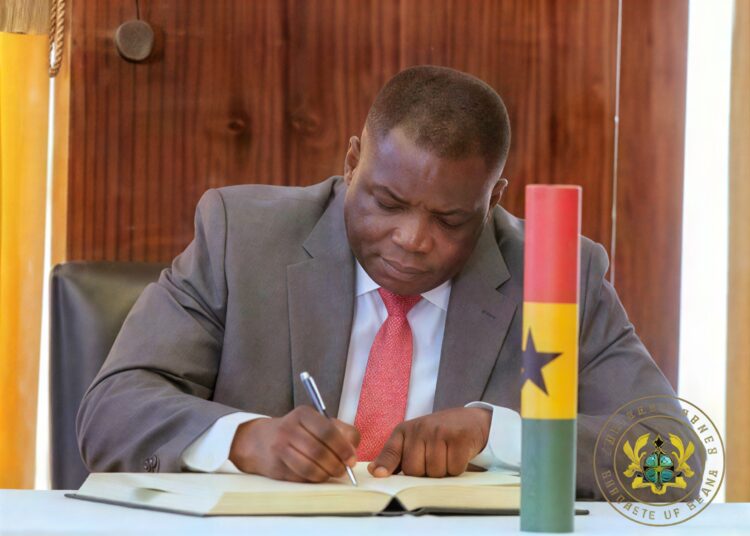
The Roads and Highways Minister, Honourable Kwame Governs Agbodza has disclosed that the government is preparing to complete abandoned bridge projects across the country as part of efforts to restore infrastructure investments that remain unusable. The Minister indicated that the Ntotroso Bridge over the River Tano is among the projects receiving attention as authorities work to reopen the route to vehicular traffic.
The Roads Minister explained that significant portions of the difficult construction work on the Ntotroso project have already been undertaken, creating an opportunity for the remaining works to progress at a faster pace. He therefore challenged the contractor to intensify operations and ensure that the project advances towards completion within the expected timeline.
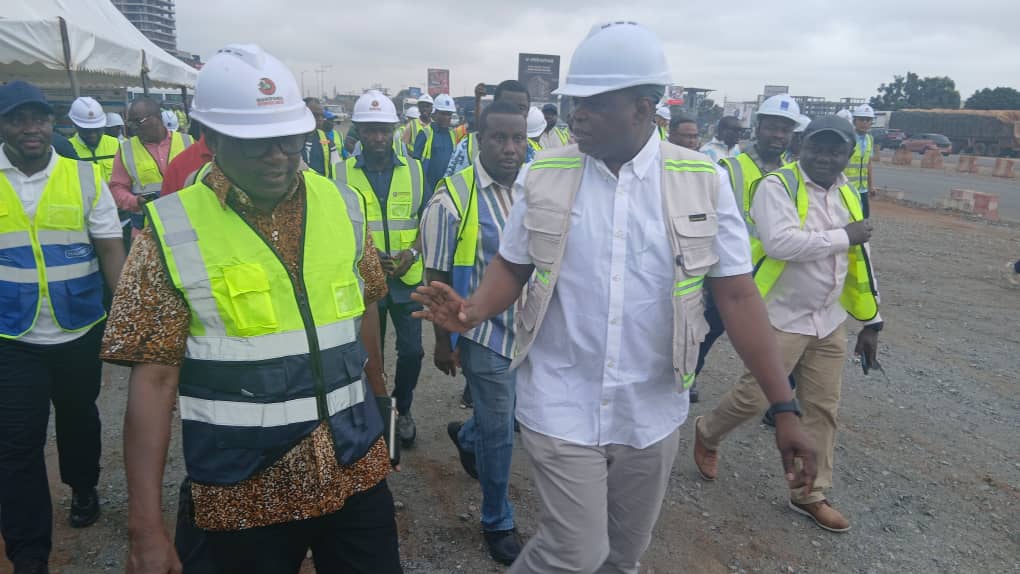
Honourable Agbodza also linked the Ntotroso situation to a wider inventory of unfinished bridge projects scattered across the country. According to him, government has identified approximately 50 abandoned critical bridges that require additional investment to become fully operational.
“We need to now step back and then identify all those and get them completed.”
Honourable Kwame Governs Agbodza
The Minister noted that considerable public resources have already been committed to bridge components imported for several projects. Completing the structures and their connecting approaches, he explained, would help turn those investments into functioning infrastructure for communities.
The discussion also covered the group of 50 Czech bridges supplied under an earlier arrangement. Honourable Agbodza revealed that many of those bridges have been launched or assembled while several remain inaccessible because the approach roads and associated works are incomplete.
From his view, the unfinished approaches represent a significant part of the challenge facing the projects. He explained that constructing a bridge alone does not create a usable transport link when motorists still lack proper access to and from the structure.
The government is therefore considering the use of domestic resources to finance the outstanding works. This approach, according to the Roads Minister, is intended to preserve the value of infrastructure components already acquired and bring stalled projects into productive use.
Analysing the situation, Honourable Agbodza pointed to the financial implications of leaving completed bridge components idle. He argued that public expenditure achieves limited value when infrastructure remains disconnected from the road network and communities cannot use it.
The Minister further indicated that the approach works vary considerably from one location to another. Some sites require substantial earthworks and additional drainage structures because of the terrain and the volume of water passing through the surrounding areas.
Funding Gaps Put Focus On Completing Critical Bridges
Financial constraints have emerged as a major factor behind several stalled bridge projects across the country. The Roads Minister attributed part of the difficulty to inadequate planning and the wider fiscal pressures that affected the government’s ability to secure additional financing.
Honourable Agbodza argued that the original estimates for some bridge projects did not sufficiently account for the cost of approach roads and other supporting infrastructure. He pointed to the Czech bridge programme as an example where the cost of imported components represented only part of the expenditure required to make each structure usable.
The Minister questioned the viability of completing an entire bridge project within a limited budget when substantial sums are also required for construction materials, transportation, earthworks and access roads. He therefore called for more comprehensive assessments before similar infrastructure arrangements are undertaken.

“They underestimated the work that needed to be done to get the bridges operational.”
Honourable Kwame Governs Agbodza
Referencing the financing arrangements, the Roads Minister also raised questions about changes made to some project agreements. He indicated that variations to major infrastructure projects require the appropriate parliamentary processes to ensure that additional commitments receive the necessary approval.
The financial challenge has been compounded by restrictions on government borrowing. According to Honourable Agbodza, the fiscal situation limited the ability to secure fresh funding for projects that had already encountered implementation difficulties.
Nevertheless, the Minister emphasised that unfinished infrastructure remains part of the state’s responsibility. He explained that changes in government do not erase existing projects because successive administrations inherit ongoing commitments and must determine how best to complete them.
This principle has informed the decision to revisit abandoned projects and establish what is required to finish them. The exercise is expected to consider the technical condition of each project, the remaining works and the financial resources required for completion.
Drainage has also emerged as a technical issue at some of the bridge sites. The Minister explained that heavy rainfall has affected certain locations, prompting contractors to consider additional culverts and other measures to improve water flow.
The situation demonstrates the importance of adequate preliminary studies before major infrastructure works begin. In the Minister’s assessment, stronger technical investigations can help identify drainage requirements, approach conditions and other costs that could otherwise disrupt implementation.
The government is consequently seeking to shift attention from unfinished structures to completed and usable infrastructure. That process requires coordination among the Roads and Highways Ministry, contractors and the relevant agencies responsible for highways and feeder roads.
READ ALSO: DR Congo Secures 70,000 Ebola Vaccine Doses as Outbreak Escalates