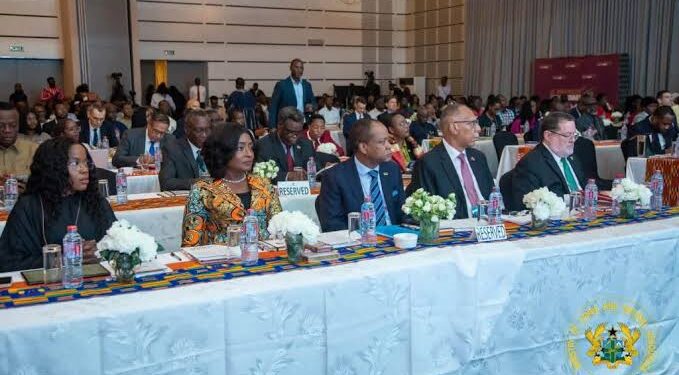
Africa’s widening electricity needs are placing greater pressure on governments to expand generation capacity while improving the reliability of existing power systems, with nuclear energy emerging as one of the technologies being considered for the continent’s long-term energy mix.
Professor Abdulai Baba Salifu, Chairman of the Governing Board of the Ghana Atomic Energy Commission (GAEC), said nearly 600 million Africans remain without access to electricity, while those connected to power systems in many countries continue to contend with unreliable supply.
His remarks, delivered at the US-Africa Nuclear Energy Summit in Accra, put the continent’s nuclear discussion within a broader energy-security challenge.
The issue is not simply how to generate more electricity, but how to build power systems capable of supporting economic activity, education and essential services as demand rises.
“Nearly 600 million of our brothers and sisters still lack access to electricity.”
Prof. Abdulai Baba Salifu, Chairman, Governing Board, Ghana Atomic Energy Commission
The scale of the access gap is particularly significant for Africa because electricity demand is expected to grow alongside population, industrialisation and urbanisation.
Prof. Salifu said Africa’s power demand is projected to increase by 47% by 2030, creating an increasingly urgent requirement for additional generation.
Reliability Adds Pressure To Generation Expansion
For countries such as Ghana, the debate extends beyond electricity access.
A substantial share of the population has access to electricity, yet recent system disturbances and outages have demonstrated that availability of generation capacity does not automatically translate into uninterrupted supply.
Ghana’s electricity system relies heavily on hydro and thermal generation, with transmission infrastructure connecting generating plants to distribution networks and major consumers.
Recent disruptions affecting parts of the country have underscored the importance of strengthening the entire electricity value chain rather than concentrating solely on new generation.
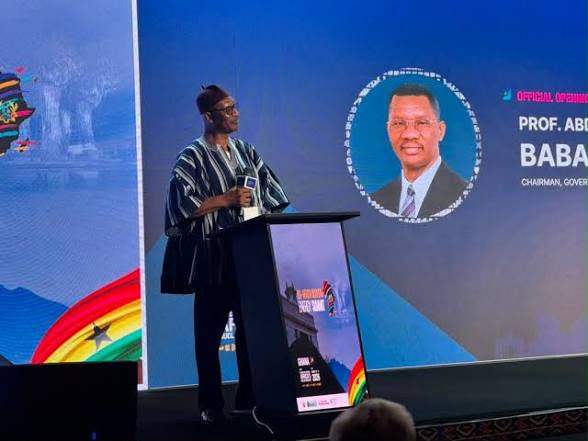
Prof. Salifu argued that Africa’s energy challenge should therefore become a driver for technological innovation rather than a permanent constraint on development.
“We in Africa should not continue to be defined by these challenges. Indeed, we must be defined by our resolve.”
Prof. Abdulai Baba Salifu, Chairman, Governing Board, Ghana Atomic Energy Commission
That argument gives nuclear energy a particular place in the discussion.
Nuclear power can provide large-scale, continuous electricity generation, making it fundamentally different from variable renewable sources whose output depends on conditions such as sunlight and wind.
For Ghana, the potential relevance lies in diversification.
Nuclear generation would not replace hydro, solar or natural-gas-fired power overnight.
Rather, its strategic value would be in adding another source of dependable electricity to a system increasingly required to support industrial and economic growth.
Nuclear Push Must Fit Ghana’s Energy Strategy
The case for nuclear power, however, should not be reduced to the size of Africa’s electricity deficit.
Nuclear projects require substantial upfront investment, long development periods, strong regulatory institutions and rigorous safety systems.
Their economic justification therefore depends on whether electricity demand, financing structures and long-term system requirements can support the investment.
Ghana has already been pursuing nuclear power as part of efforts to diversify its future electricity generation mix.
The country’s nuclear programme consequently sits within a broader question of how future electricity demand will be met while maintaining reliability and managing the cost of generation.
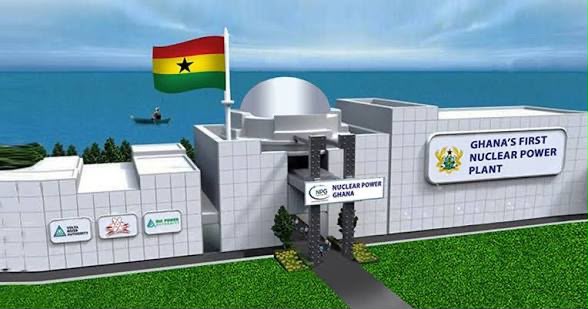
Prof. Salifu’s argument reflects that wider strategic consideration.
“We possess some of the world’s richest natural resources, yet we remain the most energy poor on earth.”
Prof. Abdulai Baba Salifu, Chairman, Governing Board, Ghana Atomic Energy Commission
The contradiction is particularly relevant to Ghana.
The country has significant hydroelectric resources and has expanded thermal generation, while solar and other renewable technologies are increasingly entering the electricity mix.
Yet periodic supply disruptions demonstrate that resource availability alone does not guarantee energy security.
A diversified generation portfolio can reduce dependence on any single resource and provide greater flexibility as demand patterns change.
Rising Demand Makes Diversification More Important
The projected 47% increase in African electricity demand by 2030 also changes the scale of the policy challenge.
Additional generation will be required not only to connect households that currently lack electricity but also to support industries, mines, manufacturing, digital infrastructure and other electricity-intensive activities.
For Ghana, this matters because economic expansion and electricity demand are closely connected.
Industrial development requires power that is not merely available, but sufficiently reliable and competitively priced.
This is where nuclear power could become part of a longer-term conversation about baseload generation.
A nuclear plant, if successfully developed, could provide a relatively stable source of electricity while hydro resources, thermal plants and renewable generation continue to play complementary roles.
At the same time, Ghana cannot treat nuclear capacity as a substitute for fixing weaknesses elsewhere in the electricity system.
Transmission constraints, distribution losses, maintenance requirements and financial challenges within the power sector can undermine reliability regardless of how much generation is available.
The recent power disturbances across the country offer a practical reminder: electricity security is a system-wide issue, not simply a generation issue.
Africa’s Energy Transition Needs More Than One Technology
The nuclear argument also intersects with Africa’s energy-transition debate.
The continent faces a different development challenge from many advanced economies.
While decarbonisation remains important, millions of people still require basic electricity access and many economies need significantly more power to industrialise.
That creates pressure for an energy strategy capable of balancing affordability, reliability, energy access and emissions reduction.
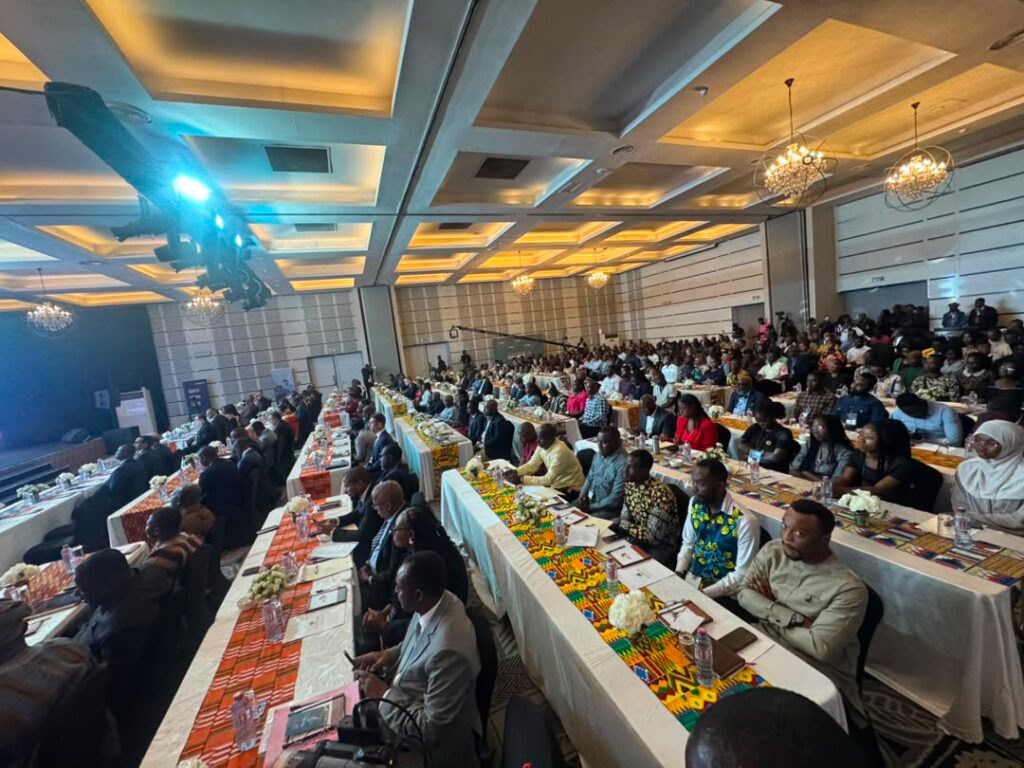
Prof. Salifu therefore sees emerging technologies, including nuclear power, as part of the solution rather than treating the energy transition as a pathway limited to renewable technologies.
“We must be defined by our resolve, especially in the wake of enormous potential for deploying new technologies such as nuclear power.”
Prof. Abdulai Baba Salifu, Chairman, Governing Board, Ghana Atomic Energy Commission
For Ghana, the more credible approach is likely to be a diversified one.
Hydro can continue providing renewable generation; natural gas can support flexible thermal power; solar can expand where grid and storage conditions permit; and nuclear could potentially provide another source of firm generation over the longer term.
The key test will be whether each technology is developed according to its economic and technical strengths rather than through a one-size-fits-all energy policy.
Africa’s electricity deficit is too large for a single technology to close.
The more consequential challenge is building an electricity system in which different sources reinforce one another while investment keeps pace with rising demand.
Prof. Salifu’s intervention therefore places nuclear energy within a much larger question confronting Ghana and the continent: how to move from having energy resources to building a reliable, diversified and scalable power system capable of supporting development.
READ MORE: UNICEF: Children Make Up Half of Guinea-Bissau’s Suspected Mpox Cases