
Student Loan Trust Fund Chief Executive Officer Dr Saajida Shiraz has defended the implementation of President Mahama’s No-Fees-Stress Policy, citing 384,607 total beneficiaries across the policy’s four components since its launch, in a statement pushing back against what she described as a sustained campaign of disinformation.
Dr Shiraz’s intervention clarifies that the No-Fees-Stress Policy comprises four distinct programmes rather than a single intervention: the No-Academic-Fees Policy, the Free Tertiary Education for Persons with Disabilities initiative, Students Loan Plus, and the Traditional Student Loan, together accounting for the total figure she cited.
The statement arrives after fact-checkers have previously had to correct exaggerated public claims about the policy’s scope, including a finding that the government has not made tuition free for all students at public universities.

The No-Academic-Fees Policy: From Emergency Response to Pilot
Dr Shiraz traced the No-Academic-Fees Policy back to the earliest days of the administration. The Mahama government was sworn in on January 7, 2025, and the policy as designed was scheduled to take effect from September 2025.
“Alert to the financial realities confronting students admitted for the 2024/25 academic year, the Government – under no obligation to do so – took the empathetic decision for SLTF to refund the academic fees of all enrolled first-year students in public institutions for that cohort.
“In all, 152,698 first-year students were validated and reimbursed for the 2024/25 academic year”.
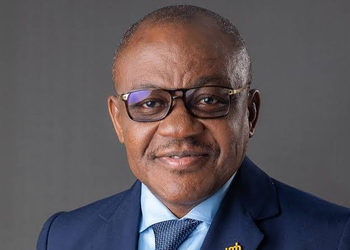
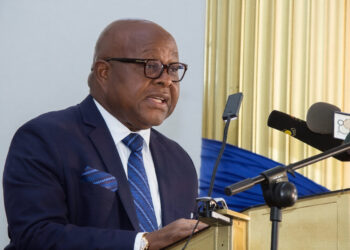
Chief Executive Officer of the Students Loan Trust Fund (SLTF), Dr. Saajida Shiraz
According to her, for the 2025/26 academic year, the Ministry of Education held stakeholder consultations on implementation, after which government adopted an incremental approach. SLTF piloted a direct-to-institution disbursement model as promised, testing its feasibility on a subset of beneficiaries.
Of 168,982 beneficiaries paid so far in 2025/26, Dr Shiraz said 45,127 first-year students in public Colleges of Education, Colleges of Agriculture and Health Training Institutions have had their support paid directly to their schools rather than to themselves.
Disability Support and the Loan Enhancements
Under the Free Tertiary Education for Persons with Disabilities initiative, Dr Shiraz said 1,623 students have received full tuition and residential support paid directly to their institutions in the current academic year, with stipends and assistive learning devices still to be rolled out.
Persons with disabilities already carrying SLTF loans are separately under executive consideration for loan forgiveness.
The Students Loan Plus, introduced on President Mahama’s express directive as an enhancement to the traditional loan package, has extended full-fee-coverage loans to 1,997 students, including 626 from the Ghana School of Law, with GH¢20,762,175.19 disbursed to date.
The SLTF Board is now examining whether to extend the scheme to graduate programmes, including the Graduate Entry Medical Programme, for the 2026/27 academic year.
The Traditional Student Loan has also been restructured. Loan amounts rose 50 percent, from a GH¢1,500–3,000 range to GH¢2,250–4,500, while the interest rate charged during study and moratorium periods fell from 12 percent compounding to 6 percent simple interest.
The repayment-period rate, previously as high as 14 percent compounding, now sits at roughly 7.3 percent, pegged to the Treasury bill rate plus 2 percent. Dr Shiraz attributed the reduction directly to prudent economic management. For 2025/26, 59,307 students have received enhanced loans totalling GH¢210,610,800.
The Cumulative Case Against the Disinformation Claims
Dr Shiraz drew the four strands together into a single defence. Across its components, she said, the policy has touched hundreds of thousands of students since launch, with the No-Academic-Fees component alone returning close to a billion cedis to families who would otherwise have been priced out of tertiary education.
She framed the 321,680 total beneficiaries recorded under the initiative as evidence rather than argument. “The 321,680 beneficiaries so far under the initiative are not statistics to be argued away; they are the verdict,” she said, extending the same framing to the 1,623 students with disabilities and the 61,304 students who have accessed enhanced or full-coverage loans.
The statement is Dr Shiraz’s most detailed public defence of the policy’s implementation to date, and it lands against a backdrop of periodic confusion over what the No-Fees-Stress Policy actually covers.
Fact-checkers at Dubawa found in June that claims the government had made tuition free for all students at public universities were false, noting that the initiative covers academic facility user fees for first-year students, with full tuition coverage reserved specifically for students with disabilities.
Individual beneficiaries have also raised complaints during the rollout, including students who reported not receiving expected disbursements despite SLTF’s confirmation of payments made.
Dr Shiraz closed by committing SLTF to continued faithful and transparent implementation. “The facts are on the record,” she said. “Let them stand.“
READ ALSO: GEPA Eyes Global Markets for Plot Enterprise as Ghana Pushes Value-Added Cocoa Exports